Emotions evident at Chamber&#39s Annual Meeting

Emotions evident at Chamber&#39s Annual Meeting

West Bromwich Spring Company Limited, George Street, West Bromwich – sign – Helical Operates

Image by ell brown
On George Street in West Bromwich is the West Bromwich Spring Co. Ltd.

It is also the Helical Functions.

The West Bromwich Spring has been the forefront of precision manufacturing given that 1896. We have maintained our position with a mixture of expertise based on technical encounter &amp continual approach development.

West Bromwich Spring Ltd

An old painted on sign on the far left of Helical Operates.

Emotions evident at Chamber&#39s Annual Meeting
Other newly-elected officers for the Chamber Executive Committee contain Elaine AbouAka of CENTURY 21 as treasurer, Ryan Nilsson of Geissler&#39s Supermarket, Inc., who will be secretary, Hussam Saada of Precision Mortgage LLC serving as&nbsp…
Read more on Hartford Courant

Lampin Corporation Educates Students with Business Tours on Manufacturing
Lampin is one particular of the region&#39s most active manufacturing firms, delivering engineering and precision machining to manufacture proper angle gear drives, and custom precision components. Lampin and other manufacturing firms will use Manufacturing&nbsp…
Study much more on PR Newswire (press release)

Cool Prototype Machined Components images

Cool Prototype Machined Components images

Some cool prototype machined components pictures:

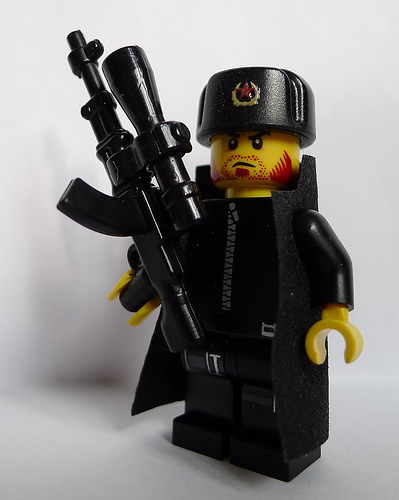
Colonel Danko with RPD-SD Machine Gun

Image by enigmabadger
A important NKGB operative, Col. Danko has sworn he will eliminate the enemy agent Viper soon after their conflict in Leningrad which price Viper an eye and Danko numerous of his colleagues.

Just primarily based on the Escape from New York-vibe this BrickArms part mixture seemed to have to me! It contains:

– RPD prototype
– U-Scope attached by means of U-Clip
– Variety-one hundred magazine

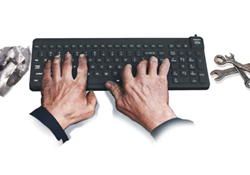
WetKeys Announces New Oil Resistant Keyboard for Industrial Computing, Food Processing Plants, Automotive Factories and Machine Shops

WetKeys Announces New Oil Resistant Keyboard for Industrial Computing, Food Processing Plants, Automotive Factories and Machine Shops


Atlanta, GA (PRWEB) September 23, 2014

WetKeys Washable Keyboards announces the launch of a new oil resistant keyboard in their industrial keyboards line. Labeled the ‘Really O’Cool’ by Man &amp Machine, it is made to last longer in heavy-duty industrial computing for the oil and gas business, automobile factories, or food manufacturing exactly where grease and oil can destroy usability or lead to information errors. Petrochemicals, oils, and solvents are a continuous threat to the longevity of pc equipment and can dissolve numerous plastics. This new keyboard model uses a different cover material that is a lot more resistant to robust chemical compounds than ordinary waterproof rubber keyboards.

&#13

Industrial personal computer workstations are utilised all through energy production facilities, automobile manufacturing plants, oil and tire altering centers, and service stations. In these environments, regular ABS (Acrylonitrile Butadiene Styrene) plastic keyboards, like the familiar rigid plastic keyboards, that have moving parts can get stuck or even melted causing premature failure.

&#13

The Truly O’Cool has no moving parts and is created of oil resistant rubber. This tends to make the new keyboard the ideal resolution for dusty, dirty, greasy, oily environments which includes oil &amp gas exploration and production facilities, food manufacturing, laboratories, mining operations, petroleum platforms, CNC milling machines in machine shops, automotive centers, maintenance facilities, workshops, and paint retailers where solvents are utilised to clean equipment.

&#13

“We’ve noticed a considerable improve in sales to the oil &amp gas power industry as domestic production ramps up with new technologies in response to ongoing conflicts in the Middle East. Demand from the American automotive business is also expanding with new plants and computerized production capabilities as the economy recovers and auto sales rebound all through North America,” stated Paul Lawrence, CEO of WetKeys Washable Keyboards.

&#13

“In the trillion-dollar oil and gas industry, maximizing the lifespan of data entry devices is essential to stay away from unplanned downtime, decreasing information entry errors, and mitigating employee non-compliance with recordkeeping. Specialized gear is required exactly where harsh operational and environmental situations are the norm. As our consumers move closer to becoming 100% paperless, the significance of information entry devices is greater,” continues David Malo, COO of WetKeys Washable Keyboards.

&#13

Our industrial meals manufacturing consumers are also in require of specialized gear. A current article from Food Processing states, ‘a major focus for food processing plants is becoming in a position to elevate allergen handle to be on par with pathogens, radiological hazards and parasites. The Meals Security Modernization Act needs all plants to have an allergen manage program however, despite these regulations 200,000 Americans had been hospitalized final year due to adverse reactions to meals.’ Even with regulations in location, these negative outcomes highlight the challenge of stopping cross-contamination in food processing plants.

&#13

“Preventing cross contamination in food processing plants doesn’t quit at defending your employees with protective gear, but demands to continue by protecting your gear and cleaning it in between makes use of,” illustrated Malo.

&#13

Best for the food, industrial, and manufacturing market, ‘Really O’Cool’ is a heavy-duty keyboard featuring TruLock technology which allows customers to lock the keyboard for simple cleaning with out unplugging it from a personal computer. The completely sealed keyboard is engineered to be waterproof, dustproof, and oil resistant. The optional individually illuminated keys allow accurate typing in low-light situations. With the addition of our magnetic mounting method, the keyboard will hold on to any ferrous surface.

&#13

WetKeys gives a wide variety of keyboards produced in the U.S.A. like, ‘Really O’Cool’ as well as other Man &amp Machine merchandise. The on the internet retailer for high high quality waterproof and water resistant keyboards also carries and produces a wide assortment of rubber keyboards and almost indestructible keyboards, perfect for manufacturers and other businesses that utilize heavy machinery.

&#13

For a lot more information about WetKeys pay a visit to: http://www.WetKeys.com

&#13

About WetKeys:&#13

WetKeys® Washable Keyboards is a top manufacturer and online retailer of industrial grade, waterproof and washable computer keyboards and mice. Inexpensive, heavy-duty keyboards, mice and touchpads are dependable, longer lasting than ordinary computer input devices and save funds. Silicone rubber keyboards are rated IP68 / NEMA4x and can be stress washed to sanitize in food processing plants complying with FDA guidelines minimizing meals-borne illness. With more than 400 keyboard and mouse selections, the sales team at WetKeys are your Washable Keyboards Authorities. Single-supply, reduced price, factory-direct pricing helps lower the price of industrial computing.

&#13

WetKeys is Vendormate verified and a member of the Advanced Technology Improvement Center of Georgia Tech with items featured on CNBC, NBC’s Right now Show and Fox News.

&#13

About Man &amp Machine:&#13

Man &amp Machine, Inc. is an international provider of major edge, infection manage laptop accessories focusing on health-related, governmental, industrial, educational and basic office environments.

&#13

Goods contain waterproof keyboards and mice, mobile keyboards for the RIM Blackberry, LCD privacy monitors, and customized goods to meet clients’ distinctive applications.

&#13

The business was founded in 1982 outside of Washington, D.C. with satellite offices in Oregon, Tennessee, Philadelphia, Indiana, The Netherlands, and China.

&#13
&#13
&#13
&#13
&#13

Locate Much more Machined Components China Press Releases

Pinpoint Laser Systems Launches the New Microgage PRO Laser Alignment Program

Pinpoint Laser Systems Launches the New Microgage PRO Laser Alignment Program


Peabody, MA (PRWEB) September 29, 2014

Pinpoint Laser Systems (http://pinpointlaser.com), a leading manufacturer of precision laser measuring and alignment goods for market, these days announces the launch of their most recent laser alignment tool, the Microgage PRO.

&#13

The Microgage PRO sets a new common for ease-of-use and consists of user directions and the operations manual appropriate on board for straightforward access. The program operates with 3 main elements a laser transmitter, a digital receiver, and a high tech, “smart show.” A precise laser beam types a straight reference line for a machine or assembly and every single receiver measures in two axial directions, horizontal and vertical (X &amp Y). The path of the laser beam can be a handful of inches up to 180 feet and the state of the art touchscreen show provides accurate readings as small as .0001 inch (two.5 micron). Intelligently made receivers are obtainable, in a selection of configurations, including hassle-free wireless choices that boost measuring variety and durability, and give customers the advantage of not getting tied down in the field. A powerful onboard microprocessor provides step-by-step guidelines for the user and enables for the storage of thousands of measurement readings with notes, all inside a tough industrial enclosure that is straightforward to hold and use in the field.

&#13

Employing the 3 basic Microgage PRO components, extended assemblies, machinery, and fixtures can be easily measured and aligned with excellent precision over lengthy distances. Adding other Microgage accessories enables the user to measure and align flatness, squareness, parallelism, bores, spindles, and several other geometric parameters.

&#13

Here are a few positive aspects of the Microgage PRO:&#13

&#13
    Precise to .0001 inches (2.five µ) at up to 180 feet (55 meters)&#13
    Provides alignment update in real time&#13
    Touchscreen and keypad with multifunction buttons&#13
    Onscreen step-by-step alignment instructions&#13
    Powerful microprocessor for computing and storage&#13
    Stores thousands of readings and notes&#13
    Connects very easily to Computer for data uploads and evaluation&#13
    Wide variety of mounts and fixtures available&#13
    Features an “simple-grip manage” for comfort and portability&#13
    Multiple (4) receiver capability.

To find out a lot more about the Microgage PRO please go to: &#13

http://pinpointlaser.com/items/laser-microgage-pro/

&#13

The Microgage PRO is the laser alignment tool of choice for experts responsible for installations, machinery and gear repair, maintenance applications, and considerably a lot more. Pinpoint’s CEO and Head Engineer remarked, “We made the Microgage PRO to be the subsequent generation in industrial alignment tools. Our new ‘smart display’ brings the comfort and technologies of a smart phone to the perform world.”

&#13

The Microgage PRO is a versatile, easy to use, and compact laser measuring and alignment method. Pinpoint Laser also provides specialized kits that have been assembled in practical configurations, valuable for a vast range of industrial applications. Every single kit functions diverse accessories that let engineers to expand the capabilities of the Microgage PRO to ideal match a client’s specific needs.

&#13

To understand more, speak to a Pinpoint Alignment Engineer to go over your alignment applications or schedule a complimentary on the web demo.

&#13

About Pinpoint Laser Systems

&#13

Pinpoint Laser Systems is a major manufacturer of precision laser measuring and alignment items for industry. Our revolutionary machine alignment merchandise are located in factories all through the United States and all more than the world. We supply a wide line of laser measurement tools that will help you solve manufacturing problems, improve manufacturing efficiency, minimize downtime and enhance profitability. Pinpoint’s aligning gear is actively employed in a diverse range of industries, such as aerospace, aircraft, machine shops, paper and textile mills, shipbuilding facilities, healthcare scanning equipment, extrusion plants, and electronic assembly facilities, to name a handful of.

&#13

###

&#13

For far more info on this product or other news things, please make contact with Pinpoint Laser Systems, Inc. at 1-800-757-5383 (US) or 978-532-8001. Or e-mail your queries to Rosemary at rbelt(at)pinpointlaser(dot)com.

&#13
&#13
&#13
&#13
&#13

County Council chairman: “There are jobs here,” people want to apply, take

County Council chairman: “There are jobs here,” people require to apply, take
19, “Our current foundry developing is constructed to accommodate a total of 6 casting machines, every getting a clamping force of 900 tons. Even so, our current infrastructure in Laurens will accommodate 1 further extension of at least 20,000 square …
Study a lot more on Clintonchronicle

Wandering Eye: Checking in with David Simon, 3-D printed guns, and the
So Cody Wilson, that guy who popularized the three-D printed gun, is now promoting a $ 1,200 CNC machine that will permit you, the freedom-loving anarchist, the choice of milling your personal AR-15—sans serial number, thank you—from readily-obtainable gun-nut …
Read more on Baltimore City Paper (weblog)

New Radiation Gear At Mercy Is Initial in Missouri
“The machine we now have in Washington is like the most recent model of a new car. It has all the … “When radiation treatment very first began, we took an X-ray of the element of the physique, and the physician would draw on the X-ray with a marker to indicate how …
Read a lot more on The Missourian

Blood Wolves: Spec Ops Ranger

Blood Wolves: Spec Ops Ranger

Verify out these prototype engineering images:

Blood Wolves: Spec Ops Ranger

Image by Âtin
The Ranger is the leader of a spec ops squad and is trained in moving fast and getting in close. Mainly known for their prodigious skill with a machete the Ranger is also a wonderful tracker and survival professional.

Blood Wolves:

[Basic Squad]

[Grunt]

[Communications Officer]

[ &quotMajor&quot Payne ]

[ Hercules ]

[Spec Ops]

[Commando]

[Demolitions]

[Ranger]

[Advanced Units]

[Berserker]

[Assassin]

[Pilot]

[Thermo Trooper]

[Aqua Trooper]

[Engineer]

[ Infiltration Expert ]

[ General ]

[Medic]

[Variety Expert]

[Demolitions]

[ &quotMayhem&quot ]

[ &quotKa-Boom&quot ]

Photo of unidentified Lancaster Bomber No.35 Sqdn and AirCrew, England, Globe War 2
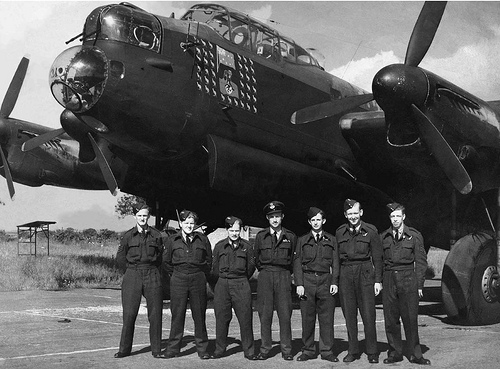
Image by manintheorangeshirt
Do You know the identity of this Lancaster or the flight engineer from this crew? Was the photo taken in 1945? Can you aid? The photo belonged to my Uncle Vic and right after he died in 2009 I have been attempting to discover out more about who is in the image with him and what the identity of the aircraft in the background is. I have a copy of this photo which initially belonged to my Uncle Vic, I thought he was a Navigator in 35 Squadron Pathfinders for the duration of WW2 but it turns out he was a Wireless Operator (not the Navigator) in this aircrew with F/Sgt WN Mercer shown right here. I do not know the identity of the aircraft and i do not know what year it was taken or where, perhaps its 35 Squadron 1945. Right here is a summary of what I have found so far.

Aircrew from Left to correct:

1. Sgt FJ Soan (Mid-upper Gnr)

2. Sgt DV Durie (Rear Gnr)

three. F/Sgt EJL Hall(Navigator)

4. F/Sgt WN Mercer (Pilot – with officer rank, probably Pilot Officer)

5. Sgt HV Gash (Wireless Op) (03/04/23-ten/03/2009) – My Uncle

6. F/Sgt Brenner (Bomb Aimer)

7. W.J. (John) Cunningham (Flight Engineer) – Can anybody confirm his rank?

Thank you to Bill Norman for researching and identifying the crew in this photograph. Bill wrote to me and mentioned &quotYour uncle, Sgt HV Gash was the Wireless Operator (not the Navigator) in the crew of F/Sgt WN Mercer. The crew joined No.640 Sqdn (Flying Halifaxes), Leconfield, on 17 Jan. 1945. They have been later re-posted (on 17 March 1945) to No. 35 Sqdn (Pathfinders). This photograph was really most likely taken when they have been on No.35 Sqdn since the aircraft is a Lancaster – the aircraft employed by No.35.&quot

Bill added &quotI have a crew photograph of this crew, taken when they joined 640, which identifies every member. Even so, the Flight Engineers differ – therefore the ‘unknown’. Mercer was clearly promoted right after leaving 640. The crew produced six trips with No.640 – you have them listed in the torn Flight Log Book.(see log books images) You might been interested in a copy of my book HALIFAX SQUADRON (the wartime bombing operations of No.640 Sqdn). Your uncle and his crew are pointed out – however your uncle is shown as HV Money. The book charges £27.50 (Post cost-free). Specifics can be located at www.billnorman.co.uk

I think the photo above may possibly nicely have been a photo taken at the end of the war, therefore the smiling in the picture and I also suspect that the aircraft could either have been a handy aircraft near the primary buildings to be photographed with or it may have had some thing to do with the head of Pathfinders, Don Bennet, who was an Australian. Nevertheless, I cant be positive. can anyone support shed some light on thsi picture?

Flight Sergeant (Flt Sgt, F/Sgt, F/S, FSgt or FS) is a senior non-commissioned rank in the British Royal Air Force and numerous other air forces which have adopted all or element of the RAF rank structure. It is equivalent to a Staff Sergeant in the British Army and has a NATO rank code of OR-7. Apart from the RAF, the rank of Flight Sergeant is also used by numerous Commonwealth air forces, which includes the Royal Australian Air Force, the Royal New Zealand Air Force, the Ghana Air Force, the Bangladesh Air Force, the Sri Lanka Air Force, the South African Air Force and the Air Force of Zimbabwe.

The Lancaster Aircraft in the background is identity unknown. Probably at a guess it is a photo from 35 squadron March 1945 onwards, either Avro Lancaster I or Avro Lancaster III. It could have 35 Squadron Code of &quotTL&quot – The Picture may have been taken at Graveley Airfield as part of No. 8 (PFF) Group – pff stands for path finder force.

The Nose art shows Kangaroos as an alternative of bombs so probably the Lancaster was an RAAF plane or had an Australian Pilot.

In the European Theatre of Globe War II, RAAF personnel were specifically notable in RAF Bomber Command: they represented two % of all RAAF personnel throughout the war, but accounted for 23% of the total quantity killed in action. This statistic is additional illustrated by the fact that for instance No. 460 Squadron RAAF, largely flying Avro Lancasters, had an official establishment of about 200 aircrew and but had 1,018 combat deaths. The squadron was consequently properly wiped out 5 occasions more than.

right here is some information provided by T: &quotNot only are the mission symbols Kangaroos, there is an Australian flag as well!

Note, Pathfinders flew a &quotdouble tour&quot 45 missions, not the usual 30.

Also of note is the lack of exhaust shrouds, which had been utilized for night operations. Perhaps this is taken post war?

This is late model Lancaster, it has the deeper bomb aimer perspex nose, and the later paddle blade propellers, and is painted black inside, older planes had been grey green inside the nose.

There were a lot of a lot of alterations introduced for the duration of the Lancaster use in WW2, but the Mark numbers had been not changed.

You need a serial number to inform a BI from a BIII, the BI was fitted with British produced Rolls Royce Merlins, the BIII was fitted with USA built Packard Merlins (as utilised in the Mustang and Spitfire XVI)

The engine components have been not interchangeable hence the various mark numbers, but look the same with the cowlings on.

There have been also Canadian built MkX utilized as properly.

As a relative I think you could get in touch with the RAF for far more info, or try the RAF musuem at hendon, they are quite helpful and informative.&quot – T

What I do know about: Sgt HV Gash (Wireless Op) / Herbert Victor Gash

He was in 640 Squadron flying Halifaxes and later 35 Squadron flying Lancasters.
He flew in Halifaxes, Lancasters and Mosquitos
He was a wireless operator and he also said he was a Navigator.
He was primarily based at RAF Leconfield and RAF Graveley
He was in the Pathfinders beneath Donald Bennett.

I know from torn pages from his logbook that he flew Halifax III’s in March 1945, with 640 squadron based at Leconfield. According to Bill Norman This crew joined No.640 Sqdn, Leconfield, on 17 Jan. 1945. They had been later re-posted (on 17 March 1945) to No. 35 Sqdn (Pathfinders).

HV GASH was a Flight Sergeant for most of the War and towards the end he became a Warrant Officer. The Photo shows three stripes on his arm so he is clearly a Flight Sergeant in the picture.

Just prior to my Uncle Vic died, I managed to record a brief couple of words from him over the phone. He refused to talk openly about his experiences throughout the second world war and following the war had ended he refused to fly and by no means flew once again.

(I was) &quot….primarily based close to Beverley, about 6 miles North of Hull (England).(I was) Based at Leconfield, 640 squadron, used to booze (go drinking) at the Green Dragon in Beverley.&quot (Leconfield is a small village in the East Riding of Yorkshire on the A614,approximately 2 miles North of Beverley. The East Riding of Yorkshire is a regional government district in the United Kingdom. … Place inside the British Isles. …Leconfield is home to RAF Leconfield, now utilised as a base for Sea King helicopters of the the 202 Squadron. The Green Dragon pub can be found at 51 Saturday Market place, Beverley, East Yorkshire, HU17 8AA United Kingdom 01482 889801)

&quot…..we did one particular particular daylight raid on Cologne, we had been told that there was mist on the rhine and we have been told we would see the twin towers of the cathedral sticking by means of the mist on the rhine. that was our aiming point 850 of us, we all aimed at it but no one hit it.&quot

&quot…..For the final year of the war we were typical placing up amongst 600 and 900 planes for every single raid. Generally 600 Lancs and 300 Halifaxes&quot

&quot…..There was a danger of collision at evening…… Effectively, we did a couple of Daylights otherwise at night it was a bit dodgy, particularly crossing the North Sea. We put our navigation lights on above us but we have been supposed to place our navigation lights out…..But crossing the North Sea at 500ft, about 800 of you…. was bloody dodgy….. and if you jump out you are wasting your time, it’s no good jumping into the sea.&quot

&quot….the poor women and kids get the battering never they? I never know how several have been in fact slaughtered. We shouldn’t have gone to Dresden, that was a terrible trip, that evening Lancasters went to Dresden twice. and we went to a target 60 miles south of that named Chemnitz. All halifaxes, 500 of us went to chemnitz……Dresden was an all Lancaster raid and of course we didn’t realize what the Lancasters have been doing to Dresden. We have been bombing Chemnitz through 16,000 strong foot of cloud, we ended up dropping markers and we bombed on radar. nevertheless, i’ve talked enough about that now……&quot – Herbert Victor Gash 2009

I did have some other conversations with him but i didn’t record them so i can only repeat what I can keep in mind. He flew on Lancasters as component of Operation Manna dropping meals to The Dutch in 1945. He said the aircraft had to fly at 400feet or reduce so as not to damage the meals sacks as they have been dropped with no parachute. He mentioned he remembered one particular trip when the plane was flying so low to the ground that as he looked out of the navigation window he remembered seeing the German Gunners for the first time and how young they looked. He stated he could even see clearly what brand of cigarette the German Gunners were smoking in their gun turrets as the plane passed overhead.

information from the net: The Dutch very first heard of the plans for Operation Manna on April 24th when it was announced by the British Broadcasting Corporation. Then on April 29th the folks of Holland heard the BBC announce, &quotBombers of the Royal Air Force have just taken off from their bases in England to drop meals supplies to the Dutch population in enemy-occupied territory.&quot

A seventeen year old student at the time, Arie de Jong wrote, &quotThere are no words to describe the emotions experienced on that Sunday afternoon. More than 300 4-engined Lancasters, flying exceptionally low, all of a sudden filled the western horizon.&quot Arie’s diary recorded, &quotOne could see the gunners waving in their turrets. A marvellous sight. One particular Lancaster roared more than the town at 70 feet. I saw the aircraft tacking amongst church steeples and drop its bags in the South. Everywhere we looked, bombers could be seen. No 1 remained inside and everybody dared to wave cloths and flags. What a feast! Everybody is excited with joy. The war should be over soon now.&quot

It was a memorable day for the Bomber Command aircrew as well. Though there had been discussions with the Germans, an agreement to permit the Lancasters to drop the food supplies had not been finalized and on the 1st day of Operation Manna the Germans have been manning their anti-aircraft guns as the bombers flew more than, so low that they could have been very easily shot down. But the Germans held their fire.

The approaches to the drop zones were made at extremely low altitude in order not to harm the meals any more than needed as it was dropped in gunny sacks without parachutes.

A total of 3100 flights were made by Bomber Command, and an added 2200 by the American Air Force which joined the operation on Could 1st. Operation Manna ended with Germany’s surrender on May 8th. Even though more than 11 000 tons of meals had been dropped in the ten days of the operation, some 20,000 individuals died of starvation.

Further Details i’ve identified on the internet:

No.35 Squadron went through two incarnations in the course of the Second Planet War. At the commence of the war it was equipped with the Fairey Battle, but in contrast to most Battle units was not sent to France, alternatively acting as a coaching unit, equipped with a mix of Battles, Ansons and Blenheims. The squadron was combined with No. 207 Squadron, 1st to type No.1 Group Pool on 1 October 1939 and then to type No. 17 Operational Instruction Unit on 8 April 1940.

The second incarnation started on five November 1940. The new No. 35 was the very first squadron to use the Handley Page Halifax. A detachment from the squadron had been training on the prototype Halifaxes, and began to work with the very first production aircraft in November 1940. The squadron carried out the initial Halifax raid on 10 March 1941. In August 1942 the squadron was transferred to the new Pathfinder Force (No. 8 Group), remaining with that unit till the end of the war. In March 1944 the squadron converted to the Avro Lancaster.

Location
25 August-7 December 1939: Cranfield
7 December 1939-1 February 1940: Bassingbourn
1 February-8 April 1940: Upwood
5-20 November 1940: Boscombe Downe
20 November-5 December 1940: Leeming
5 December 1940-15 August 1942: Linton-on-Ouse
15 August 1942-18 September 1946: Graveley, to join No. 8 (PFF) Group pff stands for path finder force

Aircraft
April 1938-February 1940: Fairey Battle
February 1939-April 1940: Avro Anso
November 1939-April 1940: Blenheim Mk IV
November 1940-February 1942: Handley Page Halifax B I
January 1942-March 1944: Handley Web page Halifax B II
December 1943-March 1944: Handley Web page Halifax B III
March 1944-October 1949: Avro Lancaster I and Avro Lancaster III

35 Squadron Motto: &quotWe act with a single accord&quot

Squadron Codes: TL

Group and Duty
On 26 September 1939: Pool squadron with No. 6 Group
eight April 1940: Merges with No.207 Squadron to become No.17 OTU
From November 1940-August 1942: Bomber squadron with No. four Group
From August 1942: Pathfinder squadron with No. 8 (PFF) Group

No. 640 Squadron RAF was a bomber squadron of the Royal Air Force throughout the Second Globe War. The Royal Air Force (RAF) is the air force branch of the British Armed Forces.

It was 1st formed at Leconfield, Yorkshire in January 1944, from C Flight of No. 158 Squadron RAF. Leconfield is a tiny village in the East Riding of Yorkshire on the A614, approximately 2 miles North of Beverley. …

It was equipped with Halifax III bombers, and operated as part of No. four Group RAF in Bomber Command. It re-equipped with Halifax VI bombers in March 1945, and was disbanded at Leconfield in Could.

RAF Bomber Command was the organisation that controlled the RAF’s bomber forces. It was formed on 14 July 1936 from the bomber element of the Air Defence of Fantastic Britain and absorbed into the new Strike Command in 1968.

The Royal Air Force (often abbreviated to RAF) is the air force branch of the British Armed Forces. … The Air Defence of Fantastic Britain (ADGB) refers to two diverse components of the RAF depending on the time period in question. … The Royal Air Forces Strike Command is the military organization which controls the majority of the United Kingdoms combat aircraft. …

Bomber Command 1st located fame throughout World War II, when aircrews beneath the command of Air Chief Marshal Sir Arthur Harris, destroyed a significant proportion of Nazi Germany’s industries and many German cities. Combatants Allies: Poland, British Commonwealth, France/Totally free France, Soviet Union, United States, China, and other folks Axis Powers: Germany, Italy, Japan, and others Casualties Military dead: 17 million Civilian dead: 33 million Total dead: 50 million Military dead: eight million Civilian dead: 4 million Total dead: 12 million Globe War II… An Air Chief Marshals sleeve/shoulder insignia Air Chief Marshal is the most senior rank active in the Royal Air Force (RAF) these days, soon after the inactivation of Marshal of the Royal Air Force as a substantive rank in peacetime in the course of defence cuts of the 1990s. … Sir is a British honorary title representing knighthood or baronetcy. … Sir Arthur Travers Harris, 1st Baronet (April 13, 1892 – April five, 1984), commonly identified as Bomber Harris, and often, in the RAF, as Butcher Harris, was commander of RAF Bomber Command and later a Marshal of the Royal Air Force throughout the latter half of World War II.

Many of Bomber Command’s personnel and squadrons in the course of the war were neither British nor component of the RAF a big proportion came from Commonwealth nations, or occupied Europe.

No. 640 Squadron was formed from C Flight of No. 158 Squadron in January 1944 as portion of No.four Group. It took portion in the primary bombing offensive against Germany as component of Bomber Command’s principal bomber force. The squadron was one of six in No.4 Group to operate the Halifax B.Mk VI just before the finish of the war. It was disbanded on 7 Might 1945.

Aircraft
January 1944 to March 1945: Handley Web page Halifax B.Mk III
March 1945 to Might 1945: Handley Page Halifax B.Mk VI

Place
7 January 1944-7 Could 1945: Leconfield

Squadron Codes: C8

Duty
1944-1945: Bomber Command primary bomber force

The Pathfinder Force officially came into being on 15th August 1942, soon after some weeks spent in behind the scenes manoeuvring. It was set up in direct response to the very poor accuracy being accomplished on bombing raids, which was threatening the complete bomber offensive. Harris, Air Officer Commanding-in-Chief of Bomber Command, had been strongly opposed to the setting up of a separate elite target-marking force, believing this would leave to rivalry and jealousy inside the non-Pathfinder squadrons (hereafter referred to as Major Force) who would inevitably resent obtaining their greatest crews taken away from them.

Harris wrote in his book, Bomber Offensive,
&quotI was more than-ruled by the Air Ministry. In other situations I need to not have accepted the position, but we had been now faced with the truth that Gee had failed as a bombing help and that the new radar aids, Oboe and H2S … had been not now to be forthcoming until the end of the year. For the time getting it was crucial to improve our techniques of finding the target visually and marking it, and this seemed to require the whole time activities of a specialised force.&quot

Although he had argued strongly against the need to have for such a specialised force, Harris was shrewd enough to know that as soon as he had conceded the point to his superiors, he would be able to set up the new force as he chose. It was he who insisted on its name, and secured authority for the Pathfinder eagle, the modest golden badge which was to mark the crews out from Principal Force.

It was Harris, above all, who secured the appointment of Don Bennett as the force’s new commander. At 32 years of age, Bennett was significantly younger than his fellow Group Commanders. He had spent portion of his career outdoors the RAF in civil aviation, flying knowledge which was then very significantly looked down upon by a lot of career officers as becoming inferior and second-price. That Bennett was an Australian and so young, yet had won such a plum job, one which was central to the entire bombing offensive, must have added insult to injury.

Harris, however, never ever had the slightest doubt about Bennett’s capabilities. He did not even contemplate any other candidate, getting the highest opinion of Bennett he was later to call him &quotthe most efficient airman I have ever met&quot.

Initial Make-up of the Pathfinder Force
After some political manoeuvring, the initial squadrons have been donated by the Group Commanders – those who had also opposed the setting up of the PFF, and did not want to lose their best and most seasoned crews to this new and untested arrangement.

Some of the most promising new intakes at the OTUs were also to be allocated to the PFF.

The PFF initially consisted of 5 squadrons:

7 Squadron, from three Group, flying Stirlings
35 Squadron, from 4 Group, flying Halifaxes
83 Squadron, from 5 Group, the only Squadron flying Lancasters
109 Squadron, from two Group, flying Wellingtons, but shortly to be re-equiped with Mosquitoes
156, from 1 Grroup, flying Wellingtons.

The PFF would ultimately be completely equipped with Lancasters and Mosquitoes, the most appropriate aircraft for its job.

The Pathfinders’ motto was &quotWe Guide to Strike&quot

The Pathfinder Force Becomes a Separate Group
The PFF squadrons were positioned at adjacent airfields inside No three Group – Oakington, Graveley, Wyton and Warboys, with the headquarters then getting at Wyton. Initially the force was beneath the direct handle of Harris, and relied on three Group only for administration, pay and rations.

On 8th January 1943, even so, the PFF expanded into a fully new Group, No 8 (PFF). This was in recognition of the huge improvements achieved by Bennet. Bennett himself, hitherto only a Group Captain, was promoted to Air Commodore, a move which gave him equality of function, even though not of rank, with the other group commanders.

In April 1943 the PFF gained two a lot more heavy bomber squadrons, 405 (RCAF) Squadron and 97 Squadron, to be primarily based respectively at Gransden Lodge and Bourn.

It also acquired the Mosquitoes of 1409 Meteorological Flight, which permitted Bennett to study climate situations much more closely, an completely crucial ingredient in the accomplishment of bombing raids and the safety of the crews returning house afterwards.

Continuing its expansion, in June 1943 the Mosquito Squadrons 105 and 109 were added to the PFF, both to be based at Marham. Later in that same month the PFF HQ was moved from Wyton to Castle Hill Home in Huntingdon, exactly where it remained for the rest of the war.

Pathfinders were the leaders of Principal Force, the Mosquitos and Lancasters flying at the head of the huge bombing stream which contained maybe 400-700 aircraft when it swarmed out from Britain on a raid.

Such raids took location at night since it was suicidal to fly them in the day. In the darkness the large force swamped the defences security lay in numbers and the bomber stream was meant to hold together as compactly as possible, but the extreme troubles of navigation with comparatively primitive aids meant that errors of judgement have been all too easily made.

The Pathfinders were the guides to Principal Force, not only as route-markers on the long hazardous trip to the target but also more than the target itself, where, with their much better navigational tactics and technologies, they had the task of pinpointing the places where the bombs should be released.

The Pathfinders had been essential to the accomplishment of the bombing raids, which were planned to the most minutely exact timetable. They had to reach the target in spite of all the issues of navigation – changing weather conditions, variable winds, German nightfighters and flak defences – inside a tolerance of only one minute. They had to drop their target indicators on specifically the proper spot even though the whole scene may be enveloped in dense cloud and higher winds may well shift the flares miles off target. When they failed, which they not infrequently did, the resulting confusion had a disastrous knock-on impact on Main Force.

Despite the crucial nature of their part, Pathfinder crews have been not a hand-picked elite. Crews reached 8 Group by different routes, about two-thirds coming with considerable expertise from Principal Force squadrons, the rest from Coastal Command, the Middle East, or any other spot exactly where great crews could be found, like straight from the instruction units with no operational encounter.

The Pathfinders’ general level of expertise and competence appears to have been considerably reduced than Bennett would have liked, and this trend became specifically marked in the course of the Battle of Berlin when the appalling loss price drained the Group. In a single horrendous six week period among 16th December 1943 and the end of January 1944, 87 Pathfinder crews became casualties in missing or crashed aircraft. The odds stacked against all bomber crews, Pathfinder or Main Force, were appalling.

Getting in Bomber Command was an very dangerous way of life. Of the 125,000 aircrew who served in Bomber Command in the course of the Second World War, 56,000 would be killed.

When they volunteered for the PFF, crews would have been conscious that, if accepted, they would be signing on for a tour of 45 operations with no a break (Major Force flew a initial tour of 30 and a second tour of 20). The compensation for this dangerously extended tour was getting one step greater in rank than in Primary Force, with attendant enhance in pay, but a significantly far more compelling motive was the exclusivity, honour and glamour of belonging to the Pathfinders. This privilege was symbolised by the Pathfinder badge. Although valueless in itself, the tiny hovering gold eagle was an emblem of really special status, and what it represented so secret that it was never worn on operations.

Please note that the only other place on the net where this photo can be found is here at: www.lancaster-archive.com/aircrew-photographs.htm I never know who supplied the photo to that website or exactly where that copy came from. Please get in touch if you can supply any data to add to this photo’s description. Cheers Mark
e-mail: mark at ironmanrecords.co.uk

Tyhee Gold: RMB Further Extends Maturity Date of Loan

Tyhee Gold: RMB Further Extends Maturity Date of Loan
SRK&#39s Threat and Chance Report examined the project&#39s geology as nicely as Tyhee&#39s mine and milling plan, which includes the expenses and economic model. The final results of this independent assessment are becoming offered to the Business&#39s possible funding partners as&nbsp…
Study far more on MarketWatch

Newark fire chief to take Hebron post
Stickradt will replace former Fire Chief Randy Weekly who retired July 18 soon after 42 years of service with the Hebron Fire Department. Randy&#39s brother, Assistant Fire … He mentioned milling the existing asphalt is scheduled for Sept. 30 and Oct. 1. New …
Read far more on The Buckeye Lake Beacon

Cyprium Mining Secures one hundred Metric Tons Per Day Flotation Plant Outdoors
Getting access to one of the couple of mills in the area, Cyprium is uniquely positioned to leverage its management&#39s extended knowledge in milling operations. The Business intends to begin right away to provide milling services to miners in Northern Mexico. Any …
Study a lot more on MarketWatch

Cyprium creates quick-term path to cash flow by securing five-yr access to Mexico
The plant is positioned in Chihuahua State, a mining jurisdiction with many small operating mines. The firm stated it will now have access to one of the handful of mills in the region, with plans to commence supplying milling solutions to miners in northern Mexico …
Study far more on Proactive Investors USA & Canada

The Most Advanced Desktop CNC Router Machine Has Been Created by Sophisticated Manage Technologies (ACT)

The Most Advanced Desktop CNC Router Machine Has Been Created by Sophisticated Manage Technologies (ACT)


Granada Hills, CA (PRWEB) July 09, 2013

Advanced Manage technology (ACT) has announced their newest line of desktop milling machines and Benchtop milling machines. Made particularly for intricate milling perform, Sophisticated Control Technology (ACT) carries a total line of the greatest of machines at the most reasonable and affordable rates. ACT machines have been obtainable to the basic public because 2004, supplying only the very best good quality CNC machine technology. Special innovation is the essential aspect to ACT’s superior technology. ACT has invested a substantial quantity of time and cash in upgrading the technologies that’s utilized in their most recent line of CNC machine technologies. As a outcome of Advanced Control technology’s continuous efforts more than the years, ACT has come up with advanced CNC controller, which gives precision and top quality the likes of which has never ever been observed before.

&#13

Advanced Control technologies delivers the ideal of machines due to their really knowledgeable and talented group. Sophisticated Manage technology develops machines that are reliable, versatile, durable and most importantly lightweight. Pertaining to their objective, ACT offers not only a desktop milling machine program but also a Benchtop CNC machine that covers the least region and are lightweight. Needless to mention that the machines provided at ACT have high precisions.

&#13

Machines offered at ACT can be utilised for the delicate milling tasks as listed beneath: &#13

    Jewelry manufacturing&#13
    Engraving&#13
    3D mold producing&#13
    Research labs&#13
    PC board drilling&#13
    Dental applications

The makes use of of machines at ACT are not restricted to the ones talked about above. The above mentioned utilizes are some of the couple of out of the large quantity of utilizes ACT machines can be place to. Following their obsession to offer you the best of machines, ACT has come up with the next generation machine DMC-III, which delivers exceptional skilled efficiency. The DMC-III has currently been very common in the market place and some of its customers really feel that the DMC-III is the only desktop CNC machine, which is CNC enabled, that is suitable for very delicate perform.

&#13

Sophisticated Handle technology can be contacted at 818 363-6070 or go to their internet site at http://www.actmachines.com.

&#13
&#13
&#13
&#13
&#13

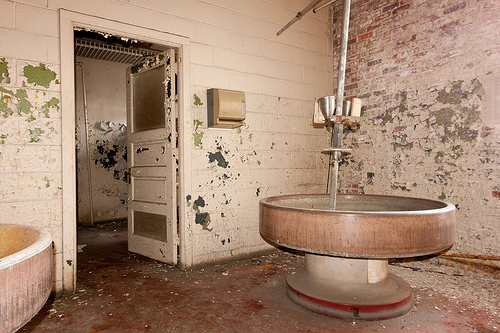
Bathroom with big round sinks aka. Bradley Washfountains. Abandoned Barber-Colman factory in Rockford, Illinois

Bathroom with big round sinks aka. Bradley Washfountains. Abandoned Barber-Colman factory in Rockford, Illinois

Some cool component manufacturing business photos:

Bathroom with large round sinks aka. Bradley Washfountains. Abandoned Barber-Colman factory in Rockford, Illinois

Image by slworking2
History of the Barber-Colman Firm

Historically 1 of Rockford’s biggest manufacturers.

Began with the founding of the Barber &amp Colman Business in 1894 – partnership between Howard Colman, an inventor and entrepreneur, and W. A. Barber, an investor. [Nowadays he would most likely be deemed a venture capitalist.] Colman’s initial patent and marketable invention was the Creamery Verify Pump employed to separate buttermilk and dispense skimmed milk.

Colman’s textile production inventions led the firm on its rapid rise as a worldwide leader in the design and style and manufacture of diversified items. Specific items created for the textile business integrated the Hand Knotter and the Warp Tying Machine. Through these innovations, Barber &amp Colman was capable to create its very first plant on Rock Street in Rockford’s Water Energy District, and to establish branch offices in Boston MA and Manchester, England.

Incorporated as Barber-Colman in 1904 and built 5 new main structures on their website by 1907.

Later innovations for the textile industry integrated an Automatic Winder, High Speed Warper and Automatic Spoolers. By 1931, the textile machinery division had branch production facilities in Framingham MA Greenville SC Munich, Germany and Manchester. This element of the company flourished by way of the mid-1960s but then declined as other divisions expanded.

Branched out from the textile industry into machine tools in 1908 with Milling Cutters. Barber-Colman created machines used at the Fiat plant in Italy (1927) and the Royal Typewriter Co. outdoors Hartford CT. By 1931, the Machine Tool and Tiny Tool Division of Barber-Colman listed branch offices in Chicago, Cincinnati and Rochester NY.

As portion of its commitment to establishing a skilled operate force, Barber-Colman started the Barber-Colman Continuation School for boys 16 and older shortly right after the company was founded. It was a three-year apprentice plan that educated them for manufacturing jobs at Barber-Colman and paid them hourly for their perform at rate that improved as their proficiency enhanced. The plan was operated in conjunction with the Rockford Vocational College.

To foster continued inventions, an Experimental Division was established with the duty of continually building new machines. A lab was very first installed in 1914 and was divided into two components – a chemistry lab to give thorough evaluation of all metals and their element properties, and a metallurgical lab to test the effectiveness of heat therapy for hardening supplies. Innovations in the Experimental Division laid the groundwork for the company’s movement into the design and improvement of electrical and electronic items, and energy management controls.

BARBER-COLMAN became involved in the electrical and electronics business in 1924 with the founding of the Electrical Division. 1st item was a radio operated electric garage door opener controlled from the dashboard of a vehicle. However, it was as well high-priced to be practical at the time. The division’s significant product in its early years was Barcol OVERdoors, a paneled wood garage door that opened on an overhead track. Many designs had been supplied in 1931, some of which had the appearance of wood hinged doors. This division sooner or later expanded into four separate ones that designed and produced electronic handle instruments and systems for manufacturing processes small motors and gear motors used in products such as vending machines, antennas and X-ray machines electronic and pneumatic controls for aircraft and marine operations and electrical and electronic controls for engine-powered systems.

In the late 1920s, the Experimental Department began conducting experiments with temperature handle instruments to be utilized in homes and other buildings and the Temperature Manage Division was born. Over time, BARBER-COLMAN became recognized worldwide leader in electronic controls for heating, ventilating and air conditioning. These are the items that continue its name and reputation right now.

The death of founder Howard Colman in 1942 was sudden but the business continued to expand its operations under changing leadership. Ground was broken in 1953 for a manufacturing building in neighboring Loves Park IL to property the overhead door division and the Uni-Flow division. Three later additions had been created to that plant.

The divestiture of BARBER-COLMAN divisions started in 1984 with the sale of the textile division to Reed-Chatwood Inc which remained at BARBER-COLMAN’s original site on Rock Street till 2001. The machine tooldivision, the company’s second oldest unit, was spun off in 1985 to Bourn and Koch, yet another Rockfordcompany. At that time, it was announced that the remaining divisions of the BARBER-COLMAN Firm would concentrate their efforts on method controls and cutting tools. These moves decreased regional employment at BARBER-COLMAN’s numerous places to about 2200. The remaining divisions have been ultimately sold as effectively, but the BARBER-COLMAN Company name continues to exist right now as one particular of 5 subsidiaries of Eurotherm Controls Inc whose worldwide headquarters are in Leesburg VA. The Aerospace Division and the Industrial Instruments Division nevertheless operate at the Loves Park plant, employing 1100 workers in 2000. The historic complex on Rock Street was vacated in 2001 and the home purchased by the City of Rockford in 2002.

In depth documentation from the Experimental Department was left at the Rock Street plant when the company moved out and was still there when the internet site was purchased by the City of Rockford. These documents are now housed at the Midway Village Museum.

Eveready Hot Shot Battery. Abandoned Barber-Colman factory in Rockford, Illinois

Image by slworking2
History of the Barber-Colman Company

Historically one of Rockford’s biggest makers.

Started with the founding of the Barber &amp Colman Business in 1894 – partnership among Howard Colman, an inventor and entrepreneur, and W. A. Barber, an investor. [Right now he would most likely be regarded a venture capitalist.] Colman’s very first patent and marketable invention was the Creamery Verify Pump employed to separate buttermilk and dispense skimmed milk.

Colman’s textile production inventions led the business on its fast rise as a worldwide leader in the design and style and manufacture of diversified merchandise. Distinct things created for the textile market integrated the Hand Knotter and the Warp Tying Machine. By way of these innovations, Barber &amp Colman was able to develop its very first plant on Rock Street in Rockford’s Water Energy District, and to establish branch offices in Boston MA and Manchester, England.

Incorporated as Barber-Colman in 1904 and built five new significant structures on their web site by 1907.

Later innovations for the textile industry incorporated an Automatic Winder, Higher Speed Warper and Automatic Spoolers. By 1931, the textile machinery division had branch production facilities in Framingham MA Greenville SC Munich, Germany and Manchester. This part of the organization flourished through the mid-1960s but then declined as other divisions expanded.

Branched out from the textile business into machine tools in 1908 with Milling Cutters. Barber-Colman developed machines utilised at the Fiat plant in Italy (1927) and the Royal Typewriter Co. outdoors Hartford CT. By 1931, the Machine Tool and Tiny Tool Division of Barber-Colman listed branch offices in Chicago, Cincinnati and Rochester NY.

As part of its commitment to creating a skilled work force, Barber-Colman began the Barber-Colman Continuation School for boys 16 and older shortly following the company was founded. It was a 3-year apprentice plan that trained them for manufacturing jobs at Barber-Colman and paid them hourly for their perform at rate that improved as their proficiency improved. The program was operated in conjunction with the Rockford Vocational College.

To foster continued inventions, an Experimental Department was established with the responsibility of continually building new machines. A lab was initial installed in 1914 and was divided into two parts – a chemistry lab to supply thorough evaluation of all metals and their element properties, and a metallurgical lab to test the effectiveness of heat therapy for hardening materials. Innovations in the Experimental Department laid the groundwork for the company’s movement into the design and improvement of electrical and electronic items, and energy management controls.

BARBER-COLMAN became involved in the electrical and electronics industry in 1924 with the founding of the Electrical Division. First solution was a radio operated electric garage door opener controlled from the dashboard of a vehicle. Unfortunately, it was too costly to be sensible at the time. The division’s key solution in its early years was Barcol OVERdoors, a paneled wood garage door that opened on an overhead track. Numerous styles had been offered in 1931, some of which had the appearance of wood hinged doors. This division sooner or later expanded into 4 separate ones that made and developed electronic handle instruments and systems for manufacturing processes little motors and gear motors utilised in items such as vending machines, antennas and X-ray machines electronic and pneumatic controls for aircraft and marine operations and electrical and electronic controls for engine-powered systems.

In the late 1920s, the Experimental Division started conducting experiments with temperature manage instruments to be utilised in houses and other buildings and the Temperature Manage Division was born. Over time, BARBER-COLMAN became known worldwide leader in electronic controls for heating, ventilating and air conditioning. These are the merchandise that continue its name and reputation right now.

The death of founder Howard Colman in 1942 was sudden but the organization continued to expand its operations beneath altering leadership. Ground was broken in 1953 for a manufacturing developing in neighboring Loves Park IL to home the overhead door division and the Uni-Flow division. 3 later additions were produced to that plant.

The divestiture of BARBER-COLMAN divisions started in 1984 with the sale of the textile division to Reed-Chatwood Inc which remained at BARBER-COLMAN’s original web site on Rock Street until 2001. The machine tooldivision, the company’s second oldest unit, was spun off in 1985 to Bourn and Koch, an additional Rockfordcompany. At that time, it was announced that the remaining divisions of the BARBER-COLMAN Company would concentrate their efforts on method controls and cutting tools. These moves decreased local employment at BARBER-COLMAN’s several places to about 2200. The remaining divisions had been ultimately sold as nicely, but the BARBER-COLMAN Organization name continues to exist today as one of 5 subsidiaries of Eurotherm Controls Inc whose worldwide headquarters are in Leesburg VA. The Aerospace Division and the Industrial Instruments Division nevertheless operate at the Loves Park plant, employing 1100 workers in 2000. The historic complicated on Rock Street was vacated in 2001 and the property bought by the City of Rockford in 2002.

Extensive documentation from the Experimental Division was left at the Rock Street plant when the business moved out and was nevertheless there when the site was purchased by the City of Rockford. These documents are now housed at the Midway Village Museum.

Latest Custom Plastic Components News

Audi TT &amp TT S Roadsters unveiled in Paris
The style of the vehicle closely echoes the coupes but with a retractable soft best that needs ten seconds to open or close, a procedure that can be done at speeds of up to 31 mph (50 km/h). Compared to its predecessor, the new roof is about 3 kg …
Read a lot more on WorldCarFans.com

Volkswagen Golf Alltrack displays its rugged looks in Paris
Based on the Golf Variant, the rugged Alltrack has received a +20mm elevated ride height and benefits from black plastic physique cladding collectively with chunkier wheels and aluminum protection plates. Volkswagen is describing the model as becoming a …
Read much more on WorldCarFans.com

Plastic welding equipment and testing systems manufacturer expands plant
Forward Technology, a manufacturer of regular and custom plastic welding equipment and testing systems, announced a key expansion at its Cokato, MN, headquarters site. The 10,000 sq-ft expansion involves six,500 sq-ft of additional manufacturing&nbsp…
Study far more on Plastics These days