Check out these precision cutting photos:
Adjustment and Clamp Roller
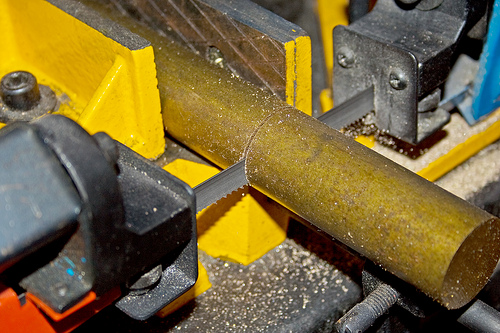
Image by tudedude
Band Saw Cutting Brass Bar
Rapid Prototyping China
Rapid Prototyping China news and precision CNC milling technology.
Check out these precision cutting photos:
Adjustment and Clamp Roller
Image by tudedude
Band Saw Cutting Brass Bar
Renton, WA (PRWEB) September 11, 2014
Microscan, a worldwide technology leader in barcode, machine vision, and lighting solutions, announces the availability of the Verification Monitoring Interface (VMI), a new software resolution specially engineered for monitoring the good quality of barcodes as they are created on components, labels, and packaging.

Unreadable barcodes can lead to pricey scrap, downtime, and errors in the provide chain and at the point of sale. This is why much more and a lot more retailers are issuing mandates to their suppliers concerning minimum barcode good quality, which leaves suppliers facing achievable fines for unreadable codes and disqualification for non-compliance. Microscan has developed effortless-to-use verification solutions to meet the require for inline (directly after merchandise are marked) and offline verification to ISO and AIM barcode high quality standards, even in high-speed applications, to support manufacturers meet client demands and guarantee efficiency throughout the supply chain. These options are tailored to meet ISO and AIM requirements and combine Microscan machine vision technology, like Vision HAWK sensible camera models, NERLITE® industrial lighting, and AutoVISION® Machine Vision Software.

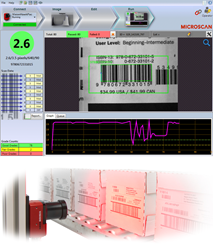
The new VMI software program plug-in provides a custom Runtime window in AutoVISION Machine Vision Computer software for visualizing the final results of ISO barcode good quality verification as nicely as fluctuations in barcode top quality more than time. As VMI operates on the production line, companies can use this reside data about their barcodes to set alarms or trigger actions based on low barcode good quality, which may possibly indicate degradation of the printing or marking method such as jammed print heads, low ink, and more. By implementing barcode verification as a preventative measure, and with VMI operating in real time as items are marked and labeled, poor and unreadable codes are prevented from entering the supply chain. Thanks to the resolution, manufacturers can significantly increase product good quality, operational efficiency, minimize scrap and unplanned downtime, and keep away from costly fines connected with poor or non-compliant barcodes.

For much more info on Microscan’s new Verification Monitoring Interface (VMI) and AutoVISION Machine Vision Software, visit http://www.microscan.com.

About Microscan
Microscan is a international leader in technology for precision data acquisition and handle solutions serving a wide range of automation and OEM applications. Founded in 1982, Microscan has a powerful history of technologies innovation that contains the invention of the very first laser diode barcode scanner and the 2D symbology, Information Matrix. Today, Microscan remains a technology leader in automatic identification and machine vision with extensive solutions for ID tracking, traceability and inspection ranging from fundamental barcode reading up to complicated machine vision inspection, identification, and measurement.

As an ISO 9001:2008 certified organization recognized for high quality leadership in the U.S., Microscan is known and trusted by consumers worldwide as a provider of good quality, higher precision products. Microscan is a Spectris business.


Locate More Precision Machined Components Press Releases

Santa Clara, CA (PRWEB) September 09, 2014
Crystallume, the business that pioneered the development and application of Chemical Vapor Deposition (CVD) diamond coating technology will showcase its latest innovations at this year’s IMTS 2014, the International Manufacturing Technologies Show. Crystallume dominates the market with more than 25 patents awarded. A sampling of Crystallume’s new items follows.

This year’s IMTS lineup includes diamond coated coolant hole drills specially created to properly evacuate chips and dust out of a drilled hole in deep-drilling applications, producing cleaner, faster and a lot more productive cuts.

Kevlar drills, featuring an exclusive Black Widow coating (a combination of diamond and graphite), are designed with points specifically for creating clean holes in Kevlar. The Black Widow coating provides extended life for longer running jobs.

Curved flute composite routers are created for trimming composite material such as carbon fiber and has a fluted design and style curved like a crescent moon to lessen delamination.

Rough cut and fine cut alligator back routers are created to function exceptionally in composite trimming applications. The alligator back style increases feed rate even though preserving low tear-out. Rough and fine cuts provide rapidly trimming.

Precise-size mold producing end mills are for ultra-precision five-axis electrode jobs where the precise size of the end mill is needed. Precise-sizing is now furnished at no additional cost on the Mold Maker end mill series.

“We’re excited to be releasing such a potent line of tools—all of which were designed to exceed buyer demands.” mentioned Ed Francis, VP of Engineering at Crystallume. “Visitors to our IMTS booth will see some of the most innovative solutions for composite machining becoming introduced at IMTS. Crystallume is consistently pushing the envelope of tool design and style, from the Bullet drills introduced at the final IMTS to these new solutions presented this year.”

Far more info about Crystallume, which includes the total Crystallume solution line can be identified at http://www.crystallume.com. Visit Crystallume at this year’s IMTS show in booth W-2206.

###

About Crystallume
Founded in 1984, Crystallume pioneered the development and application of Chemical Vapor Deposition (CVD) diamond technology. Because then, Crystallume’s coating professionals have turn out to be specialists at solving buyer difficulties with diamond technology at the largest CVD Diamond facility in the United Sates. For more details, visit http://www.crystallume.com, or to schedule a meeting, contact Manny Guevara at mguevara@crystallume.com.


Connected Milling Machine Press Releases

Some cool turned elements photos:
Operate Bench
Image by KLaFaille
Breadboarding a low pass filter making use of two triggers in a SN74HC14 to turn a low level, sine wave into 5V logic input.
On the scope is the 30mV 10kHz sine wave from the HP function generator overlaid on the 5V logic from the 74HC14. Purpose is to input this into a uC as a poor man’s frequency counter. Circuit design and style credit goes to PJRC.
Note all the crap on the bench, but the distinct lack of proper BNC cables for the HP. A single of these days..
How a ball personal computer mouse functions
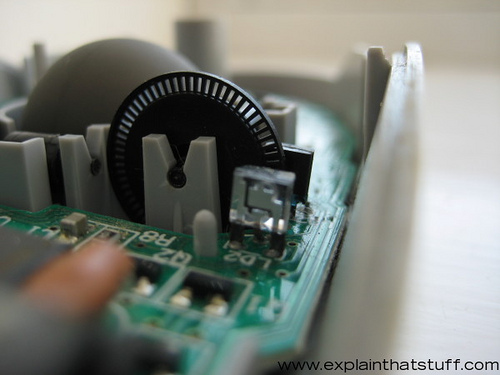
Image by explainthatstuff
Here’s a closeup of the mechanism that makes it possible for an old-style ball mouse to detect your hand movements. There’s a light beam operating among the transparent square (an LED-style light emitter) and the black square (a photocell/light detector). As you move your hand, the mouse ball moves too. It pushes against a roller that turns the spoked wheel, breaking the light beam repeatedly. Counting the quantity of occasions the beam is broken provides a precise measurement of how far your hand has moved.
This photo is from our report on how computer mice function.
For a bit more context, see the photo of the exact same mouse taken from overhead.
Our images are published below a Inventive Commons Licence (see opposite) and are cost-free for noncommercial use. We also license our images for commercial use. Please speak to us directly by way of our web site for far more specifics.
Mike O’Connell from ATL (Ad Tape & Label) in Menomonee Falls, Wisconsin, discusses disposable healthcare and safety label capabilities and services.
Video Rating: 5 / 5
A couple of good precision machine shops photos I found:
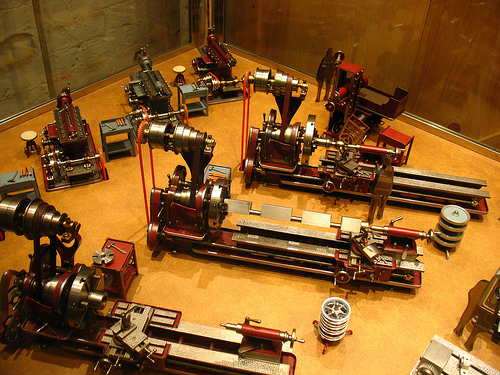
Wonderful small models of workshop machines
Image by Vilseskogen
American Precision Museum, Windsor, VT, USA.
Amazing tiny models of workshop machines
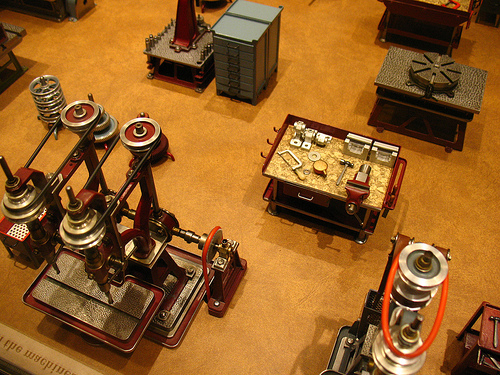
Image by Vilseskogen
American Precision Museum, Windsor, VT, USA.
Amazing modest models of workshop machines
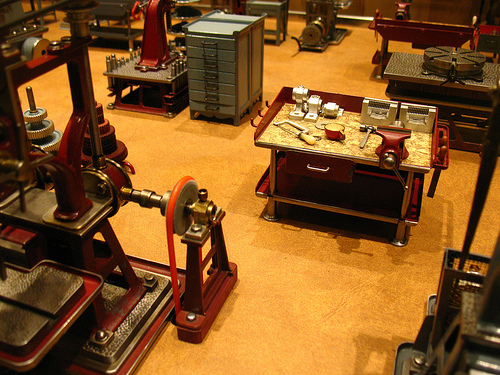
Image by Vilseskogen
American Precision Museum, Windsor, VT, USA.
A couple of good precision engineering services pictures I located:
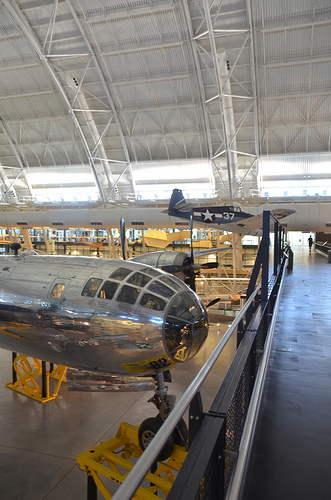
Steven F. Udvar-Hazy Center: south hangar panorama, like B-29 Superfortress “Enola Gay”, Grumman F6F-3 Hellcat, among others
Image by Chris Devers
See much more photos of this, and the Wikipedia write-up.
Details, quoting from Smithsonian National Air and Space Museum: Steven F. Udvar-Hazy | Boeing B-29 Superfortress "Enola Gay":
Boeing’s B-29 Superfortress was the most sophisticated propeller-driven bomber of Globe War II and the very first bomber to residence its crew in pressurized compartments. Although developed to fight in the European theater, the B-29 discovered its niche on the other side of the globe. In the Pacific, B-29s delivered a selection of aerial weapons: conventional bombs, incendiary bombs, mines, and two nuclear weapons.
On August six, 1945, this Martin-constructed B-29-45-MO dropped the very first atomic weapon used in combat on Hiroshima, Japan. 3 days later, Bockscar (on show at the U.S. Air Force Museum near Dayton, Ohio) dropped a second atomic bomb on Nagasaki, Japan. Enola Gay flew as the advance weather reconnaissance aircraft that day. A third B-29, The Fantastic Artiste, flew as an observation aircraft on each missions.
Transferred from the United States Air Force.
Manufacturer:
Boeing Aircraft Co.
Martin Co., Omaha, Nebr.
Date:
1945
Country of Origin:
United States of America
Dimensions:
General: 900 x 3020cm, 32580kg, 4300cm (29ft 6 five/16in. x 99ft 1in., 71825.9lb., 141ft 15/16in.)
Components:
Polished all round aluminum finish
Physical Description:
4-engine heavy bomber with semi-monoqoque fuselage and high-aspect ratio wings. Polished aluminum finish overall, common late-World War II Army Air Forces insignia on wings and aft fuselage and serial number on vertical fin 509th Composite Group markings painted in black "Enola Gay" in black, block letters on lower left nose.
• • • • •
See more pictures of this, and the Wikipedia post.
Information, quoting from Smithsonian National Air and Space Museum: Steven F. Udvar-Hazy | Grumman F6F-3 Hellcat:
The Grumman F6F Hellcat was initially conceived as an advanced version of the U.S. Navy’s then existing front-line fighter, the F4F Wildcat (see NASM collection). The Wildcat’s intended replacement, the Vought F4U Corsair (see NASM collection), initial flown in 1940, was displaying great promise, but improvement was slowed by troubles, such as the crash of the prototype.
The National Air and Space Museum’s F6F-3 Hellcat, BuNo. 41834, was built at Grumman’s Bethpage, New York, factory in February 1944 under contract NOA-(S)846. It was delivered to the Navy on February 7, and arrived in San Diego, California, on the 18th. It was assigned to Fighter Squadron 15 (VF-15) on USS Hornet (CV12) bound for Hawaii. On arrival, it was assigned to VF-3 exactly where it sustained harm in a wheels-up landing at NAS Barbers Point, Hawaii. After repair, it was assigned to VF-83 where it was utilized in a coaching role until February 21, 1945. Right after several transfers 41834 was converted to an F6F-3K target drone with the installation of sophisticated radio-control gear. It was painted red with a pink tail that carried the number 14. Its mission was to be used in Operation Crossroads – the atomic bomb tests at Bikini Atoll. It flew on June 24, 1946, with a pilot, on a practice flight and was launched, unmanned, soon following the first bomb test. Instrumentation on board and photographic plates taped to the handle stick obtained information on radioactivity. 3 more manned flights preceded the final unmanned flight on July 25, 1946, which evaluated the 1st underwater explosion. Records indicate that exposure of this aircraft to the radioactive cloud was minimal and residual radiation is negligible.
F6F-3K 41834 was transferred to NAS Norfolk and logged its final flight on March 25, 1947, with a total of 430.two flying hours. It was assigned to the National Air Museum on November 3, 1948, and remained at Norfolk till October four, 1960, when it was moved by barge to Washington and placed in storage. In 1976 this Hellcat was loaned to the USS Yorktown Museum at Charleston, South Carolina. A superficial restoration was performed at the museum, but because of the harsh environment and its poor condition the Hellcat was returned to NASM on March 16, 1982. In 1983, it was sent to Grumman Aerospace where a team of volunteers entirely restored the aircraft. In 1985, it was shipped back to the Paul E. Garber Preservation, Restoration and Storage Facility in Suitland, Maryland, and place in storage. NASM’s F6F-three Hellcat is scheduled to be displayed in the new Steven F. Udvar-Hazy center at Dulles International Airport in Virginia in 2004.
Transferred from the United States Navy.
Manufacturer:
Grumman Aircraft Engineering Corporation
Date:
1943
Country of Origin:
United States of America
Dimensions:
General: 338 x 1021cm, 4092kg, 1304cm (11ft 1 1/16in. x 33ft 5 15/16in., 9021.2lb., 42ft 9 3/8in.)
Physical Description:
Heavy armor plate, reinforced empennage, R-2800-10W engine, spring tabs on the ailerons (improved maneuverability), could carry rockets as effectively as bombs.
Russia's Putin promises new weapons to fend Western threats
With hundreds of subcontractors going out of production, Russian arms companies typically had to make components themselves, swelling expenses and affecting production top quality. The difficulties faced by the Russian arms … Talking about prospective threats …
Study much more on The Spokesman Overview
NN, Inc. Announces Two Senior Level Appointments Following Completion Of …
NN, Inc. companies and supplies higher precision metal bearing components, industrial plastic and rubber products and precision metal components to a selection of markets on a international basis. Headquartered in Johnson City, Tennessee, NN has 25 …
Study far more on CNNMoney

Some cool cnc milling aluminum images:
Bonnette_Test_ 017
Image by Drummond Masterton
Bonnette_Test_ 005
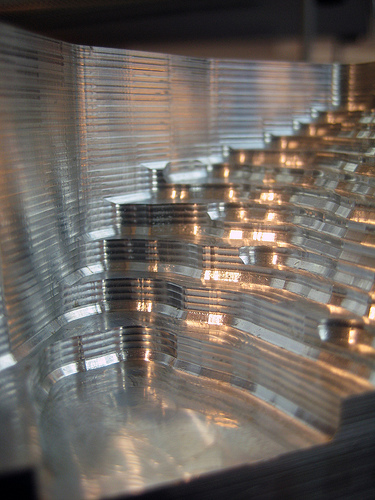
Image by Drummond Masterton
Bonnette_Test_ 003
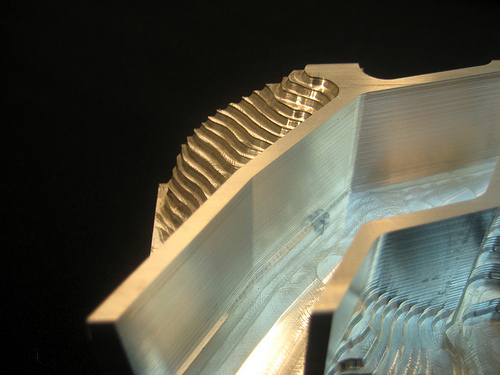
Image by Drummond Masterton
Model Engineering For Newbies #eight This video shows some of the troubles that can occur when machining castings.
Video Rating: five / 5