Cancer Genomics Experts Hope Precision Medicine Effort Will Raise Awareness

Cancer Genomics Experts Hope Precision Medicine Effort Will Raise Awareness
NEW YORK (GenomeWeb) – Despite the fact that President Obama&#39s not too long ago announced precision medicine initiative needs to be approved by Congress, and particulars of particular projects were scarce, a number of professionals in the cancer genomics field are taking into consideration the&nbsp…
Read a lot more on GenomeWeb

Will the President&#39s Program Move Precision Medicine Beyond the Hype?
Primarily based on the quantity of HiSeq X sequencing systems shipped last year, &quotwe estimate there is added capacity for hundreds of thousands of genomes to be sequenced every single year,&quot a company spokesperson mentioned. ….. facilitating technologies produced attainable …
Read much more on GenomeWeb

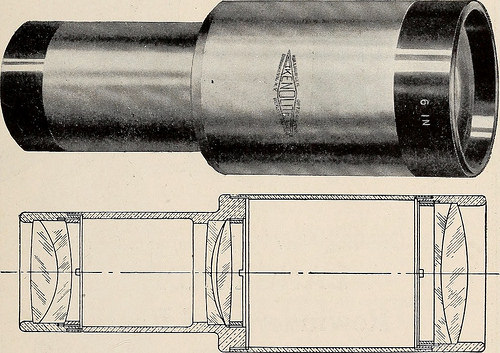
Image from page 49 of “Transactions of the Society of Motion Picture Engineers (1921)” (1921)

Image from page 49 of “Transactions of the Society of Motion Picture Engineers (1921)” (1921)

A couple of nice precision engineering solutions images I found:

Image from page 49 of “Transactions of the Society of Motion Picture Engineers (1921)” (1921)
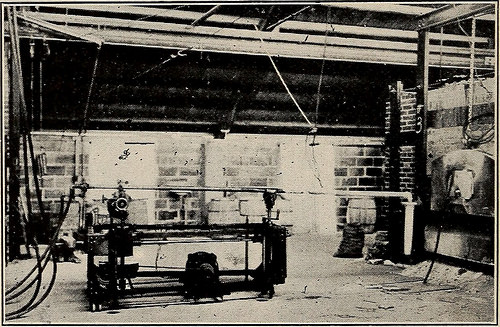
Image by Net Archive Book Images
Identifier: transactionsofso13soci
Title: Transactions of the Society of Motion Image Engineers (1921)
Year: 1921 (1920s)
Authors: Society of Motion Image Engineers
Subjects: motion images
Publisher: Society of Motion Image Engineers
Contributing Library: Library of Congress, MBRS, Moving Image Section
Digitizing Sponsor: Library of Congress, Motion Image, Broadcasting and Recorded Sound Division

View Book Page: Book Viewer
About This Book: Catalog Entry
View All Images: All Pictures From Book

Click right here to view book online to see this illustration in context in a browseable on the internet version of this book.

Text Appearing Before Image:
nchman and the lack of any encour-agement from a commercial point of view. In 1912 the Bausch &amp Lomb Optical Co. began experimenting,getting secured the services of a very in a position Belgian by the name ofMartin, who had some formulae handed down to him by his father.They succeeded in producing some very creditable glass, considering therule-of-thumb approaches utilised, and the continual worry of exposingcherished and secret formulae. They worked along in this way untilwe went into the war, when they have been provided help from the Geophysi-cal Laboratory of the Carnegie Institution. In 1915 the Bureau of Standards took up the problem in theirlaboratory in Pittsburgh. In two or a lot more years experimentingthey produced some creditable glass, but their greatest contribution to thewar requirements was their operate which developed suitable glass pots. Correct right here credit should be given to Mr. Karl Keuffel of the firmof Keuffel &amp Esser, for generating some extremely good glass, also forsuccessfully producing pots suited to his goal.

Text Appearing After Image:
Fig. 2—The Stirring Machine Mr. Duval of the Hazel-Atlas Glass Co., of Washington, Pa.,functioning in conjunction with the John A. Brashear Co., succeeded inmaking a little amount of optical glass which was used by the lat-ter mentioned organization. In 1915 The Pittsburgh Plate Glass Co., at their Charleroi plant,began some experimenting, hunting to creating both spectacle glassand the other larger grade glass used in lenses of higher precision.With the former they met with considerable achievement but with thelatter they worked along contending with varying vicissitudes and 40 meeting with questionable good results until the members of the Geophys-ical Laboratory took over the management of their plant early in1918. With these guys in charge they made some useable opticalglass, but it was not up to the regular desired since of numerous de-fects, chief amongst which have been the old furnaces, which were notprovided with regenerating chambers and the suitable temperaturecontrol was impossible. This brings us

Note About Images
Please note that these pictures are extracted from scanned web page photos that could have been digitally enhanced for readability – coloration and look of these illustrations might not completely resemble the original function.

Steven F. Udvar-Hazy Center: south hangar panorama, including B-29 Superfortress “Enola Gay”, Grumman F6F-3 Hellcat, amongst other people
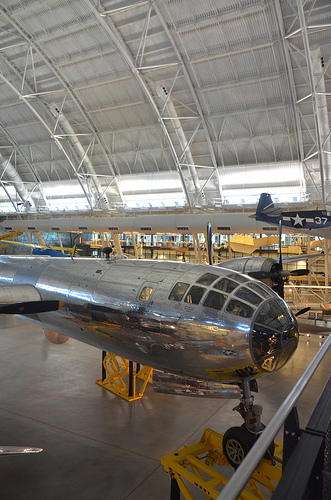
Image by Chris Devers
See more images of this, and the Wikipedia write-up.

Details, quoting from Smithsonian National Air and Space Museum: Steven F. Udvar-Hazy | Boeing B-29 Superfortress &quotEnola Gay&quot:

Boeing’s B-29 Superfortress was the most sophisticated propeller-driven bomber of Planet War II and the 1st bomber to property its crew in pressurized compartments. Although developed to fight in the European theater, the B-29 found its niche on the other side of the globe. In the Pacific, B-29s delivered a variety of aerial weapons: traditional bombs, incendiary bombs, mines, and two nuclear weapons.

On August six, 1945, this Martin-constructed B-29-45-MO dropped the very first atomic weapon utilised in combat on Hiroshima, Japan. 3 days later, Bockscar (on show at the U.S. Air Force Museum close to Dayton, Ohio) dropped a second atomic bomb on Nagasaki, Japan. Enola Gay flew as the advance weather reconnaissance aircraft that day. A third B-29, The Wonderful Artiste, flew as an observation aircraft on each missions.

Transferred from the United States Air Force.

Manufacturer:
Boeing Aircraft Co.
Martin Co., Omaha, Nebr.

Date:
1945

Nation of Origin:
United States of America

Dimensions:
All round: 900 x 3020cm, 32580kg, 4300cm (29ft 6 five/16in. x 99ft 1in., 71825.9lb., 141ft 15/16in.)

Components:
Polished general aluminum finish

Physical Description:
4-engine heavy bomber with semi-monoqoque fuselage and high-aspect ratio wings. Polished aluminum finish overall, common late-Planet War II Army Air Forces insignia on wings and aft fuselage and serial quantity on vertical fin 509th Composite Group markings painted in black &quotEnola Gay&quot in black, block letters on reduced left nose.

• • • • •

See more photos of this, and the Wikipedia article.

Specifics, quoting from Smithsonian National Air and Space Museum: Steven F. Udvar-Hazy | Grumman F6F-three Hellcat:

The Grumman F6F Hellcat was initially conceived as an sophisticated version of the U.S. Navy’s then present front-line fighter, the F4F Wildcat (see NASM collection). The Wildcat’s intended replacement, the Vought F4U Corsair (see NASM collection), first flown in 1940, was showing great guarantee, but improvement was slowed by issues, such as the crash of the prototype.

The National Air and Space Museum’s F6F-3 Hellcat, BuNo. 41834, was built at Grumman’s Bethpage, New York, factory in February 1944 below contract NOA-(S)846. It was delivered to the Navy on February 7, and arrived in San Diego, California, on the 18th. It was assigned to Fighter Squadron 15 (VF-15) on USS Hornet (CV12) bound for Hawaii. On arrival, it was assigned to VF-3 exactly where it sustained harm in a wheels-up landing at NAS Barbers Point, Hawaii. Right after repair, it was assigned to VF-83 exactly where it was employed in a education part until February 21, 1945. After numerous transfers 41834 was converted to an F6F-3K target drone with the installation of sophisticated radio-control equipment. It was painted red with a pink tail that carried the number 14. Its mission was to be employed in Operation Crossroads – the atomic bomb tests at Bikini Atoll. It flew on June 24, 1946, with a pilot, on a practice flight and was launched, unmanned, soon soon after the first bomb test. Instrumentation on board and photographic plates taped to the manage stick obtained information on radioactivity. 3 much more manned flights preceded the final unmanned flight on July 25, 1946, which evaluated the initial underwater explosion. Records indicate that exposure of this aircraft to the radioactive cloud was minimal and residual radiation is negligible.

F6F-3K 41834 was transferred to NAS Norfolk and logged its final flight on March 25, 1947, with a total of 430.two flying hours. It was assigned to the National Air Museum on November three, 1948, and remained at Norfolk till October 4, 1960, when it was moved by barge to Washington and placed in storage. In 1976 this Hellcat was loaned to the USS Yorktown Museum at Charleston, South Carolina. A superficial restoration was performed at the museum, but due to the fact of the harsh atmosphere and its poor situation the Hellcat was returned to NASM on March 16, 1982. In 1983, it was sent to Grumman Aerospace exactly where a group of volunteers totally restored the aircraft. In 1985, it was shipped back to the Paul E. Garber Preservation, Restoration and Storage Facility in Suitland, Maryland, and place in storage. NASM’s F6F-3 Hellcat is scheduled to be displayed in the new Steven F. Udvar-Hazy center at Dulles International Airport in Virginia in 2004.

Transferred from the United States Navy.

Manufacturer:
Grumman Aircraft Engineering Corporation

Date:
1943

Nation of Origin:
United States of America

Dimensions:
All round: 338 x 1021cm, 4092kg, 1304cm (11ft 1 1/16in. x 33ft five 15/16in., 9021.2lb., 42ft 9 three/8in.)

Physical Description:
Heavy armor plate, reinforced empennage, R-2800-10W engine, spring tabs on the ailerons (elevated maneuverability), could carry rockets as nicely as bombs.
Good Precision Engineering Businesses photos

Good Precision Engineering Businesses photos

A few nice precision engineering businesses photos I identified:

Image from page 186 of “Transactions of the Society of Motion Image Engineers (1921)” (1921)

Image by Web Archive Book Photos
Identifier: transactionsofso13soci
Title: Transactions of the Society of Motion Picture Engineers (1921)
Year: 1921 (1920s)
Authors: Society of Motion Image Engineers
Subjects: motion photos
Publisher: Society of Motion Picture Engineers
Contributing Library: Library of Congress, MBRS, Moving Image Section
Digitizing Sponsor: Library of Congress, Motion Image, Broadcasting and Recorded Sound Division

View Book Web page: Book Viewer
About This Book: Catalog Entry
View All Pictures: All Photos From Book

Click here to view book on the internet to see this illustration in context in a browseable on the web version of this book.

Text Appearing Prior to Image:
This entire manufacturing plant is devoted ex-clusively to the production of Motion Image Machines Stereopticons and Lantern Slides Sixty thousand feet of floor space, plenty of freshair and sunlight, precision machinery, the bestof materials and contented expert workmen, com-bine in the creating of the foremost line of non-theatrical image projectors in America. Catalogs and cost lists mailed on application VICTOR ANIMATOGRAPH CO., Inc. Davenport, Iowa, U. S. A. Sixty-5 million feet of EASTMANFILM was the average month-to-month pro-duction at Kodak Park lastyear, all manufactured on aquality basis. EASTMAN KODAK Firm ROCHESTER, N. Y. PERFECTION OF PROJECTION Can only be obtained with the KENOLITE Three Combination LENS

Text Appearing Soon after Image:
32.eight% Mere Light. 28% Much better Definition. 10 Days Trial Distributors of POWERS PROJECTORS SPEEDCO ARC CONTROLS Common ELECTRIC GENERATORS IMSCO ENGINES and GENERATORS Independent Movie Supply Co., Inc. W. H. RABELL, Pres. 729 Seventh Ave. sixth floor New York Our Catalogue Upon Request LANGS FILM REWINDER

Note About Photos
Please note that these pictures are extracted from scanned web page images that may possibly have been digitally enhanced for readability – coloration and appearance of these illustrations could not perfectly resemble the original operate.

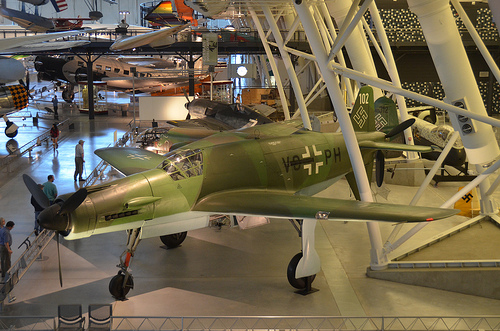
Steven F. Udvar-Hazy Center: Dornier Do 335A-1 Pfeil (Arrow)

Steven F. Udvar-Hazy Center: Dornier Do 335A-1 Pfeil (Arrow)

Some cool precision engineering solutions pictures:

Steven F. Udvar-Hazy Center: Dornier Do 335A-1 Pfeil (Arrow)

Image by Chris Devers
Quoting Smithsonian National Air and Space Museum | Dornier Do 335 A- Pfeil (Arrow):

The Do-335 was a single of a small group of aircraft marking the pinnacle of international piston-engined development. It was the fastest production piston-engined fighter ever constructed, attaining 846 kilometers per hour (474 mph) in level flight at a time when the official globe speed record was 755 kph (469 mph). Powered by two 1800-hp engines in a distinctive low-drag configuration and weighing 9600 kg (21,000 lb) loaded, it was an exceptional heavy fighter. This really revolutionary style also featured an ejection seat, for pilot safety, and a jettisoning fin.

The unconventional layout of the Do-335 — one engine &quotpulling&quot in the nose and yet another &quotpushing&quot in the tail – was patented by Claudius Dornier in 1937. The configuration provided the power of two engines, but with decreased drag and greater maneuverability. The German Aviation Ministry (RLM) was interested in the design and style, but initially wanted Dornier only to generate bombers. By 1942, Dornier was nevertheless continuing design and style function and the war scenario was worsening. The Luftwaffe now needed a multi-goal fighter, and the prototype Do-335V-1 (&quotV&quot indicating &quotversuchs&quot or &quotexperimental&quot) flew in fighter type in September, 1943 – six years after its conception. Orders have been quickly placed for 14 prototypes, 10 A- preproduction aircraft, 11 production A-1 single-seaters, and 3 A-10 and A-12 two-seat trainers.

The aircraft was quite massive for a single-seat fighter, with a cruciform tail and a tricycle landing gear. The two huge liquid-cooled Daimler-Benz DB-603 engines have been utilized in 4 diverse versions, each displacing 44.5 liters (2670 cu in) and weighing 910 kg (2006 lb). The engine made 1750 hp from 12 cylinders in an inverted V layout utilizing fuel injection and an eight.three:1 compression ratio. The rear 3-bladed propeller and dorsal fin were jettisoned by explosive bolts in an emergency, to let the pilot to bail out safely making use of a pneumatic ejection seat. The seat, inclined 13 degrees to the rear, was ejected with a force of 20 times gravity. The ventral fin could be jettisoned for a belly landing.

As opposed to a typical twin-engined aircraft, with wing-mounted engines, loss of an engine on the Do-335 did not lead to a handling dilemma. Even with 1 engine out, speed was a respectable 621 kph (348 mph). Since of its look, pilots dubbed it the &quotAnt eater&quot (&quotAmeisenbar&quot), though they described its efficiency as exceptional, particularly in acceleration and turning radius. The Do-335 was extremely docile in flight and had no unsafe spin characteristics. Several Do-335 prototypes had been built, as the Reich strained desperately to offer day and evening fighters and fast reconnaissance aircraft to the failing war work. A single of the many RLM production plans, issued in December 1943, known as for the production of 310 Do-335s by late 1945. Initial production was at the Dornier Manuel plant, but this factory was bombed heavily in March-April, 1944, and the Do-335 tooling was destroyed.

Ten Do-335A- preproduction aircraft have been then developed at Dornier’s Oberpfaffenhofen plant in July-October 1944, by which time the Allied bombing campaign was delaying arrivals of engines, propellers, radios, and structural subcomponents. This had a serious effect, since the Do-335 was not a easy aircraft: installation of the electronics alone took 60 hours of assembly, and the electrical parts list was 112 pages lengthy. Production of Daimler-Benz engines, for example, was switched to factories set up in underground salt mines and gypsum mines, but high humidity caused corrosion problems and production dropped 40 percent. Although a number of preproduction aircraft were issued to combat conversion units some ten months ahead of the war ended, no Do-335s really entered combat. Deliveries started to the 1st Experimental Squadron of the Commander-in-Chief of the Luftwaffe ( I/Versuchsverband Ob.d.L.) in late July 1944 for operational trials.

The very first of the Do-335A-1 production version left the Dornier line at Friedrichshafen early in 1945, 1 of only four produced in 1945. It was armed with a single 30 mm MK-103 cannon (70 rounds were carried) firing by way of the propeller hub and two 15 mm MG-151/15 cannon (200 rounds per gun) firing from the top of the forward engine. Even with the fighter circumstance as desperate as it was, these aircraft were nevertheless equipped to carry 500 kg (1100 lb) of bombs internally. Additional operational testing, which includes use of air-to-ground guided missiles, began in Spring 1945 with Trials Unit (Erprobungskommando) 335.

The Do-335A-six was to be a two-seat night fighter version with the advanced FFO FuG-217J Neptun radar getting triple &quottrident&quot-like antennas (therefore the name &quotNeptun&quot) on the fuselage and wings, but only a prototype was completed. A total of 37 prototypes, ten A-0s, 11 A-1s and 2 A-12 trainers have been built, despite the fact that nearly 85 extra aircraft have been in assembly when U.S. troops overran the Friedrichshafen factory in late April, 1945. The Vienna-Swechat plant of the Ernst Heinkel AG was also scheduled to develop the Do-335 beginning in February, 1945, but production in no way began.

The NASM aircraft is the second Do-335A-, designated A-02, with building number (werke nummer) 240102 and factory registration VG+PH. It was built at Dornier’s Rechlin-Oberpfaffenhofen, Germany, plant on April 16, 1945. It was captured by Allied forces at the plant on April 22, 1945. After checkout, it was flown from a grass runway at Oberweisenfeld, near Munich, to Cherbourg, France. For the duration of this flight, the Do-335 very easily outclimbed and outdistanced two escorting P-51s, beating them to Cherbourg by 45 minutes. Beneath the U.S. Army Air Force’s &quotProject Sea Horse,&quot two Do-335s had been shipped to the United States aboard the Royal Navy ship HMS &quotReaper&quot together with other captured German aircraft, for detailed evaluation. This aircraft was assigned to the U.S. Navy, which tested it at the Test and Evaluation Center, Patuxent River Naval Air Station, Maryland. The other aircraft, with registration FE-1012 (later T2-1012), went to the USAAF at Freeman Field, Indiana, where it was tested in early 1946. Its subsequent fate is unknown, and this is the only Do-335 recognized to exist.

Following Navy flight tests in 1945-48, the aircraft was donated to the Smithsonian’s National Air Museum in 1961 but was stored at NAS Norfolk until 1974. It was then returned to Oberpfaffenhofen, Germany, where the Dornier organization restored it to original situation in 1975. The return trip to Germany needed an exemption below U.S. laws regarding the export of munitions. The Dornier craftsmen carrying out the restoration – several of whom had worked on the original aircraft — were astonished to uncover that the explosive charges fitted to blow off the tail fin and rear propeller in an emergency had been nevertheless in the aircraft and active, 30 years after their original installation! The Do-335 was place on static show at the Might 1-9, 1976, Hannover Airshow, and then loaned to the Deutsches Museum in Munich, where it was on prominent display till returned to Silver Hill, MD, for storage in 1986.

Nation of Origin:
Germany

Physical Description:
Twin engine, pusher / puller, fighter / bomber grey/green, green late Planet War II development.

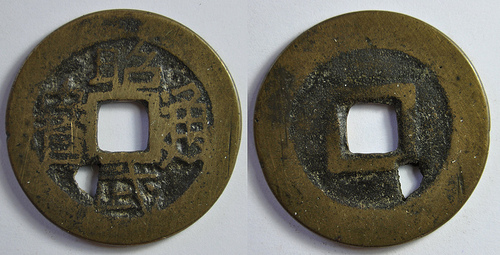
1cash_WuSangui_Zhaowu_H21109_1ar85

1cash_WuSangui_Zhaowu_H21109_1ar85

Verify out these metal fabrication china pictures:

1cash_WuSangui_Zhaowu_H21109_1ar85

Image by Enez35
Une monnaie en laiton d’une sapèque (1 money) de Wu Sangui, le général qui a aidé les Mandchous à s’établir en Chine. Il dirige une armée de 100.000 hommes et collecte des impôts, établit des monopoles sur le sel, le cuivre et l’or. Il gouverne le Yunnan et étend sa juridiction sur le Guizhou. En 1673, l’empereur Qing, Kangxi, décide d’abolir les feudataires et Wu Sangui se révolte en décembre 1673. Il proclame une nouvelle dynastie, les Zhou. En 1674, son armée contrôle le Guizhou, le Hunan et le Sichouan. Il contrôle le Sud et l’Ouest de la Chine en 1676. Il se proclame lui-même empereur et prend le nom d’ère de Zhaowu en mars 1678 mais il meurt de dysenterie en octobre de la même année.
A/ Zhao Wu tong bao (Monnaie courante de Zhao Wu)
R/ vide
Dimension : 24.26 mm Poids : three,95 g.
Remarque : Au moment de la fabrication, il n’y a pas eu assez de métal et ça a formé un trou. Cette variété se distingue de la H21.105 par la tête rectangulaire et les deux points à droite du caractère &quottong&quot (Caractère à droite sur l’avers).
Référence : H21.109
Indice de rareté : 14 (d’après D. Hartill) Monnaie très commune

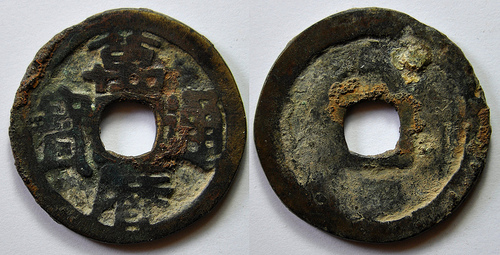
S404_Ming_ShenZong_WanLi_H20144_1ar85

Image by Enez35
Une monnaie en laiton d’une sapèque (1 cash) de l’empereur Shen Zong (1573-1620) ère Wan Li de la dynastie Ming (1368-1644). La fabrication a commencé en 1576. La métal est composé normalement de 93,8% de laiton et six,2% d’étain.
A/ Wan Li tong bao (Monnaie courante de Wan Li)
R/ Point à 2 heures
Dimension : 24.four mm Poids : 3,6 g.
Référence : H20.144
Remarque : le point est épais, il n’a pas été limé.
Indice de rareté : 11 (Commune d’après D.Hartill)

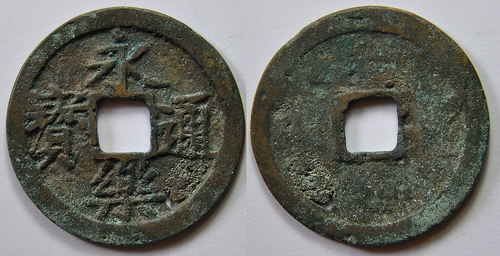
S401_Ming_Chengzu_YongLe_H20121_1ar85

Image by Enez35
Une monnaie en bronze d’une sapèque de l’empereur Cheng Zu (1403-1424), ère Yong Le de la dynastie Ming (1368-1644). En 1393, la circulation des sapèques a été interdite en faveur du papier monnaie. La fabrication est reprise en 1408 jusqu’en 1410. Une partie des monnaies n’est pas mise en circulation.
A/ Yong Le tong bao (Monnaie courante de Yong Le)
R/ two petits points, un au dessus du rebord supérieur à droite et un sur le rebord de droite.
Dimension : 24,936 mm Poids : 3,five g.
Référence : H20.121 pour l’avers, rien pour le revers.
Remarque : Il n’y a pas eu assez de métal à la fonte auto il en manque à droite du caractère du bas.
Indice de rareté : 14 (Très commune d’après D.Hartill)

Why hire contract precision engineering services providers

Why hire contract precision engineering services providers

Each and every industrial sector manufacturing hi tech merchandise demands precision engineering services which are in high demand. They are essential to create precision machined components that need to be fitted into a variety of goods. These days, these components are utilized in virtually every product that is created using latest technology such as automobiles, aerospace cars, industrial machinery, computer systems, digital item like watches, mobile telephone and so several other things.

Precision engineers use their knowledge to style and manufacture high top quality precision machining elements. These components are made with the help of precision machining processes in which material is separated from a high tolerance substance.

Most OEMs create huge demands for precision machined components. In addition, designing and making these little components is not achievable in their own units due to resource crunch. In that scenario, contract companies and service providers offer their expert services to OEMs. In reality, outsourcing the needs of precision-machined components is a smart choice for OEMs as it helps them save their sources and increase their profit margin.

In truth, outsourcing the precision engineering requirements have grow to be a trend among the OEMs for many causes. OEMs do not have sources like space, money, time and workforce to produce each little or massive component within their premises. Designing and producing precision-machined elements requires higher experience and knowledge that can be rendered by only precision engineers and the educated workforce. Hiring specialist and experienced engineers for a small job function comes to be quite expensive for any original manufacturer. Furthermore, it demands specialized and latest gear and machinery to execute all these specialized jobs. Once again, in getting and installing most recent machinery, maintaining them, operating them and other related fees add up to a massive quantity that adds to final price of the completed solution creating it infeasible in the marketplace. On the other hand, when you outsource any job connected to precision machined components to contract person engineering solutions providers, these men and women take care of all these hassles. On the identical note, you will amazed to know that they supply you these services at truly low rates that you can by no means accomplish if you attempt all these on their personal.

These precision engineering solutions providers employ specialist folks, latest equipments and up-to-date technology when offer services to their customers. Outsourcing aids OEMs in far more than one particular techniques. For instance, it assists decreasing the marketplace time for them as they get elements speedily and complete their production within deadlines. It provides them an edge more than their competitors and creates good reputation in the industry. It outcomes in improved income for these OEMs.

Precision engineering services providers also offer soon after sales assistance to their clients. In addition, some of them are effective sufficient to manage global supply chains for them. Even so, the most important aspect right here is to discover a reputed service provider to get higher good quality items and higher quality solutions.
 

Denis Ferranti Precision Machining has modern day cnc milling &amp Turning Machines prepared to go on your precision engineering projects, to find out much more about our capabilities, please read our devoted CNC Milling &amp Turning page.

CNC Precision Engineering http://cncmachiningservicesuk.com/cnc-machining/cnc-precision-engineering/ CNC Machining Solutions UK Most companies in the UK-spec…

Much more Precision Engineering Services Articles

Toyota Camry Hybrid SiC Prototype

Toyota Camry Hybrid SiC Prototype

DSC_0173

Image by meccanica

Toyota Camry Hybrid SiC Prototype
There is no indication as to how significantly the new SiC semiconductors would influence pricing for future hybrids and electric autos, but like any new tech, there could be a slightly larger price tag that aspects in engineering and study and improvement fees.
Read much more on Best Speed

Feds Spending 4351 For Youngsters to Speak to Robots About Bullying
Cindy Bethel, Ph. D., an assistant professor in Pc Science and Engineering at Mississippi State University, is major the study, and also helmed the previous analysis, also funded by the NSF, that studied regardless of whether four and five-year-old children …
Read much more on Washington Free Beacon

Frost &amp Sullivan Acclaims TMEIC&#39s Achievement Born of its Ability to Deliver PV

Frost &amp Sullivan Acclaims TMEIC&#39s Good results Born of its Capacity to Provide PV
TMEIC employs cutting-edge manage technologies in its higher-precision maximum power point tracking (MPPT), which assists operation optimisation at all times, while drastically increasing energy harvest. Its MPPT efficiency of 99.01 percent is the new …
Read much more on Jakarta Post

China achieves breakthrough in pulse weapons technologies
According to the report, the Xian Institute of Optics and Precision Mechanics of the Chinese Academy of Sciences has effectively created a third-generation X-ray pulsar simulation supply. The technologies, which can develop an X-ray pulsar supply in X …
Study more on WantChinaTimes

MTS Systems [MTSC] CEO Jeffrey Graves on Q1 2015 Earnings Final results
Second, as we&#39ve discussed in prior earnings calls, the test gross margin rate continues to be affected by damaging product mix resulting from the high level of custom content in our backlog flowing via our engineering and manufacturing processes …
Read more on In search of Alpha (registration)

China link pays off for UK Midlands engineering group
… shops for big car components — with the aid of 40 engineers from Coventry. Shandong Yongtai in northern China, a privately owned industrial group, is utilizing the capabilities and knowhow of Covpress, a one hundred-year-old West Midlands precision metal pressing …
Read more on Economic Times

Why hire contract precision engineering solutions providers

Every single industrial sector manufacturing hi tech merchandise requirements precision engineering services which are in high demand. They are necessary to make precision machined components that want to be fitted into different goods. These days, these elements are utilized in nearly each solution that is created utilizing most recent technologies such as automobiles, aerospace vehicles, industrial machinery, computers, digital item like watches, mobile phone and so many other issues.

Precision engineers use their knowledge to design and manufacture high high quality precision machining elements. These elements are created with the aid of precision machining processes in which material is separated from a higher tolerance substance.

Most OEMs produce huge demands for precision machined components. Additionally, designing and producing these modest components is not achievable in their personal units due to resource crunch. In that circumstance, contract companies and service providers give their professional solutions to OEMs. In fact, outsourcing the requirements of precision-machined components is a wise alternative for OEMs as it assists them save their sources and enhance their profit margin.

In fact, outsourcing the precision engineering demands have grow to be a trend amongst the OEMs for many factors. OEMs do not have sources like space, funds, time and workforce to produce every modest or massive element within their premises. Designing and producing precision-machined components requires high experience and experience that can be rendered by only precision engineers and the educated workforce. Hiring specialist and knowledgeable engineers for a small job perform comes to be extremely costly for any original manufacturer. Furthermore, it needs specialized and newest gear and machinery to execute all these specialized jobs. Once more, in purchasing and installing latest machinery, keeping them, operating them and other related fees add up to a large amount that adds to final cost of the finished item making it infeasible in the industry. On the other hand, when you outsource any job related to precision machined elements to contract person engineering services providers, those men and women take care of all these hassles. On the very same note, you will amazed to know that they give you these solutions at genuinely low prices that you can never ever achieve if you try all these on their own.

These precision engineering solutions providers employ expert individuals, latest equipments and up-to-date technologies when offer services to their clientele. Outsourcing aids OEMs in a lot more than one particular approaches. For instance, it assists reducing the market time for them as they get components speedily and complete their production within deadlines. It provides them an edge over their competitors and creates great reputation in the market. It final results in enhanced profits for these OEMs.

Precision engineering services providers also provide after sales support to their customers. In addition, some of them are efficient enough to handle global provide chains for them. However, the most critical aspect right here is to discover a reputed service provider to get higher high quality merchandise and higher quality solutions.
 

Denis Ferranti Precision Machining has modern cnc milling &amp Turning Machines ready to go on your precision engineering projects, to uncover out much more about our capabilities, please study our devoted CNC Milling &amp Turning page.

Much more Precision Engineering Services Articles

TORAD Opens New $2 Million Commercial Development Center

TORAD Opens New $2 Million Commercial Development Center


Cumming, Georgia, USA (PRWEB) January 20, 2015

The state-of-the-art facility in Cumming, Georgia measuring 13,000 sq. feet, homes skilled style and manufacturing engineers as effectively as a full complement of manufacturing equipment. The TCDC facility supports TORAD’s core analysis and the need to make prototype hardware for TORAD’s commercialization partners. In addition, TORAD has expanded testing capacity for refrigeration development as effectively as enhanced metrology capabilities to help in the fast development of production prepared styles. TORAD now has the capability of creating machines for a wide range of applications with capacities ranging from fractional horsepower to 200 horsepower.

&#13

“The $ 2 million investment in the TCDC demonstrates TORAD’s commitment to the continued research and industrial improvement of the spool machine across a diverse set of applications and industries,” stated Greg Kemp TORAD’s chief executive officer. “The new facility will accelerate the understanding curve for all applications of the spool machine. The expanding engineering and manufacturing resource extends TORAD’s information base to help OEM partners develop and provide revolutionary goods far more swiftly with significantly less technical danger.”

&#13

TORAD’s new Industrial Development Center serves as a launch platform for OEMs interested in shaping the next generation in advanced compression technologies. TORAD plans include growing investments in technologies and additional employees such as engineers, technical staff, as well as sales and marketing to support worldwide growth.

&#13

TORAD’s Spool Compressor technologies functions a straightforward rotary style with four major elements: rotor, primary housing, vane, and bearing housing. Unlike scroll and screw compressors employing complicated geometries, the elements can be manufactured utilizing reduce price capital gear and simply scaled for bigger sizes. The style is uniquely durable with important positive aspects in capacity density and variable speed operation.

&#13

About TORAD Engineering, LLC&#13

Primarily based in Cumming, Georgia, TORAD Engineering conducts investigation, development and licensing of its patented spool machine technology. TORAD’s spool machine technology holds the guarantee of breakthrough cost and efficiency positive aspects for energy conversion applications that are ubiquitous to modern society. Applications such as air-conditioning, refrigeration, waste heat to power, heat engines and other individuals for mobile, stationary, commercial and industrial use. TORAD Engineering, LLC is a privately held business. For more details, pay a visit to http://www.toradengineering.com.

&#13
&#13
&#13
&#13
&#13