CNC port cylinder heads, blueprint and CNC machine engine blocks and make all types of parts with one machine the CENTROID A560. See the machine in action po…
Video Rating: / 5
Rapid Prototyping
Rapid Prototyping China news and precision CNC milling technology.
Cool Precision Engineering Components images
Some cool precision engineering elements photos:
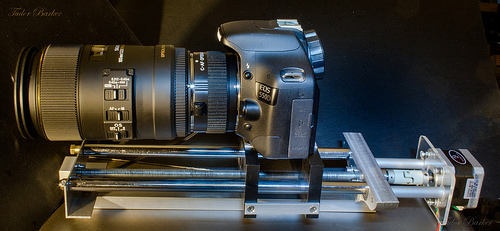
Digital Macro Stacking Concentrate Rail
Image by tudedude
Experimental Focus Rail Driven by a Nema 17 Stepper Motor and controlled by a an Arduino Nano.

Steven F. Udvar-Hazy Center: View of south hangar, like B-29 Superfortress “Enola Gay”, a glimpse of the Air France Concorde, and many others
Some cool precision turning and machining pictures:
Steven F. Udvar-Hazy Center: View of south hangar, like B-29 Superfortress “Enola Gay”, a glimpse of the Air France Concorde, and several others
Image by Chris Devers
Quoting Smithsonian National Air and Space Museum | Boeing B-29 Superfortress "Enola Gay":
Boeing’s B-29 Superfortress was the most sophisticated propeller-driven bomber of Planet War II and the very first bomber to residence its crew in pressurized compartments. Although made to fight in the European theater, the B-29 located its niche on the other side of the globe. In the Pacific, B-29s delivered a range of aerial weapons: standard bombs, incendiary bombs, mines, and two nuclear weapons.
On August 6, 1945, this Martin-constructed B-29-45-MO dropped the 1st atomic weapon utilised in combat on Hiroshima, Japan. 3 days later, Bockscar (on display at the U.S. Air Force Museum close to Dayton, Ohio) dropped a second atomic bomb on Nagasaki, Japan. Enola Gay flew as the advance weather reconnaissance aircraft that day. A third B-29, The Great Artiste, flew as an observation aircraft on each missions.
Transferred from the United States Air Force.
Manufacturer:
Boeing Aircraft Co.
Martin Co., Omaha, Nebr.
Date:
1945
Country of Origin:
United States of America
Dimensions:
Overall: 900 x 3020cm, 32580kg, 4300cm (29ft six 5/16in. x 99ft 1in., 71825.9lb., 141ft 15/16in.)
Materials:
Polished overall aluminum finish
Physical Description:
Four-engine heavy bomber with semi-monoqoque fuselage and higher-aspect ratio wings. Polished aluminum finish overall, normal late-Planet War II Army Air Forces insignia on wings and aft fuselage and serial number on vertical fin 509th Composite Group markings painted in black "Enola Gay" in black, block letters on lower left nose.
Steven F. Udvar-Hazy Center: Hawker Hurricane Mk. IIC, with Northrop P-61C Black Widow, B-29 Superfortress “Enola Gay”, and SR-71 Blackbird in the background
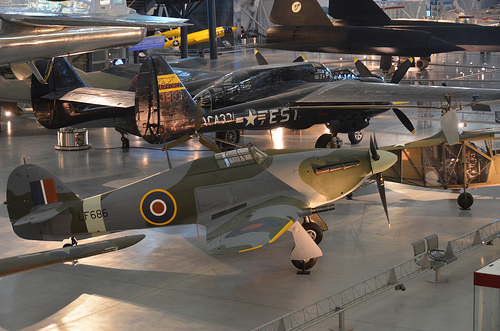
Image by Chris Devers
See a lot more images of this, and the Wikipedia report.
Specifics, quoting from Smithsonian National Air and Space Museum: Steven F. Udvar-Hazy | Hawker Hurricane Mk. IIC:
Hawker Chief Designer Sydney Camm’s Hurricane ranks with the most important aircraft designs in military aviation history. Made in the late 1930s, when monoplanes were deemed unstable and too radical to be productive, the Hurricane was the first British monoplane fighter and the initial British fighter to exceed 483 kilometers (300 miles) per hour in level flight. Hurricane pilots fought the Luftwaffe and helped win the Battle of Britain in the summer season of 1940.
This Mark IIC was constructed at the Langley factory, close to what is now Heathrow Airport, early in 1944. It served as a education aircraft in the course of the World War II in the Royal Air Force’s 41 OTU.
Donated by the Royal Air Force Museum
Manufacturer:
Hawker Aircraft Ltd.
Date:
1944
Nation of Origin:
United Kingdom
Dimensions:
Wingspan: 12.2 m (40 ft)
Length: 9.8 m (32 ft 3 in)
Height: 4 m (13 ft)
Weight, empty: two,624 kg (five,785 lb)
Weight, gross: 3,951 kg (eight,710 lb)
Prime speed:538 km/h (334 mph)
Engine:Rolls-Royce Merlin XX, liquid-cooled in-line V, 1,300 hp
Armament:4 20 mm Hispano cannons
Ordnance:two 250-lb or two 500-lb bombs or eight three-in rockets
Supplies:
Fuselage: Steel tube with aircraft spruce forms and fabric, aluminum cowling
Wings: Stressed Skin Aluminum
Horizontal Stablizer: Pressure Skin aluminum
Rudder: fabric covered aluminum
Handle Surfaces: fabric covered aluminum
Physical Description:
Hawker Hurricane Mk. IIC single seat, low wing monoplane ground attack fighter enclosed cockpit steel tube fuselage with aircraft spruce forms and fabric, aluminum cowling, stressed skin aluminum wings and horizontal stablizer, fabric covered aluminum rudder and handle surfaces grey green camoflage prime surface paint scheme with dove grey underside red and blue national roundel on upper wing surface and red, white, and blue roundel decrease wing surface red, white, blue, and yellow roundel fuselage sides red, white and blue tail flash Rolls-Royce Merlin XX, liquid cooled V-12, 1,280 horsepower engine Armament, 4: 20mm Hispano cannons.
• • • • •
See far more images of this, and the Wikipedia article.
Particulars, quoting from Smithsonian National Air and Space Museum: Steven F. Udvar-Hazy | Northrop P-61C Black Widow:
The P-61 Black Widow was the first U.S. aircraft developed to locate and destroy enemy aircraft at evening and in bad weather, a feat produced attainable by the use of on-board radar. The prototype first flew in 1942. P-61 combat operations started just following D-Day, June 6, 1944, when Black Widows flew deep into German airspace, bombing and strafing trains and road site visitors. Operations in the Pacific began at about the identical time. By the end of World War II, Black Widows had seen combat in every single theater and had destroyed 127 enemy aircraft and 18 German V-1 buzz bombs.
The Museum’s Black Widow, a P-61C-1-NO, was delivered to the Army Air Forces in July 1945. It participated in cold-weather tests, higher-altitude drop tests, and in the National Thunderstorm Project, for which the top turret was removed to make area for thunderstorm monitoring gear.
Transferred from the United States Air Force.
Manufacturer:
Northrop Aircraft Inc.
Date:
1943
Country of Origin:
United States of America
Dimensions:
All round: 450 x 1500cm, 10637kg, 2000cm (14ft 9 3/16in. x 49ft 2 9/16in., 23450.3lb., 65ft 7 3/8in.)
• • • • •
Quoting Smithsonian National Air and Space Museum | Boeing B-29 Superfortress "Enola Gay":
Boeing’s B-29 Superfortress was the most sophisticated propeller-driven bomber of Globe War II and the 1st bomber to house its crew in pressurized compartments. Although made to fight in the European theater, the B-29 discovered its niche on the other side of the globe. In the Pacific, B-29s delivered a assortment of aerial weapons: traditional bombs, incendiary bombs, mines, and two nuclear weapons.
On August six, 1945, this Martin-built B-29-45-MO dropped the first atomic weapon utilised in combat on Hiroshima, Japan. Three days later, Bockscar (on show at the U.S. Air Force Museum close to Dayton, Ohio) dropped a second atomic bomb on Nagasaki, Japan. Enola Gay flew as the advance weather reconnaissance aircraft that day. A third B-29, The Great Artiste, flew as an observation aircraft on both missions.
Transferred from the United States Air Force.
Manufacturer:
Boeing Aircraft Co.
Martin Co., Omaha, Nebr.
Date:
1945
Country of Origin:
United States of America
Dimensions:
All round: 900 x 3020cm, 32580kg, 4300cm (29ft 6 5/16in. x 99ft 1in., 71825.9lb., 141ft 15/16in.)
Components:
Polished general aluminum finish
Physical Description:
4-engine heavy bomber with semi-monoqoque fuselage and higher-aspect ratio wings. Polished aluminum finish all round, standard late-Globe War II Army Air Forces insignia on wings and aft fuselage and serial number on vertical fin 509th Composite Group markings painted in black "Enola Gay" in black, block letters on decrease left nose.
• • • • •
See much more photographs of this, and the Wikipedia article.
Details, quoting from Smithsonian National Air and Space Museum | Lockheed SR-71 Blackbird:
No reconnaissance aircraft in history has operated globally in a lot more hostile airspace or with such total impunity than the SR-71, the world’s quickest jet-propelled aircraft. The Blackbird’s overall performance and operational achievements placed it at the pinnacle of aviation technologies developments during the Cold War.
This Blackbird accrued about 2,800 hours of flight time for the duration of 24 years of active service with the U.S. Air Force. On its final flight, March 6, 1990, Lt. Col. Ed Yielding and Lt. Col. Joseph Vida set a speed record by flying from Los Angeles to Washington, D.C., in 1 hour, four minutes, and 20 seconds, averaging three,418 kilometers (two,124 miles) per hour. At the flight’s conclusion, they landed at Washington-Dulles International Airport and turned the airplane more than to the Smithsonian.
Transferred from the United States Air Force.
Manufacturer:
Lockheed Aircraft Corporation
Designer:
Clarence L. "Kelly" Johnson
Date:
1964
Nation of Origin:
United States of America
Dimensions:
All round: 18ft 5 15/16in. x 55ft 7in. x 107ft 5in., 169998.5lb. (five.638m x 16.942m x 32.741m, 77110.8kg)
Other: 18ft five 15/16in. x 107ft 5in. x 55ft 7in. (5.638m x 32.741m x 16.942m)
Materials:
Titanium
Physical Description:
Twin-engine, two-seat, supersonic strategic reconnaissance aircraft airframe constructed largley of titanium and its alloys vertical tail fins are constructed of a composite (laminated plastic-sort material) to decrease radar cross-section Pratt and Whitney J58 (JT11D-20B) turbojet engines feature large inlet shock cones.
Steel and Brass
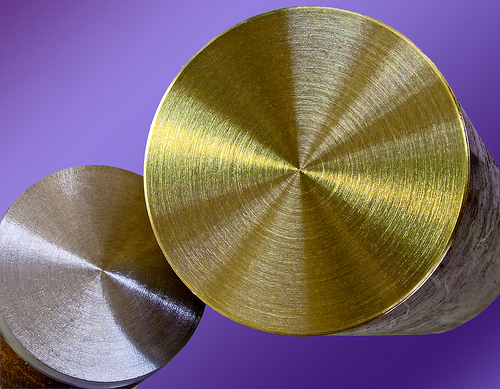
Image by tudedude
View On Black
Additive Manufacturing – Precision In A Prototype
Back in the day, generating a model or prototype needed you to begin with a chunk of some raw material such as clay, wood, or metal, and to gradually chip away at it till it formed the prototype of your design and style. This is usually known as subtractive manufacturing, since it requires subtracting from the original material to develop your prototype or solution. Additive manufacturing requires a distinct approach – the opposite method, in truth. Rather of subtracting layers of components, it progressively adds layers exactly where they are required in order to form the prototype. This process is specifically valuable when it comes to metal prototyping.
Additive manufacturing is specifically beneficial in the location of metal prototyping for a selection of factors. One particular of the most distinctive properties of metal is that it is difficult. This implies that a metal prototype will be sturdy and can even be used in production. But since metal is so difficult, it can also be tough to reduce into with accuracy to form a model by subtractive manufacturing. In reality, it can be extremely challenging to produce an accurate model or prototype by this strategy. It comes with a lot of challenges, and that is why it is hardly ever utilised any longer.
By sintering thin layers of powdered metal to 1 an additional, you can gradually add to your prototype until you have a completed model. Additive manufacturing tends to make it significantly easier to form metal prototypes with precision. Rather of chipping away at hardened metal, attempting not to do any more harm than essential, metal sintering makes it possible for you to bond with each other powdered metal one particular layer at a time. Every layer is only twenty microns thick, so you can attain unparalleled levels of detail in your metal prototyping by making use of this strategy. Making a metal prototype has never ever been easier or a lot more accurate.
It is critical for metal prototyping to be as precise as attainable. These metal prototypes are generally utilized as parts in machines, and if they are not built precisely to specifications, they can result in harm to important machinery. Additive manufacturing permits you to develop precise prototypes with out getting to manufacture them in bulk just before you are confident that the style is just proper for what you need. Getting capable to build a precise metal prototype that you can actually use signifies that you will be in a position to reach a design and style conclusion considerably more quickly than you would have been in a position to if you had utilised less accurate prototypes.
Go to http://www.directedMFG.com for more details regarding why this business is a single of the best additive manufacturing firms in the planet. As 1 of the premier metal prototyping firms, DirectedMFG continues to offer its customers with goods and solutions that meet and exceed expectations. Make contact with DirectedMFG nowadays by calling 714-546-1113.
WorldSkills London 2011 – CNC Milling
Shaun Adams, CNC Milling Professional at WorldSkills London.
Video Rating: five / 5
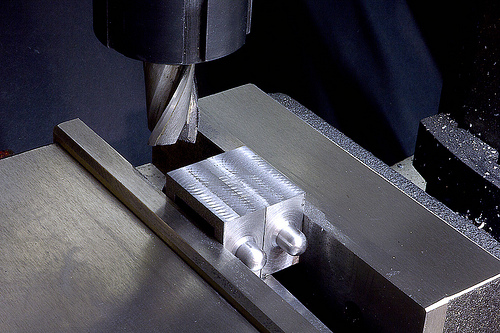
Good Milling Engineering photographs
Check out these milling engineering images:
D10 Stuart Milling the valve Chests
Image by tudedude
Milling machine
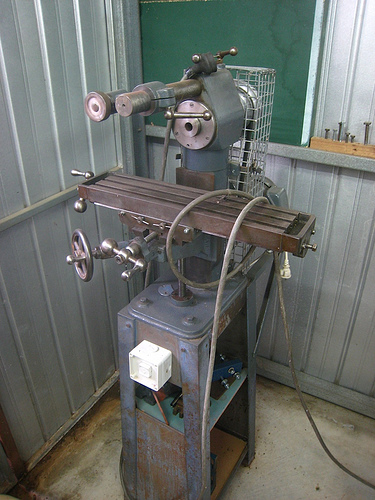
Image by brotherlywalks
Mill
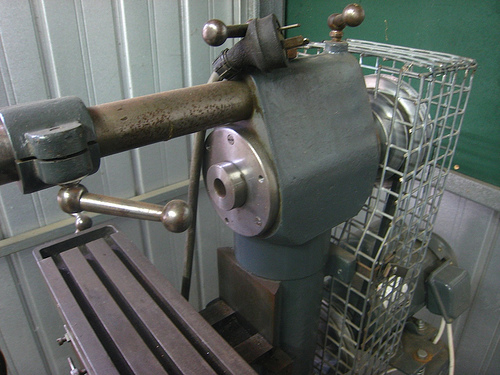
Image by brotherlywalks
New hobby CNC mill.
New benchtop CNC installation with Harbor Freight 44991, Gecko G540, Autocad Inventor, Edgecam and Mach3 in action. Running: http://youtu.be/fEquQ3iKMEY http…
Video Rating: four / 5
9:30 AM The Galaxy Note Edge is a flagship telephone with an entirely new type of …
9:30 AM The Galaxy Note Edge is a flagship telephone with an totally new kind of …
The asymmetry of the telephone feels a tiny odd, like I chipped component of the correct side off by accident, but it doesn't really hurt the aesthetic appeal of the phone. … It's an odd concept, turning this vertical rail into primarily an constantly-on secondary …
Read a lot more on The Verge
Mantua Markets Simple To Assemble Bed Frames To The Hospitality Sector
Mantua, a major manufacturer of innovative bed frame options, stated that it is seeing a significant rise in its hospitality sales division due to boutique and chain hotels turning to their steel bed frame products. The company says it's bed base …
Study a lot more on Furniture Planet Magazine (press release)
LINDAR expands, creates first-of-its-type solution line
Located in the Baxter Industrial Park, LINDAR makes use of thermoforming technologies to manufacture plastic components for health-related, building, agriculture and recreation industries. The organization is also a leader making plastic meals containers. Brainerd …. right here …
Study a lot more on Brainerd Daily Dispatch

Newest Lathe Milling News
Mabry Mill
Image by Frank Kehren
Mabry Mill, Meadows of Dan, Blue Ridge Parkway, Milepost 176, Virginia
Mabry Mill was built by Edwin Boston Mabry (E.B. Mabry). E.B. Mabry returned to Floyd County in 1903 and started the building of the mill. It was initial a blacksmith and wheelwright shop, then became a sawmill. By 1905 it was in operation as a gristmill. By 1910 the front portion of the mill was completed and integrated a lathe for turning out wheel hubs, a tongue and groove lathe, a planer and a jig-saw. In between 1905 and 1914 E.B. Mabry purchased adjacent tracts of land, largely for the purpose of acquiring a lot more water energy.
en.wikipedia.org/wiki/Mabry_Mill
The most (and least) profitable professions in Massachusetts
Lathe and Turning Machine Tool Setters, Operators, and Tenders, Metal and Plastic, 1070, .33, $ 47,210, $ 36,890. Very first-Line Supervisors of … Milling and Planing Machine Setters, Operators, and Tenders, Metal and Plastic, 970, .three, $ 48,730, $ 37,400.
Read far more on Boston Globe
Rimeco Items, Inc. of Willoughby, Ohio is pleased to be included in the new …
Rimeco Merchandise, Inc. of Willoughby, Ohio is pleased to be integrated in the new …
Rimeco Goods, Inc. is a manufacturer of CNC Machined components for aircraft and aircraft engines. We have CNC Turning and Milling … Using our proprietary process along with off-line programming, we have been in a position to minimize our lead-occasions on new …
Study much more on Virtual-Technique Magazine (press release)
Impro Industries adopts SinterCast technology for industrial energy export …
Impro Industries produces a wide-range of sand cast and investment cast elements and machined parts, offering options to the precision component demands of a wide assortment of clients in the domestic and export markets. For much more information: …
Study much more on NASDAQ