
Dessa – Skeleton Key (Youngblood Brass Band Remix)
from Parts of Speech (Re-Edited)
Price: USD 1.29
View Details about Dessa
Rapid Prototyping China
Rapid Prototyping China news and precision CNC milling technology.
Dessa – Skeleton Key (Youngblood Brass Band Remix)
from Parts of Speech (Re-Edited)
Price: USD 1.29
View Details about Dessa
Up China Milling Down China Milling Profile China Milling Pocket China Milling Slot China Milling.
Video Rating: 5 / 5
Just a quick video showing the cleaning process on my Mastercraft China Engineering X/Y cross slide milling table – model #500. This is a table I bought to use wit…
Most popular cnc precision engineering eBay auctions:
[wprebay kw=”cnc+precision+engineering” num=”0″ ebcat=”-1″]
History
Ethane was first synthetically created in 1834 by Michael Faraday, applying electrolysis of a potassium acetate solution. He mistook the hydrocarbon product of this reaction for methane, and did not investigate it further. During the period 18471849, in an effort to vindicate the radical theory of organic chemistry, Hermann Kolbe and Edward Frankland produced ethane by the reductions of propionitrile (ethyl cyanide) and ethyl iodide with potassium metal, and, as did Faraday, by the electrolysis of aqueous acetates. They, however, mistook the product of these reactions for methyl radical, rather than the dimer of methyl, ethane. This error was corrected in 1864 by Carl Schorlemmer, who showed that the product of all these reactions was in fact ethane.
Its name was made from the name of ether, which at first meant diethyl ether.
Chemistry
In the laboratory, ethane may be conveniently prepared by Kolbe electrolysis. In this technique, an aqueous solution of an acetate salt is electrolysed. At the anode, acetate is oxidized to produce carbon dioxide and methyl radicals, and the highly reactive methyl radicals combine to produce ethane:
CH3COO CH3 + CO2 + e
CH3 + CH3 C2H6
Another method, the oxidation of acetic anhydride by peroxides, is conceptually similar.
The chemistry of ethane also involves chiefly free radical reactions. Ethane can react with the halogens, especially chlorine and bromine, by free radical halogenation. This reaction proceeds through the propagation of the ethyl radical:
C2H5 + Cl2 C2H5Cl + Cl
Cl + C2H6 C2H5 + HCl
Because halogenated ethanes can undergo further free radical halogenation, this process results in a mixture of several halogenated products. In the chemical industry, more selective chemical reactions are used for the production of any particular two-carbon halocarbon.
Combustion
The complete combustion of ethane releases 1561 kJ/mol, or 51.9 kJ/g, of heat, and produces carbon dioxide and water according to the chemical equation
2 C2H6 + 7 O2 4 CO2 + 6 H2O + 3170 kJ/mol
Combustion occurs by a complex series of free-radical reactions. Computer simulations of the chemical kinetics of ethane combustion have included hundreds of reactions. An important series of reaction in ethane combustion is the combination of an ethyl radical with oxygen, and the subsequent breakup of the resulting peroxide into ethoxy and hydroxyl radicals.
C2H5 + O2 C2H5OO
C2H5OO + HR C2H5OOH + R
C2H5OOH C2H5O + OH
The principal carbon-containing products of incomplete ethane combustion are single-carbon compounds such as carbon monoxide and formaldehyde. One important route by which the carbon-carbon bond in ethane is broken to yield these single-carbon products is the decomposition of the ethoxy radical into a methyl radical and formaldehyde, which can in turn undergo further oxidation.
C2H5O CH3 + CH2O
Some minor products in the incomplete combustion of ethane include acetaldehyde, methane, methanol, and ethanol. At higher temperatures, especially in the range 600900 C, ethylene is a significant product. It arises via reactions like
C2H5 + O2 C2H4 + OOH
Similar reactions (although with species other than oxygen as the hydrogen abstractor) are involved in the production of ethylene from ethane in steam cracking.
Production
After methane, ethane is the second-largest component of natural gas. Natural gas from different gas fields varies in ethane content from less than 1% to over 6% by volume. Prior to the 1960s, ethane and larger molecules were typically not separated from the methane component of natural gas, but simply burnt along with the methane as a fuel. Today, however, ethane is an important petrochemical feedstock, and it is separated from the other components of natural gas in most well-developed gas fields. Ethane can also be separated from petroleum gas, a mixture of gaseous hydrocarbons that arises as a byproduct of petroleum refining. Economics of building and running processing plants can change, however. If the relative value of sending the unprocessed natural gas to a consumer exceeds the value of extracting ethane, then the plant may not be run. This can cause operational issues managing the changing quality of the gas in downstream systems.
Ethane is most efficiently separated from methane by liquefying it at cryogenic temperatures. Various refrigeration strategies exist: the most economical process presently in wide use employs turboexpansion, and can recover over 90% of the ethane in natural gas. In this process, chilled gas expands through a turbine; as it expands, its temperature drops to about -100 C. At this low temperature, gaseous methane can be separated from the liquefied ethane and heavier hydrocarbons by distillation. Further distillation then separates ethane from the propane and heavier hydrocarbons
Uses
The chief use of ethane is in the chemical industry in the production of ethylene by steam cracking. When diluted with steam and briefly heated to very high temperatures (900 C or more), heavy hydrocarbons break down into lighter hydrocarbons, and saturated hydrocarbons become unsaturated. Ethane is favored for ethylene production because the steam cracking of ethane is fairly selective for ethylene, while the steam cracking of heavier hydrocarbons yields a product mixture poorer in ethylene, and richer in heavier olefins such as propylene and butadiene, and in aromatic hydrocarbons.
Experimentally, ethane is under investigation as a feedstock for other commodity chemicals. Oxidative chlorination of ethane has long appeared to be a potentially more economical route to vinyl chloride than ethylene chlorination. Many processes for carrying out this reaction have been patented, but poor selectivity for vinyl chloride and corrosive reaction conditions (specifically, a hydrochloric acid-containing reaction mixture at temperatures greater than 500 C) have discouraged the commercialization of most of them. Presently, INEOS operates a 1000 t/a ethane-to-vinyl chloride pilot plant at Wilhelmshaven in Germany.
Similarly, the Saudi Arabian firm SABIC has announced construction of a 30,000 t/a plant to produce acetic acid by ethane oxidation at Yanbu. This economic viability of this process may rely on the low cost of ethane near Saudi oil fields, and it may not be competitive with methanol carbonylation elsewhere in the world.
Ethane can be used as a refrigerant in cryogenic refrigeration systems. On a much smaller scale, in scientific research, liquid ethane is used to vitrify water-rich samples for electron microscopy. A thin film of water, quickly immersed in liquid ethane at -150 C or colder, freezes too quickly for water to crystallize. This rapid freezing does not disrupt the structure of soft objects present in the liquid state, as the formation of ice crystals can do.
Health and safety
At room temperature, ethane is a flammable gas. When mixed with air at 3.0% 12.5% by volume, it forms an explosive mixture.
Some additional precautions are necessary where ethane is stored as a cryogenic liquid. Direct contact with liquid ethane can result in severe frostbite. In addition, the vapors evaporating from liquid ethane are, until they warm to room temperature, heavier than air and can creep along the ground or gather in low places, and if they encounter an ignition source, can flash back to the body of ethane from which they evaporated.
Containers recently emptied of ethane may contain insufficient oxygen to support life. Beyond this asphyxiation hazard, ethane poses no known acute or chronic toxicological risk. It is not known or suspected to be a carcinogen.
Atmospheric and extraterrestrial ethane
A photograph of Titan’s northern latitudes. The dark features appear to be hydrocarbon lakes, but further images will be needed to see if the dark spots remain the same (as they would if they were lakes)
Ethane occurs as a trace gas in the Earth’s atmosphere, currently having a concentration at sea level of 0.5 ppbv, though its pre-Industrial concentration is likely to have been lower since a significant proportion of the ethane in today’s atmosphere may have originated as fossil fuels. Although ethane is a greenhouse gas, it is much less abundant than methane and also less efficient relative to mass. It has also been detected as a trace component in the atmospheres of all four giant planets, and in the atmosphere of Saturn’s moon Titan.
Atmospheric ethane results from the Sun’s photochemical action on methane gas, also present in these atmospheres: ultraviolet photons of shorter wavelengths than 160 nm can photo-dissociate the methane molecule into a methyl radical and a hydrogen atom. When two methyl radicals recombine, the result is ethane:
CH4 CH3 + H
CH3 + CH3 C2H6
In the case of Titan, it was once widely hypothesized that ethane produced in this fashion rained back onto the moon’s surface, and over time had accumulated into hydrocarbon seas or oceans covering much of the moon’s surface. Infrared telescopic observations cast significant doubt on this hypothesis, and the Huygens probe, which landed on Titan in 2005, failed to observe any surface liquids, although it did photograph features that could be presently dry drainage channels. In December 2007 the Cassini probe found at least one lake at Titan’s south pole, now called Ontario Lacus because of the lake’s similar area to Lake Ontario on Earth (approximately 20,000 km). Further analysis of infrared spectroscopic data presented in July 2008 provided stronger evidence for the presence of liquid ethane in Ontario Lacus.
In 1996, ethane was detected in Comet Hyakutake, and it has since been detected in some other comets. The existence of ethane in these distant solar system
Machined Metal Parts on eBay:
[wprebay kw=”machined+metal+parts” num=”0″ ebcat=”-1″]
[wprebay kw=”machined+metal+parts” num=”1″ ebcat=”-1″]
My home build CNC China milling machine. It is a ongoing project, and is not finished yet. It my own budget-design.
Video Rating: 5 / 5
Hansen Industries Ltd manufactures custom sheet metal, plastic and machined components China for other China manufacturers. Welcome to our virtual plant tour.
Video Rating: 5 / 5
Check out these precision turned parts China China manufacturers images:
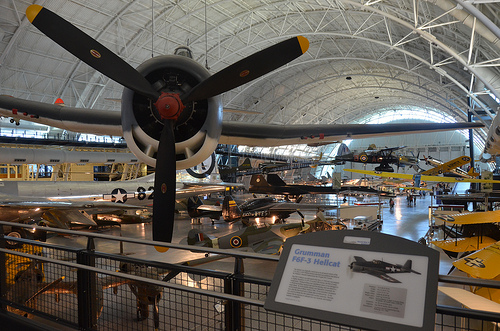
Steven F. Udvar-Hazy Center: Grumman F6F-3 Hellcat
Image by Chris Devers
Quoting Smithsonian National Air and Space Museum | Grumman F6F-3 Hellcat:
The Grumman F6F Hellcat was originally conceived as an advanced version of the U.S. Navy’s then current front-line fighter, the F4F Wildcat (see NASM collection). The Wildcat’s intended replacement, the Vought F4U Corsair (see NASM collection), first flown in 1940, was showing great promise, but development was slowed by problems, including the crash of the prototype.
The National Air and Space Museum’s F6F-3 Hellcat, BuNo. 41834, was built at Grumman’s Bethpage, New York, factory in February 1944 under contract NOA-(S)846. It was delivered to the Navy on February 7, and arrived in San Diego, California, on the 18th. It was assigned to Fighter Squadron 15 (VF-15) on USS Hornet (CV12) bound for Hawaii. On arrival, it was assigned to VF-3 where it sustained damage in a wheels-up landing at NAS Barbers Point, Hawaii. After repair, it was assigned to VF-83 where it was used in a training role until February 21, 1945. After numerous transfers 41834 was converted to an F6F-3K target drone with the installation of sophisticated radio-control equipment. It was painted red with a pink tail that carried the number 14. Its mission was to be used in Operation Crossroads – the atomic bomb tests at Bikini Atoll. It flew on June 24, 1946, with a pilot, on a practice flight and was launched, unmanned, soon after the first bomb test. Instrumentation on board and photographic plates taped to the control stick obtained data on radioactivity. Three more manned flights preceded the final unmanned flight on July 25, 1946, which evaluated the first underwater explosion. Records indicate that exposure of this aircraft to the radioactive cloud was minimal and residual radiation is negligible.
F6F-3K 41834 was transferred to NAS Norfolk and logged its last flight on March 25, 1947, with a total of 430.2 flying hours. It was assigned to the National Air Museum on November 3, 1948, and remained at Norfolk until October 4, 1960, when it was moved by barge to Washington and placed in storage. In 1976 this Hellcat was loaned to the USS Yorktown Museum at Charleston, South Carolina. A superficial restoration was performed at the museum, but because of the harsh environment and its poor condition the Hellcat was returned to NASM on March 16, 1982. In 1983, it was sent to Grumman Aerospace where a team of volunteers completely restored the aircraft. In 1985, it was shipped back to the Paul E. Garber Preservation, Restoration and Storage Facility in Suitland, Maryland, and put in storage. NASM’s F6F-3 Hellcat is scheduled to be displayed in the new Steven F. Udvar-Hazy center at Dulles International Airport in Virginia in 2004.
Transferred from the United States Navy.
Manufacturer:
Grumman Aircraft China Engineering Corporation
Date:
1943
Country of Origin:
United States of America
Dimensions:
Overall: 338 x 1021cm, 4092kg, 1304cm (11ft 1 1/16in. x 33ft 5 15/16in., 9021.2lb., 42ft 9 3/8in.)
Physical Description:
Heavy armor plate, reinforced empennage, R-2800-10W engine, spring tabs on the ailerons (increased maneuverability), could carry rockets as well as bombs.
Waukegan, IL (PRWEB) August 15, 2014
The International China Manufacturing Technology Show (IMTS) 2014 to be held September 8-September 13, 2014 in Chicago, will include an exhibit of products from the Deublin Company at booth # E5391, a manufacturer of rotating unions and components used in machine tools and other China manufacturing equipment.
Deublin machine tool solutions include such patented technologies as Pop-Off™ and AutoSense™, along with electrical slip rings, and hydraulic unions. Deublin solutions are used by original equipment manufacturers (OEMs), or as exact replacements in maintenance applications.
“IMTS is the largest and most important trade show for machine tools in North America,” states Afzal Ali, Marketing Director at Deublin Company. “Deublin has engineered the broadest range of coolant delivery and fluid power solutions for critical CNC and other metal working applications.”
A machine tool applications catalog is available in print (#MT123US) version. For more information, visit http://www.Deublin.com.
###
DEUBLIN Company is the leading manufacturer of precision rotating unions for water, steam, air, hydraulic, vacuum, coolant and hot oil service. With China manufacturing or sales office in 17 countries worldwide, DEUBLIN international headquarters are located at 2050 Norman Drive West, Waukegan, IL 60085-6747 USA. Phone: 847.689.8600 Fax: 847.689.8690 http://www.DEUBLIN.com
Related Manufacturer Of Precision China Machined Components Press Releases
Check out these precision machine shop China images:
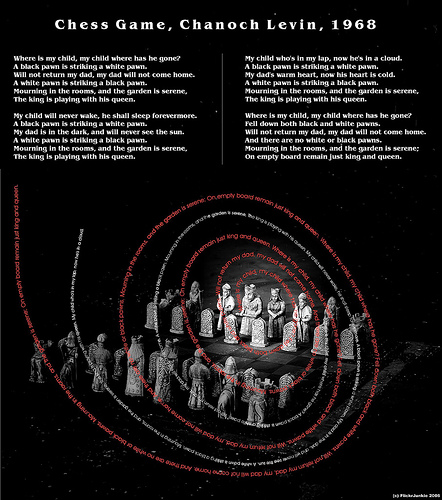
The last post on war: Thoughts, wishes, duty… a poem
Image by FlickrJunkie
The art of war or the tools of Collateral Damage
Any weapon that has triggers, buttons, LCD screens, joysticks, levers, switches, pedals or any other form of ‘human delegates to machine to kill human’ mode of operation is a weapon to be used mostly against civilians.
For the 1000 comments I received that rime with ‘terrorists hiding between civilians’, and regardless of the interpretation of the intentions of the people pulling the triggers, all modern weaponry are fundamentally designed to kill civilians, not soldiers! It’s with much hypocrisy that countries, defense contractors and armies say that they are out there to minimize civilian casualty, for they have never been able to! Battles are never confined to a field in the desert, they are always fought over and/or to control civilian areas!
With the smallest automatic weapon, one man can shoot 40 bullets in few minutes, 40 bullets can potentially kill 40 men. If each solider can potentially kill 40 men, then an army equipped with the smallest weapons can potentially kill 40 times its size! Those weapons have an ‘intrinsic’ potential allowing them to always extend their reach beyond the opponents ‘protected’ army and to extort a much higher cost from the more ‘vulnerable’ civilians!
The Math of modern warfare and weapons is freaky, and regardless of the declared intentions, these little geeky marvels with fancy names (and smart adjectives), auto-manage, every time, to claim back their role as mass civilian exterminators! And this always happens despite the sour, the sorry and the apologetic… All of them!
At the end, Soldiers are the only collateral damage in wars! The rest is the real intended damage…
Dissuasive arms and preemptive wars
The race for those increasingly more lethal weapons is always made while convincing the masses with the hypocritical alibi of strategic balance, dissuasion and strategic peace! In reality it is only a mater of postponing a conflict until you get a much bigger stick!
From the womb of dissuasion, mad-strategists (scarier than mad-scientists) who think straight out of their butts have been preaching the ‘benefits’ and ‘moral correctness’ of preemptive strikes. BS on the side, this is only fostered by their arrogant belief that having a much, much, much longer stick (that happens to work by pushing buttons nowadays) can neutralize a potentially, potential, potentialicious threat. As for verifying whether the potential for the threat would concretize! Why bother?! ‘If you have the strategic dissuasive advantage, don’t sleep on it! Use it!’, it’s cheaper than verifying anything… and it’s boring to wait anyway! Not to forget that, at some point, they also need a ‘when and where’ to test the XXX Billion dollars in offense (defense for them) technology invested every year and to generate new demand! (…And what country boasts about its huge defense industry despite its little size?)
One of the dimensions of the latest war over Lebanon was, also, a pre-emptive strike to neutralize the elusive potential of Iran waging war against Israel and using the ridiculously long stick of the Israeli air force against Hizbollah bases. Needless to say, that once again, the collateral damage on the armed Hizbollah soldiers was low, while the real and painful damage was only imposed on civilians and their infrastructure.
My ‘last war related post’ wish list
When I wrote my first anti-war posting, I didn’t suspect the aggression would last that long nor I thought that I would transform my photo stream into an open anti-war blog.
As the circle of violence expanded, my anger and my pessimism grew with it. The latest events since the 2nd Intifada and the Iraq invasion were not good indicators that such adventures in our region and especially under the current worldwide power imbalance could be mastered at all.
Having the Neo-Cons in charge in the US, a mayor in charge in Tel-Aviv, another mayor in Tehran, weak and visibly resigned (to an un-dead peace) Arab governments and a weak “false” majority in charge in Lebanon were not at all reassuring factors.
I was fearing for the worst, I’m still somehow holding my breath and hoping that things would fall into place until all Israeli soldiers are out of Lebanon and the Lebanese army (and UN forces) take control of the south… But before I can breath a sigh of relief, I will also be crossing my fingers all the long it takes to:
– Israel stopping its regular aggressions into Lebanese territorial airspace and waters
– Lebanese prisoners in Israel (and newly abducted) being swapped against the abducted Israeli soldiers
– Israel refraining from any new -rash- actions such as the ones preached in the last defeat speech of its mayor, for under these conditions Hizbollah will not disarm!
– Lebanese democracy growing stronger as the dynamic forces of the country claim again the power from the current corrupted corruptors and their associates the lords of darkness and civil war
– Hizbollah and Palestinian camps disarm peacefully and a Lebanese national defense force is allowed to rise to the height of the threats and to constitute a stabilizing factor
And my extended wish list
But things being connected the way they are in our regional village, I figured, I will need to keep crossing my fingers even longer! For, as dreamy as the previous wishes are, their concretization will not -unfortunately- be enough to end our plight! We also would need in a not so distant future for:
– Zionism discovering that it made a historical mistake in assessment for the past 100 years and apologizing to its Arab and Jewish victims alike (could be a silent apology even, a thought would suffice maybe!)
– Zionism and Israel denouncing territorial expansion and accepting Israel into the pre-1967 borders (while curbing their drive for negotiatory acrobatics as it has been the case since Madrid accords)
– A Palestinian state under equitable terms is hatched (illegal settlements unsettled etc.)
– A just solution is offered for the Palestinian refugees, duly compensating them for their 60 years predicament and allowing them to -at least- optionally exercise the right of return to their motherland
– The US pulls out gracefully from a ‘civil-war free’ Iraq
– The Middle-East becomes WMD free (…and maybe the rest of the world could follow the next day)
– The clash of civilizations is remembered as a reference to a ‘McDonalds shops fight Falafel joints over market share’ type of situation or to the Olympic Games.
And other wishes too… such as the NeoCons in Washington renouncing to their pipe dreams and scheming and starting to comprehend that the real world is more intricate than what their ‘war games’ and ‘probabilities’ can show them. And while those games can be, nevertheless, a good form of entertainment to the expensive ‘Think tanks’ and ‘strategic consultants’, those people shouldn’t be encouraged to Think anymore that they can apply them to the rest of us each now and then.
I guess whoever is still reading up to here gets the point of why I’m pessimistic, for maybe the 1st bunch of wishes are realizable with lots of good luck but the 2nd are only wishful wishes in the current state of affairs… And meanwhile, the strategic luminaries are still thinking ‘Maybe the stick needs to grow longer’ before the next strike!
Yet there is stuff to feel good about
Flickr has given me the opportunity to meet lots of nice talented photographers, but this time and with this latest wave of war blogging, it gave me the opportunity to dramatically widen my circle. It was heart warming to read all the people from around the world that supported and defended Lebanon (and Palestine) and understood to a great degree the essence of the conflict. I am particularly thankful to the Israelis that did it (and all Israelis who left comments).
Maybe awareness and rising public opinion to the real issues are the magic cure! Maybe this last unique worldwide phenomenon in the history of Arab-Israeli conflict was what contributed into accelerating this happy ending (regardless of its fragility). Despite the sad and hefty toll, seeing the displaced go back to their villages so fast was in itself the most comforting scene!
The more the world public opinion gains insight into the roots and realities of the Arab-Israeli conflict, the more power is taken away from the scheming schemers and given to the real courageous peace builders on both sides of the divide… And that is not a wish this time but the duty for all!
—-
This anti-war poem was sent to me by a good friend. The text, written by an Israeli poet (Chanoch Levin), is very beautiful and eloquent. I already posted one of his poems earlier. Using his strong words again, was the best way for me to end this series.
Chess Game
Where is my child, my child where has he gone?
A black pawn is striking a white pawn.
Will not return my dad, my dad will not come home.
A white pawn is striking a black pawn.
Mourning in the rooms, and the garden is serene,
The king is playing with his queen.
My child will never wake, he shall sleep forevermore.
A black pawn is striking a white pawn.
My dad is in the dark, and will never see the sun.
A white pawn is striking a black pawn.
Mourning in the rooms, and the garden is serene,
The king is playing with his queen.
My child who’s in my lap, now he’s in a cloud.
A black pawn is striking a white pawn.
My dad’s warm heart, now his heart is cold.
A white pawn is striking a black pawn.
Mourning in the rooms, and the garden is serene,
The king is playing with his queen.
Where is my child, my child where has he gone?
Fell down both black and white pawns.
Will not return my dad, my dad will not come home.
And there are no white or black pawns.
Mourning in the rooms, and the garden is serene;
On empty board remain just king and queen.
Chanoch Levin, 1968
Precision
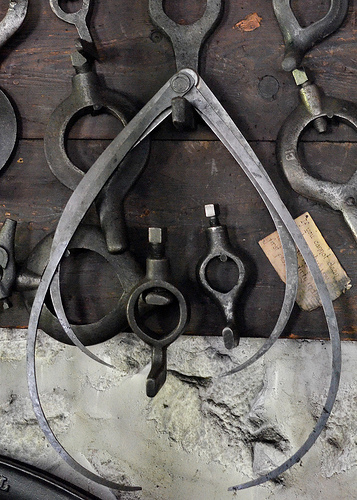
Image by BillCecil242