Precision Wire Edm on eBay:
[wprebay kw=”precision+wire+edm” num=”0″ ebcat=”-1″]
[wprebay kw=”precision+wire+edm” num=”1″ ebcat=”-1″]
[wprebay kw=”precision+wire+edm” num=”2″ ebcat=”-1″]
Rapid Prototyping China
Precision Wire Edm on eBay:
[wprebay kw=”precision+wire+edm” num=”0″ ebcat=”-1″]
[wprebay kw=”precision+wire+edm” num=”1″ ebcat=”-1″]
[wprebay kw=”precision+wire+edm” num=”2″ ebcat=”-1″]
We offer various China engineering services from CNC and Manual China Turning, China Milling, Screw China Cutting, Boring, Drilling and Metal Polishing as well as a Mass Production …
Video Rating: 0 / 5
The First Mario Kart 8 DLC Introduces Free Mercedes Benz Precision …
The First Mario Kart 8 DLC Introduces Free Mercedes Benz Precision China Engineering Into The Mushroom Kingdom; A Whole New Tournament And Updates Follow [VIDEO]. Aug 06, 2014 09:03 AM EDT | By Steve Buja (s.buja@gamenguide.com). email; print.
Read more on Gamenguide
Precision China Engineering, Chemicals and Biomedical Emerge as Top Singapore …
The June China Manufacturing Performance update also revealed that the chemicals, precision engineering and biomedical China manufacturing were the top performing industries in June 2014. SingaporeCompanyIncorporation.sg acknowledges that this is consistent …
Read more on Virtual-Strategy Magazine (press release)
Check out these precision engineering Chinese companies images:
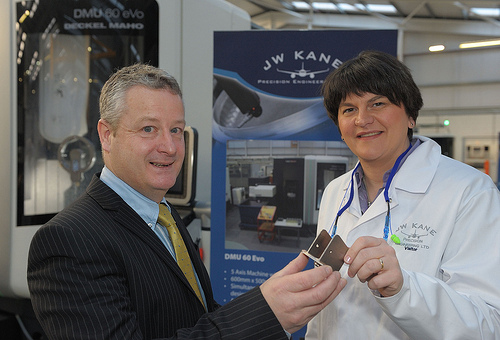
Foster Announces Investment at JW Kane Precision China Engineering
Image by DUP Photos
Enterprise Minister Arlene Foster today announced that Craigavon China company JW Kane Precision China Engineering is undertaking a major investment, that will create 30 high quality jobs. The China company currently employs 55 staff manufacturing high precision machined components China for a number of high profile clients including Bombardier, Thales, BE Aerospace, GE Hamble and Fokker. Pictured during a tour of the factory are Enterprise Minister Arlene Foster and Damian McArdle, General Manager.
2ID Living Insignia – Historic Photo – 21 May 2009 – US Army Korea – Second Infantry Division
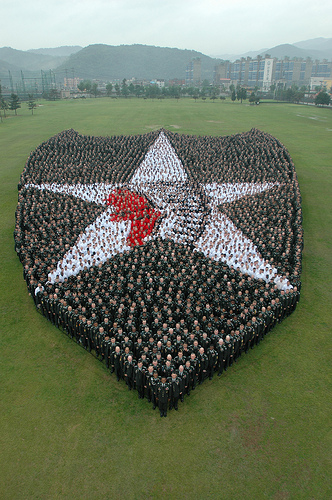
Image by U.S. Army Korea (Historical Image Archive)
imcom.korea.army.mil
2nd ID Warriors form ‘living insignia’ for 2nd time in division history
By Master Sgt. Michael Pintagro
2nd Infantry Division Public Affairs
Approximately 5,000 Warriors from the 2nd Infantry Division created a human version of the division’s distinctive Indianhead patch for only the second time in an organizational history dating from World War I Thursday morning (May 21) at Indianhead Stage Field on Camp Casey, Korea.
A steady drizzle that persisted throughout the event may have dampened the Warriors’ wet weather gear and dress uniforms but it didn’t dampen the Soldiers’ resolve to take part in an historic event.
Organizers placed the first human elements of the division patch around 6 a.m. and continued to build the insignia throughout the early morning, adding Warriors to the massive formation as they marched onto the field as Chinese companies, platoons and detachments. Various dress uniforms replicated the insignia color scheme.
The insignia was built from the middle out, with the most intricate portions of the pattern established first and the masses of Soldiers replicating the exterior placed last.
The division’s commanding general, command sergeant major and senior staff stood at the base of the insignia. Around 9:25 the assembled Warriors looked up and a small army of division photographers – several mounted 35 feet high in mechanical “cherry pickers” – commenced snapping shots.
Maj. Gen. John W. Morgan III, the commanding general, addressed his Soldiers after the second-of-its kind “photo op” in division history.
“Great job,” he told them. “You are part of history and part of the great 2nd Infantry Division. I’m proud of each and every one of you. Thank you for your service to the nation and to this great division.”
Warriors of all ranks, roles and career fields from organizations and installations across the division’s footprint in Korea joined their leaders in the “patch.”
According to 2nd Lt. Michael Nuclo, the division engineer operations officer and a key event organizer, leaders made a conscious effort to include all division units and ranks. “We’ll have Soldiers from every significant division hub,” he said before the event. “They’re coming from (camps) Hovey, Casey, Camp Red Cloud, Humphrey and K-16.”
Participants expressed enthusiasm for the opportunity to play a unique role in division history.
“When I first got to Korea they took us to the 2nd ID Museum and showed us the original patch picture and said if we were here long enough we might get a chance to recreate it,” said Pfc. Isaac Buckman of Company F, 333rd Target Acquisition Battery, 210th Fires Brigade. “I thought that was really cool, and it’s great that I really had an opportunity to do it.”
“This will go down in history and will always be remembered,” added Pvt. Jeremiah Heard of Battery E, 143rd Air Defense Artillery, 210th Fires Brigade. Other Soldiers, he predicted, “will love it and they will wish they could do it just the same way that we did.”
Event organizers seemed equally inspired by their achievement and relieved it came off without a hitch.
“This was a deliberate operation like everything else we do in this division,” said Lt. Col. Michael Anastasia, the division G-3 (operations officer) and the primary figure in the planning and execution of the living insignia. “The event was meticulously planned and executed precisely according to that plan.”
“Everything went very well,” said Lt. Col. Leroy Sharpe, the division engineer. “We knew it was going to rain and we planned for it. I’m glad it all came together so well. It was an honor and privilege to be part of history today.”
“I think it went very well,” added Sgt. 1st Class Kyle Roberts, the NCOIC of the division engineer shop. “It feels pretty good to be part of an event like this that hopefully will last another 84 years.”
The ceremony recreated an event conducted 84 years ago at Fort Sam Houston, Texas, which served as division headquarters during the period between the World Wars.
“It’s the first time this has been accomplished since 1925,” said William M. Alexander, the 2nd ID museum director and division historian. Organizational pride, heritage and esprit de corps, the retired Army colonel added, motivated both “living insignia” ceremonies.
“Living insignia” formations, Alexander noted, “were widely popular during the ‘20s – that was probably the high point of their popularity. Maj. Gen. Morgan had the vision to do this again.”
Alexander said he plans to display the new living insignia photo alongside the 1925 image in the museum foyer.
Event organizers confronted daunting engineering, mechanical and logistical challenges. Conducting a 5,000-Soldier formation, with all its inherent transportation and scheduling difficulties, represents a significant feat in itself. Event and unit leaders worked tirelessly to ensure consistency in uniform and precision in placement.
Division engineers faced a particularly daunting task: determining and implementing the proper configuration and dimensions. This required engineers to establish models projecting the likely appearance of the Soldiers from a vantage point 35 feet high and to the front of the formation, and arranging 5,000 Warriors in accordance with that vision.
“We used computer models – there are mathematical equations we used based on the patch design and adjusting for the slope of the angle from 35 feet,” Nuclo said.
“For all our technological advantages I’m not sure what we did was a lot different from what they did in 1925,” he added with a smile. “That was a generation of Americans that built a lot of amazing things.”
Organizers and observers described the present as an ideal time for the division to recreate the insignia.
“Service on the Korean Peninsula is so important a part of the division’s heritage it’s only appropriate they do this on the peninsula,” Alexander said. “The division suffered the highest number and proportion of casualties during the war and its members received the highest number of awards. Over half of the division’s service has been in Korea. It’s due to that Korean War legacy Gen. Douglas MacArthur said, ‘No division I’ve ever commanded is better than the 2nd ID.’”
“This is a time in the history of the division when the camaraderie and esprit de corps have never been higher,” Anastasia said. “In my 21 years of service I’ve never been part of an organization with such a spirit of brotherhood, so this was an ideal time to take the picture.”
Nuclo drew an historical parallel between the generations of Warriors pictured in the past and present living insignia photographs.
“The older guys in that picture would have served in World War I, and most of the younger guys would serve later in World War II,” Nuclo said of the 1925 photo. “So you had a unique moment when most of the participants served in one of the two greatest wars of their era. Now our Soldiers are either on their way from or eventually going to Iraq or Afghanistan – the two wars of our era.”
For more information about the U.S. Army in Korea visit us online at imcom.korea.army.mil
Striko CNC was founded in 1996 as a China machining China company to satisfy today’s sophisticated customer’s needs. We have earned the reputation for excellence in all …
Video Rating: 5 / 5
http://www.helebayprecision.com/ We are a UK precision China machining China company with an extensive CNC China China Turning and China milling facility for Chinese companies who require a fast …
Some cool precision China machining service images:
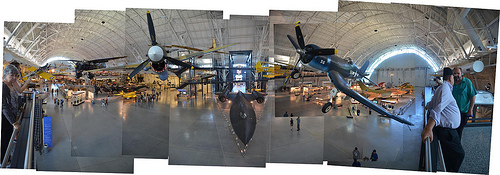
Steven F. Udvar-Hazy Center: Photomontage of main entrance view, including P-40 Warhawk & F-4 Corsair up front, SR-71 Background below in the near distance, and the Space Shuttle Enterprise beyond
Image by Chris Devers
Blogged on ☛ HoloChromaCinePhotoRamaScope‽ as: Bye bye, Miss American Pie.
• • • • •
Quoting Smithsonian National Air and Space Museum | Curtiss P-40E Warhawk (Kittyhawk IA):
Whether known as the Warhawk, Tomahawk, or Kittyhawk, the Curtiss P-40 proved to be a successful, versatile fighter during the first half of World War II. The shark-mouthed Tomahawks that Gen. Claire Chennault’s "Flying Tigers" flew in China against the Japanese remain among the most popular airplanes of the war. P-40E pilot Lt. Boyd D. Wagner became the first American ace of World War II when he shot down six Japanese aircraft in the Philippines in mid-December 1941.
Curtiss-Wright built this airplane as Model 87-A3 and delivered it to Canada as a Kittyhawk I in 1941. It served until 1946 in No. 111 Squadron, Royal Canadian Air Force. U.S. Air Force personnel at Andrews Air Force Base restored it in 1975 to represent an aircraft of the 75th Fighter Squadron, 23rd Fighter Group, 14th Air Force.
Donated by the Exchange Club in Memory of Kellis Forbes.
Manufacturer:
Curtiss Aircraft Company
Date:
1939
Country of Origin:
United States of America
Dimensions:
Overall: 330 x 970cm, 2686kg, 1140cm (10ft 9 15/16in. x 31ft 9 7/8in., 5921.6lb., 37ft 4 13/16in.)
Materials:
All-metal, semi-monocoque
Physical Description:
Single engine, single seat, fighter aircraft.
• • • • •
Quoting Smithsonian National Air and Space Museum | Lockheed SR-71 Blackbird:
No reconnaissance aircraft in history has operated globally in more hostile airspace or with such complete impunity than the SR-71, the world’s fastest jet-propelled aircraft. The Blackbird’s performance and operational achievements placed it at the pinnacle of aviation technology developments during the Cold War.
This Blackbird accrued about 2,800 hours of flight time during 24 years of active service with the U.S. Air Force. On its last flight, March 6, 1990, Lt. Col. Ed Yielding and Lt. Col. Joseph Vida set a speed record by flying from Los Angeles to Washington, D.C., in 1 hour, 4 minutes, and 20 seconds, averaging 3,418 kilometers (2,124 miles) per hour. At the flight’s conclusion, they landed at Washington-Dulles International Airport and turned the airplane over to the Smithsonian.
Transferred from the United States Air Force.
Manufacturer:
Lockheed Aircraft Corporation
Designer:
Clarence L. "Kelly" Johnson
Date:
1964
Country of Origin:
United States of America
Dimensions:
Overall: 18ft 5 15/16in. x 55ft 7in. x 107ft 5in., 169998.5lb. (5.638m x 16.942m x 32.741m, 77110.8kg)
Other: 18ft 5 15/16in. x 107ft 5in. x 55ft 7in. (5.638m x 32.741m x 16.942m)
Materials:
Titanium
Physical Description:
Twin-engine, two-seat, supersonic strategic reconnaissance aircraft; airframe constructed largley of titanium and its alloys; vertical tail fins are constructed of a composite (laminated plastic-type material) to reduce radar cross-section; Pratt and Whitney J58 (JT11D-20B) turbojet engines feature large inlet shock cones.
• • • • •
Quoting Smithsonian National Air and Space Museum | Vought F4U-1D Corsair :
By V-J Day, September 2, 1945, Corsair pilots had amassed an 11:1 kill ratio against enemy aircraft. The aircraft’s distinctive inverted gull-wing design allowed ground clearance for the huge, three-bladed Hamilton Standard Hydromatic propeller, which spanned more than 4 meters (13 feet). The Pratt and Whitney R-2800 radial engine and Hydromatic propeller was the largest and one of the most powerful engine-propeller combinations ever flown on a fighter aircraft.
Charles Lindbergh flew bombing missions in a Corsair with Marine Air Group 31 against Japanese strongholds in the Pacific in 1944. This airplane is painted in the colors and markings of the Corsair Sun Setter, a Marine close-support fighter assigned to the USS Essex in July 1944.
Transferred from the United States Navy.
Manufacturer:
Vought Aircraft Company
Date:
1940
Country of Origin:
United States of America
Dimensions:
Overall: 460 x 1020cm, 4037kg, 1250cm (15ft 1 1/8in. x 33ft 5 9/16in., 8900lb., 41ft 1/8in.)
Materials:
All metal with fabric-covered wings behind the main spar.
Physical Description:
R-2800 radial air-cooled engine with 1,850 horsepower, turned a three-blade Hamilton Standard Hydromatic propeller with solid aluminum blades spanning 13 feet 1 inch; wing bent gull-shaped on both sides of the fuselage.
• • • • •
See more photos of this, and the Wikipedia article.
Details, quoting from Smithsonian National Air and Space Museum | Space Shuttle Enterprise:
Manufacturer:
Rockwell International Corporation
Country of Origin:
United States of America
Dimensions:
Overall: 57 ft. tall x 122 ft. long x 78 ft. wing span, 150,000 lb.
(1737.36 x 3718.57 x 2377.44cm, 68039.6kg)
Materials:
Aluminum airframe and body with some fiberglass features; payload bay doors are graphite epoxy composite; thermal tiles are simulated (polyurethane foam) except for test samples of actual tiles and thermal blankets.
The first Space Shuttle orbiter, "Enterprise," is a full-scale test vehicle used for flights in the atmosphere and tests on the ground; it is not equipped for spaceflight. Although the airframe and flight control elements are like those of the Shuttles flown in space, this vehicle has no propulsion system and only simulated thermal tiles because these features were not needed for atmospheric and ground tests. "Enterprise" was rolled out at Rockwell International’s assembly facility in Palmdale, California, in 1976. In 1977, it entered service for a nine-month-long approach-and-landing test flight program. Thereafter it was used for vibration tests and fit checks at NASA centers, and it also appeared in the 1983 Paris Air Show and the 1984 World’s Fair in New Orleans. In 1985, NASA transferred "Enterprise" to the Smithsonian Institution’s National Air and Space Museum.
Transferred from National Aeronautics and Space Administration
Most popular precision engineering eBay auctions:
[wprebay kw=”precision+engineering” num=”0″ ebcat=”-1″]
[wprebay kw=”precision+engineering” num=”1″ ebcat=”-1″]
BMW Precision China Manufacturing.
Video Rating: 4 / 5
Press Brake Tooling supports all sheet metal fabrication.
ANOKA, Minn., – Mate Precision Tooling, a world-leading manufacturer of high-quality tooling for the metal fabrication market, has launched a new line of press brake tooling punches and dies. Now available for press brakes configured with European …
Read more on ThomasNet News (press release)
RG Drage to hold new student orientation
Students enrolled in bakery/pastry operations, cosmetology, culinary arts, dental assisting, health technologies, graphic communications, heating/ventilation/air conditioning/refrigeration and metal fabrication will meet at 7 p.m. Tuesday. … enrolled …
Read more on Massillon Independent
The Work Sharp 2000 is the next generation bench grinder. This tool excels in sharpening and fine China grinding applications. From sharpening household tools like…
Video Rating: 5 / 5