Watch: Prize giving at Magherafelt High College

Image from page 464 of “The inventions : researches and writing of Nikola Tesla, with unique reference to his work in polyphase currents and high prospective lighting” (1894)

Image by Net Archive Book Pictures
Identifier: inventionsresear00martuoft
Title: The inventions : researches and writing of Nikola Tesla, with unique reference to his operate in polyphase currents and higher potential lighting
Year: 1894 (1890s)
Authors: Martin, Thomas Commerford, 1856-1924 Tesla, Nikola, 1856-1943
Subjects: Electric currents, Alternating Electric engineering
Publisher: New York : The Electrical Engineer
Contributing Library: Gerstein – University of Toronto
Digitizing Sponsor: University of Toronto

View Book Page: Book Viewer
About This Book: Catalog Entry
View All Photos: All Pictures From Book

Click here to view book on the internet to see this illustration in context in a browseable online version of this book.

Text Appearing Just before Image:
interposed ( k, Ili. •JCi:.. i Itetwccn the point ./• and the A UXILIARY BR USE REG ULA TJOK. 445 auxiliary tjrush or brushes to divide the sensitiveness when thebrushes are adjusted. The acconipanjing sketches also illustrate improvements madeby Mr. Tesla in the meehanical devices utilized to impact the shift-ing of the ])rushes, in the use of an auxiliary bnish. Fig. 266 isan elevation of the regulator ^vith the frame partly in section and Fig. 267 is a section at the line xx, Fig. 266. c is the com-mutator B and b, the brush-holders, b carrying the mainbruslies a a , and b the auxiliary or shunt brushes h h. Theaxis of the brush-holder b is supported by two pivot-screws, 7 ^&gt.The other brush-holder, b, has a sleeve, rZ, and is movablearound the axis of tlie brush-holder b. In this way each brnsh-holders can turn very freely, the friction of the components beingreduced to a minimum. More than the brush-holders is mounted thesolenoid s, which rests upon a forked column, . This column

Text Appearing After Image:
Fig. 264. Fig. 265. also affords a support for the pivots jPjy, and is fastened upon asolid bracket or projection, p, which extends from the base ofthe machine, and is cast in one piece with the .exact same. Thebrush-holders b b are connected by means of the links e eand tlie cross-piece f to tlie iron core i, whicli sHdes freely in thetube T of the solenoid. The iron core 1 has a screw, .v, by implies&lt(f which it can be rai.-^cd and adjusted in its position rehitivelvto the soh-noid, so that the pull exerted upon it by the solenoidis practically uniform through the whole length of motion whichis recjuired to effect the regulation. In order to impact theadjustment with greater precision, the core 1 is supplied with asmall iron mtcw, .s. ]he core being tirst brought quite nearlyin the reiinind position reasonably to the st)lenoid by implies ofthe screw .v, the little screw .v is then adjusted until the magneticattraction upon the core is the same when the core is in any posi.lion. A eonyinient

Note About Photos
Please note that these photos are extracted from scanned web page photos that may possibly have been digitally enhanced for readability – coloration and appearance of these illustrations may not perfectly resemble the original work.

Watch: Prize providing at Magherafelt Higher College
Edel McCrory and Rodney Campbell, from Moyola Precision Engineering, presenting the new Cup to the College for A Level Technology to the 2015 winner Claire Forsythe.INMM39-526. Photographs by Simon Robinson.
Study far more on Mid Ulster Mail

Prince Turns 1000
His liberal use of MIDI (Musical Instrument Digital Interface) programming apart from his elaborate, manual orchestrations also paved the way for minimizing the painstaking job of musical composition into a single of mere sound engineering, which A.R. Rahman …
Read far more on Swarajya

Insider Promoting: Frederick Ball Sells 2500 Shares of Advanced Energy
Sophisticated Power Industries has a 12-month low of $ 16.54 and a 12-month high of $ 29.50. The stock&#39s market capitalization is … Sophisticated Energy Industries Inc. is a provider of very-engineered, mission-important, precision energy conversion …
Study a lot more on The Market Business

US Army tests drone-killing 50 mm cannon

US Army tests drone-killing 50 mm cannon
Below development by the U.S. Army Study, Development, and Engineering Center (ARDEC) at Picatinny Arsenal, New Jersey, the Enhanced Region Protection and Survivability (EAPS) program utilised steerable 50 mm wise rounds to shoot down two drones in recent …
Study far more on Gizmag

Hyperlink Microtek Recreates Higher-Power Avionics Test Technique
With its knowledge in microwave engineering, electronics and mechanical design, Link Microtek was able to reproduce the complex unit operating only from a set of old drawings and some components. The unit was initially made more than 25 years ago, and no …
Read far more on RF Globalnet (press release)

Hutchinson Technology Downgraded by Zacks to Hold (HTCH)
According to Zacks, “Hutchinson Technology Incorporated is an acknowledged planet leader in precision manufacturing. … Suspension assemblies are components of disk drives that hold the study/create heads in place above the whirling magnetic disks. … drive …
Read more on WKRB News

Sensible Sensor Brings 3D Inspection to Tiny Spaces
Delivering high-precision 3D cloud-point acquisition, measurement and manage selection capabilities, they&#39re developed to execute inline 3D scanning and inspections of stationary subjects and can do it regardless of whether they&#39re fixed-frame or robot-mounted …
Study far more on ENGINEERING.com

Semiconductor Manufacturing Int&#39l Rating Enhanced to Purchase at Zacks (SMI)

Semiconductor Manufacturing Int&#39l Rating Increased to Get at Zacks (SMI)
Headquartered in Shanghai, China, SMIC has a 300-millimeter wafer fabrication facility (fab) and 3 200 mm wafer fabs in its Shanghai mega-fab, two 300 mm wafer fabs in its Beijing mega-fab, a 200 mm wafer fab in Tianjin, and an in-property assembly …
Study far more on Monetary Wisdom Works

Taiwanese Unveil Initial Industrial 3D Printing Metal Method, Will Maintain
cslogo The Taiwanese not only have a penchant for exploring new technology, they have as a complete been working difficult to emerge as severe leaders in manufacturing and innovation, aside from the world of the Computer and laptop. Serious and ongoing&nbsp…
Read much more on 3DPrint.com

European Stocks Rise as U.S. Jobs Data Is Awaited
Also in Frankfurt, Klöckner &amp Co. was up properly over two% right after announcing Thursday that its U.S. unit has bought sheet metal fabrication company American Fabricators of Nashville, Tenn. The firm generates annual revenue of about $ 30 million, Klöckner …
Study far more on TheStreet.com

Career In Mechanical Engineering And Civil Engineering

Mechanical engineering and Civil engineering are the two most growing and broad fields of engineering. A profession in mechanical engineering and civil engineering is a dream of numerous. A single gets reputation and status along with handsome pays in this profession choice. Considering that the planet is technologically developing the need to have for intelligent minds is in higher demand and the students who enroll themselves for these two courses serve this goal.

Profession in mechanical engineering
It is regarded the broadest field of engineering which includes the production and design of tools and machines used in industries. Given that machines are the backbone of any sector, mechanical engineers are in high demand and so mechanical engineering is the highest profession in demand. It includes the appropriate function and mechanism of all the machinery, design, constructions, installation and their upkeep. Mechanical engineering plays an critical component in shaping the future with the technological advancements they are involved with. One particular needs to have sharp abilities, IT, design and style, analytical thinking and most importantly the ability to operate as a team as the production of any machine calls for team work. They also need to have a excellent evaluation of the marketplace, since they have to locate possibilities in issues persisting in the environment. One particular inclined towards employing his or her intelligence in formation of technologies and is prepared to commit faithfully and function tough must take up this career choice.

Career in civil engineering
There is want of numerous facilities is modern life. Civil engineering is a career choice which requires the design and style and supervision of such facilities. These facilities spread in all elements of life like, tunnels, bridges, buildings, highways, dams, airports, harbors, wastewater treatment plants, and so forth. a civil engineer is necessary in all the construction projects carried out by state and central government and even the public department. They are essential in genuine estate functions and even teaching students. A single can also join the Indian Engineering service by Union Public Service Commission. A career in civil engineering is a lucrative career selection which requires tough perform and constant study of strategies, projects and requirements of the society. There are different colleges providing this course like, IIT Chennai, IIT Bangalore, IIT Kozhikode, IIT Indore, Delhi college of Engineering, Anna University, Bits Pilani and numerous a lot more.

A profession in civil engineering or a profession in mechanical engineering is not effortless to get. One needs to perform quite challenging and commit most of the time in study perform and the production procedure. The ones who are prepared to give there time which would promise higher return on investment, must go ahead with this profession choice. There are several colleges providing these degrees, one need to study challenging and get into these colleges so that they are guided properly.

Uncover your career choices for career in civil engineering and profession in mechanical engineering on jagranjosh.com

Discover Much more Mechanical Engineering China Articles

Sweepstakes Winner Gets $10000 Towards Patent and Prototype Cost At Globe

Sweepstakes Winner Gets 000 Towards Patent and Prototype Expense At Planet
World Patent Marketing Dollars can be spent with World Patent Marketing and advertising for patent registration, prototypes, licensing costs, manufacturing, advertising or distribution fees. Stephanie, one of Planet Patent Advertising and marketing&#39s several inventors, can commit her prize …
Study far more on GlobeNewswire (press release)

This Wearable Device Translates Sign Language To English
The device, nevertheless in the prototype stage, can recognize some 40 ASL indicators with 96 % accuracy. … In China, researchers have utilized Microsoft&#39s Kinect motion-sensing equipment to translate Chinese Sign Language into spoken and written words.
Study more on Smithsonian

IN DEPTH: Is the tide turning for Chinese offshore?
Ming Yang, for instance, with the assist of German designer Aerodyn, has constructed, installed and grid-connected its prototype 6.5MW two-blade, downwind offshore turbine at the intertidal demonstration website off Rudong, Jiangsu province. Calculations suggest …
Read more on Recharge (subscription)

Cool China Prototype Manufacturing photos

A few good china prototype manufacturing photos I located:

Steven F. Udvar-Hazy Center: Photomontage of SR-71 on the port side
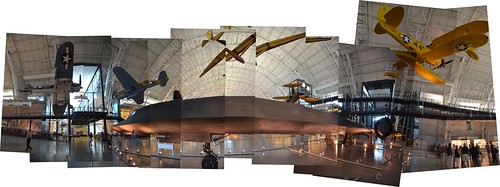
Image by Chris Devers
Posted by means of e-mail to ☛ HoloChromaCinePhotoRamaScope‽: cdevers.posterous.com/panoramas-of-the-sr-71-blackbird-at…. See the full gallery on Posterous …

• • • • •

See far more pictures of this, and the Wikipedia report.

Specifics, quoting from Smithsonian National Air and Space Museum | Lockheed SR-71 Blackbird:

No reconnaissance aircraft in history has operated globally in a lot more hostile airspace or with such complete impunity than the SR-71, the world’s fastest jet-propelled aircraft. The Blackbird’s efficiency and operational achievements placed it at the pinnacle of aviation technologies developments throughout the Cold War.

This Blackbird accrued about two,800 hours of flight time in the course of 24 years of active service with the U.S. Air Force. On its final flight, March six, 1990, Lt. Col. Ed Yielding and Lt. Col. Joseph Vida set a speed record by flying from Los Angeles to Washington, D.C., in 1 hour, 4 minutes, and 20 seconds, averaging three,418 kilometers (two,124 miles) per hour. At the flight’s conclusion, they landed at Washington-Dulles International Airport and turned the airplane more than to the Smithsonian.

Transferred from the United States Air Force.

Manufacturer:
Lockheed Aircraft Corporation

Designer:
Clarence L. &quotKelly&quot Johnson

Date:
1964

Nation of Origin:
United States of America

Dimensions:
Overall: 18ft 5 15/16in. x 55ft 7in. x 107ft 5in., 169998.5lb. (5.638m x 16.942m x 32.741m, 77110.8kg)
Other: 18ft 5 15/16in. x 107ft 5in. x 55ft 7in. (5.638m x 32.741m x 16.942m)

Components:
Titanium

Physical Description:
Twin-engine, two-seat, supersonic strategic reconnaissance aircraft airframe constructed largley of titanium and its alloys vertical tail fins are constructed of a composite (laminated plastic-kind material) to minimize radar cross-section Pratt and Whitney J58 (JT11D-20B) turbojet engines feature massive inlet shock cones.

Long Description:
No reconnaissance aircraft in history has operated in a lot more hostile airspace or with such total impunity than the SR-71 Blackbird. It is the quickest aircraft propelled by air-breathing engines. The Blackbird’s overall performance and operational achievements placed it at the pinnacle of aviation technologies developments in the course of the Cold War. The airplane was conceived when tensions with communist Eastern Europe reached levels approaching a full-blown crisis in the mid-1950s. U.S. military commanders desperately needed correct assessments of Soviet worldwide military deployments, especially close to the Iron Curtain. Lockheed Aircraft Corporation’s subsonic U-two (see NASM collection) reconnaissance aircraft was an in a position platform but the U. S. Air Force recognized that this comparatively slow aircraft was currently vulnerable to Soviet interceptors. They also understood that the speedy development of surface-to-air missile systems could put U-2 pilots at grave risk. The danger proved reality when a U-2 was shot down by a surface to air missile more than the Soviet Union in 1960.

Lockheed’s 1st proposal for a new high speed, higher altitude, reconnaissance aircraft, to be capable of avoiding interceptors and missiles, centered on a design and style propelled by liquid hydrogen. This proved to be impracticable since of considerable fuel consumption. Lockheed then reconfigured the style for conventional fuels. This was feasible and the Central Intelligence Agency (CIA), already flying the Lockheed U-2, issued a production contract for an aircraft designated the A-12. Lockheed’s clandestine ‘Skunk Works’ division (headed by the gifted style engineer Clarence L. &quotKelly&quot Johnson) created the A-12 to cruise at Mach 3.2 and fly well above 18,288 m (60,000 feet). To meet these challenging requirements, Lockheed engineers overcame a lot of daunting technical challenges. Flying far more than three occasions the speed of sound generates 316° C (600° F) temperatures on external aircraft surfaces, which are sufficient to melt traditional aluminum airframes. The design group chose to make the jet’s external skin of titanium alloy to which shielded the internal aluminum airframe. Two conventional, but very effective, afterburning turbine engines propelled this remarkable aircraft. These power plants had to operate across a enormous speed envelope in flight, from a takeoff speed of 334 kph (207 mph) to far more than three,540 kph (2,200 mph). To prevent supersonic shock waves from moving inside the engine intake causing flameouts, Johnson’s group had to style a complex air intake and bypass program for the engines.

Skunk Performs engineers also optimized the A-12 cross-section style to exhibit a low radar profile. Lockheed hoped to achieve this by meticulously shaping the airframe to reflect as little transmitted radar energy (radio waves) as attainable, and by application of specific paint made to absorb, rather than reflect, those waves. This treatment became one of the very first applications of stealth technology, but it never ever completely met the design ambitions.

Test pilot Lou Schalk flew the single-seat A-12 on April 24, 1962, soon after he became airborne accidentally for the duration of higher-speed taxi trials. The airplane showed wonderful guarantee but it needed considerable technical refinement just before the CIA could fly the very first operational sortie on May 31, 1967 – a surveillance flight over North Vietnam. A-12s, flown by CIA pilots, operated as component of the Air Force’s 1129th Unique Activities Squadron beneath the &quotOxcart&quot program. While Lockheed continued to refine the A-12, the U. S. Air Force ordered an interceptor version of the aircraft designated the YF-12A. The Skunk Operates, nonetheless, proposed a &quotspecific mission&quot version configured to conduct post-nuclear strike reconnaissance. This program evolved into the USAF’s familiar SR-71.

Lockheed built fifteen A-12s, which includes a specific two-seat trainer version. Two A-12s had been modified to carry a unique reconnaissance drone, designated D-21. The modified A-12s have been redesignated M-21s. These have been developed to take off with the D-21 drone, powered by a Marquart ramjet engine mounted on a pylon amongst the rudders. The M-21 then hauled the drone aloft and launched it at speeds high adequate to ignite the drone’s ramjet motor. Lockheed also built 3 YF-12As but this type never ever went into production. Two of the YF-12As crashed for the duration of testing. Only a single survives and is on display at the USAF Museum in Dayton, Ohio. The aft section of a single of the &quotwritten off&quot YF-12As which was later utilised along with an SR-71A static test airframe to manufacture the sole SR-71C trainer. One SR-71 was lent to NASA and designated YF-12C. Including the SR-71C and two SR-71B pilot trainers, Lockheed constructed thirty-two Blackbirds. The 1st SR-71 flew on December 22, 1964. Simply because of extreme operational charges, military strategists decided that the much more capable USAF SR-71s need to replace the CIA’s A-12s. These had been retired in 1968 soon after only one year of operational missions, largely over southeast Asia. The Air Force’s 1st Strategic Reconnaissance Squadron (part of the 9th Strategic Reconnaissance Wing) took more than the missions, flying the SR-71 starting in the spring of 1968.

Following the Air Force began to operate the SR-71, it acquired the official name Blackbird– for the unique black paint that covered the airplane. This paint was formulated to absorb radar signals, to radiate some of the tremendous airframe heat generated by air friction, and to camouflage the aircraft against the dark sky at higher altitudes.

Experience gained from the A-12 program convinced the Air Force that flying the SR-71 safely required two crew members, a pilot and a Reconnaissance Systems Officer (RSO). The RSO operated with the wide array of monitoring and defensive systems installed on the airplane. This equipment incorporated a sophisticated Electronic Counter Measures (ECM) program that could jam most acquisition and targeting radar. In addition to an array of sophisticated, higher-resolution cameras, the aircraft could also carry equipment designed to record the strength, frequency, and wavelength of signals emitted by communications and sensor devices such as radar. The SR-71 was created to fly deep into hostile territory, avoiding interception with its tremendous speed and higher altitude. It could operate safely at a maximum speed of Mach three.3 at an altitude more than sixteen miles, or 25,908 m (85,000 ft), above the earth. The crew had to put on pressure suits comparable to those worn by astronauts. These suits have been needed to safeguard the crew in the event of sudden cabin stress loss even though at operating altitudes.

To climb and cruise at supersonic speeds, the Blackbird’s Pratt &amp Whitney J-58 engines have been made to operate continuously in afterburner. While this would seem to dictate higher fuel flows, the Blackbird really accomplished its greatest &quotgas mileage,&quot in terms of air nautical miles per pound of fuel burned, in the course of the Mach three+ cruise. A typical Blackbird reconnaissance flight might require a number of aerial refueling operations from an airborne tanker. Every single time the SR-71 refueled, the crew had to descend to the tanker’s altitude, typically about six,000 m to 9,000 m (20,000 to 30,000 ft), and slow the airplane to subsonic speeds. As velocity decreased, so did frictional heat. This cooling effect triggered the aircraft’s skin panels to shrink significantly, and those covering the fuel tanks contracted so a lot that fuel leaked, forming a distinctive vapor trail as the tanker topped off the Blackbird. As quickly as the tanks were filled, the jet’s crew disconnected from the tanker, relit the afterburners, and again climbed to high altitude.

Air Force pilots flew the SR-71 from Kadena AB, Japan, throughout its operational profession but other bases hosted Blackbird operations, too. The 9th SRW occasionally deployed from Beale AFB, California, to other places to carryout operational missions. Cuban missions have been flown directly from Beale. The SR-71 did not commence to operate in Europe until 1974, and then only temporarily. In 1982, when the U.S. Air Force based two aircraft at Royal Air Force Base Mildenhall to fly monitoring mission in Eastern Europe.

When the SR-71 became operational, orbiting reconnaissance satellites had already replaced manned aircraft to collect intelligence from sites deep inside Soviet territory. Satellites could not cover each and every geopolitical hotspot so the Blackbird remained a essential tool for worldwide intelligence gathering. On several occasions, pilots and RSOs flying the SR-71 offered information that proved important in formulating productive U. S. foreign policy. Blackbird crews offered critical intelligence about the 1973 Yom Kippur War, the Israeli invasion of Lebanon and its aftermath, and pre- and post-strike imagery of the 1986 raid carried out by American air forces on Libya. In 1987, Kadena-primarily based SR-71 crews flew a number of missions over the Persian Gulf, revealing Iranian Silkworm missile batteries that threatened industrial shipping and American escort vessels.

As the overall performance of space-based surveillance systems grew, along with the effectiveness of ground-primarily based air defense networks, the Air Force started to drop enthusiasm for the costly program and the 9th SRW ceased SR-71 operations in January 1990. In spite of protests by military leaders, Congress revived the plan in 1995. Continued wrangling more than operating budgets, even so, quickly led to final termination. The National Aeronautics and Space Administration retained two SR-71As and the one particular SR-71B for high-speed research projects and flew these airplanes till 1999.

On March six, 1990, the service profession of 1 Lockheed SR-71A Blackbird ended with a record-setting flight. This special airplane bore Air Force serial quantity 64-17972. Lt. Col. Ed Yeilding and his RSO, Lieutenant Colonel Joseph Vida, flew this aircraft from Los Angeles to Washington D.C. in 1 hour, 4 minutes, and 20 seconds, averaging a speed of 3,418 kph (2,124 mph). At the conclusion of the flight, ‘972 landed at Dulles International Airport and taxied into the custody of the Smithsonian’s National Air and Space Museum. At that time, Lt. Col. Vida had logged 1,392.7 hours of flight time in Blackbirds, more than that of any other crewman.

This particular SR-71 was also flown by Tom Alison, a former National Air and Space Museum’s Chief of Collections Management. Flying with Detachment 1 at Kadena Air Force Base, Okinawa, Alison logged a lot more than a dozen ‘972 operational sorties. The aircraft spent twenty-4 years in active Air Force service and accrued a total of 2,801.1 hours of flight time.

Wingspan: 55’7&quot
Length: 107’5&quot
Height: 18’6&quot
Weight: 170,000 Lbs

Reference and Further Reading:

Crickmore, Paul F. Lockheed SR-71: The Secret Missions Exposed. Oxford: Osprey Publishing, 1996.

Francillon, Rene J. Lockheed Aircraft Given that 1913. Annapolis, Md.: Naval Institute Press, 1987.

Johnson, Clarence L. Kelly: Far more Than My Share of It All. Washington D.C.: Smithsonian Institution Press, 1985.

Miller, Jay. Lockheed Martin’s Skunk Works. Leicester, U.K.: Midland Counties Publishing Ltd., 1995.

Lockheed SR-71 Blackbird curatorial file, Aeronautics Division, National Air and Space Museum.

DAD, 11-11-01

Newest Precision Engineering China News

Taiwan: An Island in a Sea of Volatility
Investors have a tendency to treat Taiwan and South Korea as proxies both for international technologies demand and, much more not too long ago, as moons orbiting a giant Chinese Jupiter. Taiwan&#39s stock market has hence been hit fairly hard by the Fed&#39s hesitance, as investors fear it …
Read more on Barron’s

Venture capitalist Lee&#39s investment suggestions in China: precision engineering and
“China reinvents itself each and every ten years and you can see this in their policies – from the migration from low-expense labour to computer software-based IT personnel in 2000-05, to now precision manufacturing and automation,” stated Lee, who worked briefly as a banker …
Read far more on South China Morning Post (subscription)

ASE&#39s legal action won&#39t affect marketplace: Taiwan FSC head
Tseng Ming-chung, chair of Taiwan&#39s Monetary Supervisory Commission (FSC), stated Tuesday that a legal maneuver by IC packager Sophisticated Semiconductor Engineering (ASE) against a rival is unlikely to influence the country&#39s broader equity marketplace.
Read a lot more on WantChinaTimes

Millesimal fineness – prototype circuit boards – China printed circuit assemblies

Millesimal fineness is a technique of denoting the purity of platinum, gold and silver alloys by components per thousand of pure metal by mass in the alloy. For example, an alloy containing 75% gold is denoted as “750”. Many European nations use the percentage hallmark stamps (i.e. ‘585’, ‘750’, and so forth) rather than ’14K’, ’18K’, and so on., which is utilized in the United States.

It is an extension of the older carat (karat in North American spelling) technique of denoting the purity of gold by fractions of 24, such as “18 carat” for an alloy with 75% (18 parts per 24) pure gold by mass.

The millesimal fineness is usually rounded to a three figure quantity, especially where utilized as a hallmark, and the fineness could vary slightly from the standard versions of purity.

The most typical millesimal finenesses used for valuable metals:

999 (also known as 3 nines fine)

995 (what most dealer would acquire your platinum at if it is 100% pure)

950 (the most widespread purity for platinum jewellery)

900 (also identified as one nine fine)

999.99 (The purest variety of Gold in the marketplace)

999 (Fine gold equivalent to 24 carat, also recognized as 3 nines fine)

990 also known as two nines fine

916 (equivalent to 22 carat)

833 (equivalent to 20 carat)

750 (equivalent to 18 carat)

625 (equivalent to 15 carat)

585 (equivalent to 14 carat)

417 (equivalent to ten carat)

375 (equivalent to 9 carat)

333 (equivalent to 8 carat minimum regular for gold in Germany after 1884)

999.9 (Ultra-fine silver used by Royal Canadian Mint in the Canadian Silver Maple Leaf)

999 (Fine silver used in bullion bars, also identified as three nines fine)

980 (frequent common used in Mexico ca.1930 – 1945)

958 (equivalent to Britannia silver)

950 (equivalent to “French 1st Regular”)

925 (equivalent to Sterling silver)

900 (equivalent to “Coin silver” in the USA, also recognized as one particular nine fine)

875 (could be discovered in former USSR and in Switzerland)

833 (typical regular used in continental silver specifically among the Dutch, Swedish, and Germans)

830 (widespread normal utilised in older Scandinavian silver)

835 (a regular predominantly employed in Germany soon after 1884)

800 (minimum standard for silver in Germany after 1884 Egyptian silver Canadian silver circulating coinage)

750 (uncommon silver common discovered in older German, Swiss and Austro-Hungarian silver)

Gold as an investment

Silver as an investment

Anklet Belt buckle Belly chain Bracelet Brooch Chatelaine Crown Cufflink Earring lapel pin Necklace Pendant Ring Tiara Tie clip Watch (pocket)

Bench jeweler Goldsmith Jewelry designer Lapidary Watchmaker

Casting (centrifugal, lost-wax, vacuum) Enameling Engraving Filigree Metal clay Plating Polishing Repouss and chasing Soldering Stonesetting Wire wrapping

Draw plate File Hammer Mandrel Pliers

Gold Palladium Platinum Rhodium Silver

Britannia silver Colored gold Crown gold Electrum Platinum sterling Shakudo Shibuichi Sterling silver Tumbaga

Brass Bronze Copper Kuromido Pewter Stainless steel Titanium

Aventurine Agate Alexandrite Amethyst Aquamarine Carnelian Citrine Diamond Emerald Garnet Jade Jasper Malachite Lapis lazuli Moonstone Obsidian Onyx Opal Peridot Quartz Ruby Sapphire Sodalite Sunstone Tanzanite Tiger’s Eye Topaz Tourmaline

Amber Copal Coral Jet Pearl Abalone

Carat (unit) Carat (purity) Discovering Millesimal fineness

Associated topics: Body piercing Fashion Gemology Metalworking Wearable art

We are higher high quality suppliers, our merchandise such as prototype circuit boards , China printed circuit assemblies for oversee purchaser. To know far more, please visits gerber pcb.

Far more Cnc Prototype China Articles