Most current Cnc Fast Prototyping China News

3D Sidekick Direct Pellet Printhead Provides Affordability in Components, Hooks
… not only returned to Kickstarter with his 3D Sidekick Direct Pellet Printhead, but he&#39s returned with a new and enhanced version for rapid prototyping and machining all rolled into a single, with the capability to use recycled polymers and low-cost pellets …
Read far more on 3DPrint.com

Why Is The Future All About 3D Printed Super Cars?
More than the last two decades, several automotive makers have started to use the technology for rapid prototyping of complicated models and other production tools. Big names, like Lamborghini, Formula 1 and Honda, which dominate the automotive market&nbsp…
Study much more on 3DPrint.com

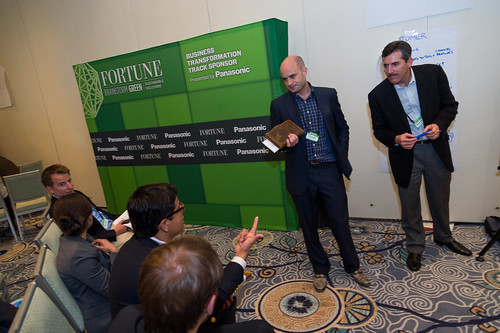
Fortune Brainstorm Green 2013

A couple of nice rapid prototyping expense photos I found:

Fortune Brainstorm Green 2013

Image by Fortune Live Media
Tuesday, April 30, 2013

Solar: How do we scale solar to be on 50% of the roofs in the US by 2018?
Presented by Panasonic
Plummeting panel and balance-of-system expenses are generating solar electrical energy increasingly competitive with carbon-intensive options. Nonetheless, the general pace of adoption in the U.S. is still slow. This working session will discover sensible breakthroughs to installing solar on 50% of U.S. rooftops by 2015. Using speedy prototyping in modest groups, participants will work together to locate solutions and then participate in the identified actions to accelerate progress.

Contributors:
David Crane, President and CEO, NRG Power
Ed Fenster, Co-founder, Sunrun
Andy Karsner, Executive Chairman and Founder, Manifest Energy
Danny Kennedy, Founder and President, Sungevity
Nat Kreamer, President and CEO, Clean Energy Finance
Paul Nahi, Chief Executive Officer, Enphase Power
Richard O’Day, Managing Director, Global Industry Options Group, Credit Suisse
Billy Parish, Founder and President, Solar Mosaic
Naimish Patel, Chief Executive Officer, Gridco Systems
Laura Spanjian, Sustainability Director, City of Houston
Howard Wenger, President, Regions, SunPower Corp
Ray Wood, Managing Director, Head, U.S. Energy and Renewables Group, Bank of America Merrill Lynch

Facilitator: Jib Ellison, Founder and CEO, Blu Skye Consulting

Photograph by Stuart Isett/Fortune Brainstorm Green

Fortune Brainstorm Green 2013

Image by Fortune Reside Media
Tuesday, April 30, 2013

Solar: How do we scale solar to be on 50% of the roofs in the US by 2018?
Presented by Panasonic
Plummeting panel and balance-of-system costs are creating solar electricity increasingly competitive with carbon-intensive options. However, the all round pace of adoption in the U.S. is nonetheless slow. This operating session will discover practical breakthroughs to installing solar on 50% of U.S. rooftops by 2015. Making use of speedy prototyping in modest groups, participants will perform collectively to uncover solutions and then participate in the identified actions to accelerate progress.

Contributors:
David Crane, President and CEO, NRG Power
Ed Fenster, Co-founder, Sunrun
Andy Karsner, Executive Chairman and Founder, Manifest Energy
Danny Kennedy, Founder and President, Sungevity
Nat Kreamer, President and CEO, Clean Power Finance
Paul Nahi, Chief Executive Officer, Enphase Power
Richard O’Day, Managing Director, Global Industry Options Group, Credit Suisse
Billy Parish, Founder and President, Solar Mosaic
Naimish Patel, Chief Executive Officer, Gridco Systems
Laura Spanjian, Sustainability Director, City of Houston
Howard Wenger, President, Regions, SunPower Corp
Ray Wood, Managing Director, Head, U.S. Energy and Renewables Group, Bank of America Merrill Lynch

Facilitator: Jib Ellison, Founder and CEO, Blu Skye Consulting

Photograph by Stuart Isett/Fortune Brainstorm Green

Fortune Brainstorm Green 2013

Image by Fortune Live Media
Tuesday, April 30, 2013

Solar: How do we scale solar to be on 50% of the roofs in the US by 2018?
Presented by Panasonic
Plummeting panel and balance-of-system fees are generating solar electrical energy increasingly competitive with carbon-intensive options. Nevertheless, the all round pace of adoption in the U.S. is still slow. This working session will discover sensible breakthroughs to installing solar on 50% of U.S. rooftops by 2015. Utilizing speedy prototyping in tiny groups, participants will operate collectively to discover options and then participate in the identified actions to accelerate progress.

Contributors:
David Crane, President and CEO, NRG Energy
Ed Fenster, Co-founder, Sunrun
Andy Karsner, Executive Chairman and Founder, Manifest Power
Danny Kennedy, Founder and President, Sungevity
Nat Kreamer, President and CEO, Clean Energy Finance
Paul Nahi, Chief Executive Officer, Enphase Energy
Richard O’Day, Managing Director, Global Marketplace Options Group, Credit Suisse
Billy Parish, Founder and President, Solar Mosaic
Naimish Patel, Chief Executive Officer, Gridco Systems
Laura Spanjian, Sustainability Director, City of Houston
Howard Wenger, President, Regions, SunPower Corp
Ray Wood, Managing Director, Head, U.S. Power and Renewables Group, Bank of America Merrill Lynch

Facilitator: Jib Ellison, Founder and CEO, Blu Skye Consulting

Photograph by Stuart Isett/Fortune Brainstorm Green

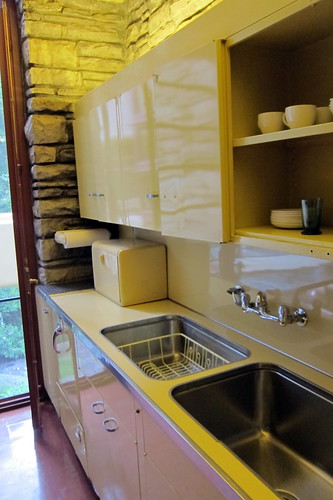
PA – Mill Run: Fallingwater – Kitchen

Verify out these milling engineering pictures:

PA – Mill Run: Fallingwater – Kitchen

Image by wallyg
Modern for its day, the Fallingwater kitchen was equipped with St. Charles metal cabinets, a Swedish AGA stove, red asphalt tiles, and a Formica-topped work table designed by Wright. The Kaufmanns’ chef Elsie Henderson bought the state of-of-the-art turquoise-lined Imperial Cyclomatic CT150 Frigidaire in the 1950s. The Formica that tops the counters and Wright’s table was only patented in 1935, but Kaufmann learned of it early simply because it was invented locally by two engineers at Westinghouse.

Fallingwater, at times referred to as the Edgar J. Kaufmann Sr. Residence or just the Kaufmann Residence, positioned inside a 5,100-acre nature reserve 50 miles southeast of Pittsburgh, was designed by Frank Lloyd Wright and constructed amongst 1936 and 1939. Built over a 30-foot flowing waterfall on Bear Run in the Mill Run section of Stewart Township, Fayette County, Pennsylvania, the house served as a vacation retreat for the Kaufmann loved ones which includes patriarch, Edgar Kaufmann Sr., was a profitable Pittsburgh businessman and president of Kaufmann’s Division Retailer, and his son, Edgar Kaufmann, Jr., who studied architecture briefly beneath Wright. Wright collaborated with staff engineers Mendel Glickman and William Wesley Peters on the structural design, and assigned his apprentice, Robert Mosher, as his permanent on-web site representative throughout building. In spite of frequent conflicts between Wright, Kaufmann, and the building contractor, the property and guesthouse were finally constructed at a expense of 5,000.

Fallingwater was designated a National Historic Landmark in 1966. It was listed amongst the Smithsonian’s 28 Locations to See Ahead of You Die. In a 1991 poll of members of the American Institute of Architects (AIA), it was voted &quotthe best all-time work of American architecture.&quot In 2007, Fallingwater was ranked #29 on the AIA 150 America’s Favored Architecture list.

National Register #74001781 (1974)

PA – Mill Run: Fallingwater – Sitting Space

Image by wallyg
The Sitting Space at Fallingwater was added in 1946 just off the Kitchen underneath the cantilevered terrace to offer further space for servants in the Major Residence. A massive boulder punctuates the space, and the mitered-glass corner maintains Wright’s theme of transparency.

Fallingwater, sometimes referred to as the Edgar J. Kaufmann Sr. Residence or just the Kaufmann Residence, situated inside a 5,one hundred-acre nature reserve 50 miles southeast of Pittsburgh, was created by Frank Lloyd Wright and built in between 1936 and 1939. Built more than a 30-foot flowing waterfall on Bear Run in the Mill Run section of Stewart Township, Fayette County, Pennsylvania, the home served as a trip retreat for the Kaufmann family such as patriarch, Edgar Kaufmann Sr., was a profitable Pittsburgh businessman and president of Kaufmann’s Department Retailer, and his son, Edgar Kaufmann, Jr., who studied architecture briefly beneath Wright. Wright collaborated with employees engineers Mendel Glickman and William Wesley Peters on the structural style, and assigned his apprentice, Robert Mosher, as his permanent on-internet site representative all through building. Regardless of frequent conflicts amongst Wright, Kaufmann, and the construction contractor, the home and guesthouse had been lastly constructed at a price of 5,000.

Fallingwater was designated a National Historic Landmark in 1966. It was listed among the Smithsonian’s 28 Areas to See Before You Die. In a 1991 poll of members of the American Institute of Architects (AIA), it was voted &quotthe best all-time perform of American architecture.&quot In 2007, Fallingwater was ranked #29 on the AIA 150 America’s Preferred Architecture list.

National Register #74001781 (1974)

Prototyping Services for Item Design and Improvement

Prototyping is an integral element of product style and improvement. There are numerous organizations which strive hard to accomplish good results in the field of engineering. But good results does not come only with knowledge the way to implement those skills in a sensible way is what defines accomplishment.

Product design and improvement is what each company delivers, but in order to succeed what matters is the good quality or the finishing that you add to that particular item style or development.

One of the successful ways of succeeding in this really stream is building a prototype of the solution. The protype is required to define the early sample of the item so that any changes to be produced can be decided prior to the sensible implementation of the solution.

The output of the product assists the organization to function on their product so that there should not be any bug after the solution is in the improvement mode.  The most current prototyping technique that is utilised is Fast Prototyping, which is the automatic execution of the complete building process. This kind of prototyping is performed making use of different softwares such as Autodesk, 3D Method, AutoCAD and so on.

This sort of prototyping not only defines the final outcome of the product but also defines a basic protocol for developers which even make their perform easier and as a result adds efficiency to their operate. Efficient item improvement is the only point on which the organization focuses on, since its not only about building the solution but about developing the item with an edge over other people since no matter how big an organization you have, you will often find fine competing competitors. Hence, to sustain in the marketplace you want to give your goods one thing above other people. Speaking about solution development, it does not matter a lot that “What is your product?” instead what matters is “How is your item?”

There are numbers of solution improvement companies in the market place, but extremely couple of who can serve up to the expectation of the clientele.

3D Rapid Prototyping 1 of the excellent advancement in the field of prototyping, which enables the designers to design and style a item with 3D touch, that adds refinement to the development level of the product. Really couple of organizations have this technology offered. But those which have are excelling in their perform at a excellent pace. They not only excel in their perform, but with the use of most current technologies, they can easily completely stand by the client’s satisfaction level.

WB Engineering was established in fall 2007, since then has been growing year following year by growing its capabilities and client base. Our employees involves engineers with varying backgrounds, like Biomedical, Mechanical and Electrical Engineering. With in house capabilities for digital and fast prototyping making use of the newest and most sought soon after technology.

Nice Machining Engineering images

A few good machining engineering photos I discovered:

:)*

Image by The hills are alive*
If you’ve got the time go genuinely large. It is worth it.

Electronic sound effects you can make with the Science Fair

electronic bird
electronic cat
electronic bird with CdS
2 way electronic bird
chicken peeping
knocking noise
woodpecker sound
light controlled electronic harp
T-transistor toy organ
wireless electronic organ
light-music maker,
electronic metronome
electronic motorcycle noise
machine gun sound generator
sound effects generator
sleep inducer

Drilling for Terrestrial Heat

Image by Kecko
This mobile gear can drill to a maximum depth of 300 m. Now they go down to 165 meters. Lutzenberg, Switzerland, Oct 1, 2008.

Adjustable Reamer in Hand Chuck

Image by tudedude

Action Mold Adds Action Prototype

Action Prototype &amp Action Mold have a history of effectively going the further mile to service our customer’s requirements. We did it last year by bringing on line our very first Engel 90VV Vertical molding machine and Toshiba EC20 energy efficient higher precision mold press’s.

It offers a complete speedy prototype and method of manufacturing solutions that has been designed to receive your goods to various markets in the best achievable way. Also, it can gather the best final results in the quickest feasible way. Also, we have the capacity to offer you service when it comes in high and low volume production when it comes to plastic parts. Likewise, customers require to know that we are dedicated I employing power-saving equipments. Our equipments are also environmentally safe and do not impose any threat to it. We use zero VOC paints in order for men and women not to have any difficulties when it comes to their overall health.

When it comes to the industries we serve, consumers can have the opportunity to know that we have a wide range of services that can offer fantastic assist for absolutely everyone. We can offer service to defense, automotive, architectural, entertainment and even educational aspect, which is why we have a lengthy-standing list of happy buyers that you can use as a reference for our quality services. All you want to do is to keep in touch with us if you want to know the prices we provide. We can discuss your item improvement requirements and get a quote in order to back you up properly.

With our wide variety of services that can provide you wonderful service, rest assured that you are in very good hands. All our customers can get the opportunity to have the satisfaction that they need to have when it comes to our offerings. Furthermore, we offer you plastic component style for injection molding, which is why it is up to you to truly think about our solutions. Buyers will never ever go wrong when it comes to our solutions. With the addition of Action Prototype in 2009 we have had great good results in implementing our total turn essential assistance of plastic part production.

From notion all the way through to the packaging. Which is frequently referred to as “Cradle to Grave”. We continue to offer much more creative options to answer our customers manufacturing wants. If you have any projects coming up please let us know if we can support you in any way. We are happy to handle all or element of your project. Let us take the head ache out of your provide chain.

We supply wonderful plastic design and injection molding in order to support you get the ideal. With our fast prototype services, anticipate the very best results that you want to have.

Hồng cam

Some cool stamping parts china pictures:

Hồng cam

Image by Hoa Trai Viet Nam
Hoa Hồng Rosa Rosaceae

Hồng hay hường là tên gọi chung cho các loài thực vật có hoa dạng cây bụi hoặc cây leo lâu năm thuộc chi Rosa, họ Rosaceae, với hơn 100 loài với màu hoa đa dạng, phân bố từ miền ôn đới đến nhiệt đới. Các loài này nổi tiếng vì hoa đẹp nên thường gọi là hoa hồng. Đa phần có nguồn gốc bản địa châu Á, số ít còn lại có nguồn gốc bản địa châu Âu, Bắc Mỹ, và Tây Bắc Phi. Các loài bản địa, giống cây trồng và cây lai ghép đều được trồng làm cảnh và lấy hương thơm.. Đôi khi các loài này được gọi theo tiếng Trung là tường vi (薔薇).
Hình thái
Đây là các cây bụi mọc đứng hoặc mọc leo, thân và cành có gai. Lá kép lông chim lẻ, lá chét khía răng, có lá kèm. Hoa thơm, màu sắc đa dạng: hồng, trắng, vàng hay đỏ… Hoa thường có nhiều cánh do nhị đực biến thành. Đế hoa hình chén. Quả bế, tụ nhau trong đế hoa dày lên thành quả.
Các loài
Dưới đây là một số loài hồng tiêu biểu
•Rosa beauvaisii: hồng Beauvais
•Rosa californica: hồng California
•Rosa canina: tầm xuân
•Rosa chinensis: hồng, hường, nguyệt quý hoa
•Rosa cymosa: hồng roi, tầm xuân
•Rosa gallica: hồng Pháp
•Rosa glauca (đồng nghĩa R. rubrifolia): hồng lá đỏ
•Rosa laevigata (đồng nghĩa R. sinica): hồng vụng, kim anh
•Rosa leschenaultiana: hồng Leschenault
•Rosa longicuspis: hồng mũi dài
•Rosa multiflora: tầm xuân nhiều hoa
•Rosa pimpinellifolia: hồng Scotch
•Rosa rubus: hồng đum
•Rosa rugosa: hồng Nhật, hồng Rugosa Rose
•Rosa transmorissonensis: hồng choắt
•Rosa tunquinensis: tầm xuân Bắc, quầng quầng
•Rosa virginiana (đồng nghĩa R. lucida): hồng Virginia
•Rosa yunnanensis: hồng Vân Nam
Hoa hồng trong văn hóa
Với vẻ đẹp, hình dáng và hương thơm nổi bật, hoa hồng là hoa biểu trưng hay được dùng nhất ở phương Tây, tương ứng trong tổng thể với hình tượng hoa sen ở châu Á, cả hai đều gần gũi với biểu tượng bánh xe. Trong văn hóa Ấn Độ, bông hồng vũ trụ Triparasundari được dùng làm vật đối chiếu với vẻ đẹp của người Mẹ thánh thần, biểu thị một sự hoàn mĩ trọn vẹn và không có thiếu sót. Bên cạnh đó, hoa hồng còn tượng trưng cho phần thưởng cuộc sống, tâm hồn, trái tim, tình yêu, và có thể được chiêm ngưỡng như một mandala.
Trong hệ tranh tượng Kitô giáo, hoa hồng hoặc là cái chén hứng máu của Chúa Kitô, hoặc là sự hóa thân của những giọt máu này và thậm chí, là chính vết thương của Chúa.
Hình hoa hồng gô-thích và hoa hồng hướng gió (hình hoa hồng 32 cánh ứng với 32 hướng gió) đánh dấu bước chuyển của xu hướng biểu trưng của hoa hồng sang xu hướng biểu trưng bánh xe.
Saadi de Chiraz trong đạo Hồi quan niệm vườn hoa hồng là vườn của sự quán tưởng.
Trong văn hóa phương Tây, hoa hồng, bởi sự tương hợp với màu máu chảy, thường xuất hiện như là biểu tượng của sự phục sinh huyền bí. Abd Ul Kadir Gilani so sánh hoa hồng với những vết sẹo trên cơ thể sống, trong khi đó F. Portal quan niệm hoa hồng vào màu hồng hợp thành một biểu tượng của sự tái sinh do có quan hệ gần gũi ngữ nghĩa của từ latinh rosa (hoa hồng) với ros (mưa, sương). Với người Hy Lạp hoa hồng vốn là một loài hoa màu trắng, nhưng khi Adonis bị tử thương, nữ thần Aphorodite chạy đến cứu chàng đã bị đâm phải một cái gai và máu đã nhuộm thẫm những bông hồng cung tiến nàng. Chính ý nghĩa biểu trưng về sự tái sinh đã khiến con người, từ thời cổ đại, đặt những bông hồng lên các nấm mộ, và Hecate, nữ thần âm phủ đôi khi được thể hiện với hình ảnh đầu quấn một vòng hoa hồng có five lá.
Theo Bède, ở thế kỷ VII mộ của Chúa Giêxu được sơn một màu pha lẫn trắng và đỏ. Hai yếu tố tạo thành màu của hoa hồng này, màu trắng và màu đỏ, với giá trị biểu trưng truyền thống của chúng phản ánh các bình diện từ trần tục đến thiêng liêng, trong sự khác nhau ứng với sự dâng tặng những bông hồng trắng hay đỏ[four].
Hoa hồng đã trở thành biểu tượng của tình yêu và còn hơn thế, của sự dâng hiến tình yêu, của tình yêu trong trắng, tương tự ý nghĩa của hoa sen Ai Cập và cây thủy tiên Hy Lạp[four].
Dù là màu trắng hay màu đỏ, hoa hồng cũng đều được các nhà luyện đan ưa chuộng hơn cả, mà những chuyên luận của họ thường mang những tiêu đề như &quotNhững cây hồng của các nhà triết học&quot. Trong khi đó, hoa hồng màu lam lại biểu tượng của cái bất khả, cái không thể đạt tới.
A rose is a perennial plant of the genus Rosa, inside the household Rosaceae. There are over 100 species. They type a group of erect shrubs, and climbing or trailing plants, with stems that are usually armed with sharp prickles. Flowers are massive and showy, in a number of colours from white through yellows and reds. Most species are native to Asia, with smaller sized numbers native to Europe, North America, and northwest Africa. Species, cultivars and hybrids are all widely grown for their beauty and fragrance. Rose plants range in size from compact, miniature roses, to climbers that can attain 7 meters in height. Species from diverse components of the planet effortlessly hybridize, which has given rise to the a lot of types of garden roses.[1]
The name rose comes from French, itself from Latin rosa, which was maybe borrowed from Oscan, from Greek ρόδον rhodon (Aeolic βρόδον wrodon), related to Old Persian wrd-, Avestan varəda, Sogdian ward, Parthian wâr, Armenian vard.[2][three]
Botany
The leaves are borne alternately on the stem. In most species they are 5 to 15 centimetres (two. to 5.9 in) long, pinnate, with (3–) 5–9 (–13) leaflets and basal stipules the leaflets usually have a serrated margin, and frequently a couple of tiny prickles on the underside of the stem. Most roses are deciduous but a couple of (particularly from South east Asia) are evergreen or almost so.
The flowers of most species have 5 petals, with the exception of Rosa sericea, which usually has only four. Each petal is divided into two distinct lobes and is typically white or pink, although in a couple of species yellow or red. Beneath the petals are five sepals (or in the case of some Rosa sericea, 4). These may possibly be extended enough to be visible when viewed from above and appear as green points alternating with the rounded petals. The ovary is inferior, creating beneath the petals and sepals. Roses are insect-pollinated in nature.
The aggregate fruit of the rose is a berry-like structure known as a rose hip. Numerous of the domestic cultivars do not produce hips, as the flowers are so tightly petalled that they do not offer access for pollination. The hips of most species are red, but a handful of (e.g. Rosa pimpinellifolia) have dark purple to black hips. Each hip comprises an outer fleshy layer, the hypanthium, which contains 5–160 &quotseeds&quot (technically dry single-seeded fruits named achenes) embedded in a matrix of fine, but stiff, hairs. Rose hips of some species, especially the Dog Rose (Rosa canina) and Rugosa Rose (Rosa rugosa), are extremely wealthy in vitamin C, amongst the richest sources of any plant. The hips are eaten by fruit-eating birds such as thrushes and waxwings, which then disperse the seeds in their droppings. Some birds, specifically finches, also consume the seeds.
While the sharp objects along a rose stem are typically called &quotthorns&quot, they are technically prickles — outgrowths of the epidermis (the outer layer of tissue of the stem). (True thorns, as made by e.g. Citrus or Pyracantha, are modified stems, which constantly originate at a node and which have nodes and internodes along the length of the thorn itself.) Rose prickles are usually sickle-shaped hooks, which aid the rose in hanging onto other vegetation when expanding more than it. Some species such as Rosa rugosa and Rosa pimpinellifolia have densely packed straight spines, almost certainly an adaptation to decrease browsing by animals, but also possibly an adaptation to trap wind-blown sand and so lessen erosion and safeguard their roots (both of these species develop naturally on coastal sand dunes). Despite the presence of prickles, roses are frequently browsed by deer. A couple of species of roses have only vestigial prickles that have no points.
Species
Additional information: List of Rosa species
The genus Rosa is subdivided into four subgenera:
•Hulthemia (formerly Simplicifoliae, which means &quotwith single leaves&quot) containing one or two species from southwest Asia, R. persica and Rosa berberifolia which are the only roses with out compound leaves or stipules.
•Hesperrhodos (from the Greek for &quotwestern rose&quot) includes Rosa minutifolia and Rosa stellata, from North America.
•Platyrhodon (from the Greek for &quotflaky rose&quot, referring to flaky bark) with 1 species from east Asia, Rosa roxburghii.
•Rosa (the sort subgenus) containing all the other roses. This subgenus is subdivided into 11 sections.
oBanksianae – white and yellow flowered roses from China.
oBracteatae – three species, two from China and 1 from India.
oCaninae – pink and white flowered species from Asia, Europe and North Africa.
oCarolinae – white, pink, and vibrant pink flowered species all from North America.
oChinensis – white, pink, yellow, red and mixed-color roses from China and Burma.
oGallicanae – pink to crimson and striped flowered roses from western Asia and Europe.
oGymnocarpae – a single species in western North America (Rosa gymnocarpa), other folks in east Asia.
oLaevigatae – a single white flowered species from China
oPimpinellifoliae – white, pink, vibrant yellow, mauve and striped roses from Asia and Europe.
oRosa (syn. sect. Cinnamomeae) – white, pink, lilac, mulberry and red roses from everywhere but North Africa.
oSynstylae – white, pink, and crimson flowered roses from all regions.
Utilizes
Roses are ideal identified as ornamental plants grown for their flowers in the garden and occasionally indoors. They have been also used for industrial perfumery and industrial cut flower crops. Some are used as landscape plants, for hedging and for other utilitarian purposes such as game cover. They also have minor medicinal makes use of.
Ornamental plants
The majority of ornamental roses are hybrids that have been bred for their flowers. A handful of, mainly species roses are grown for eye-catching or scented foliage (such as Rosa glauca and Rosa rubiginosa), ornamental thorns (such as Rosa sericea) or for their showy fruit (such as Rosa moyesii).
Ornamental roses have been cultivated for millennia, with the earliest known cultivation identified to date from at least 500 BC in Mediterranean nations, Persia, and China.[four] Numerous thousands of rose hybrids and cultivars have been bred and selected for garden use as flowering plants. Most are double-flowered with many or all of the stamens getting mutated into additional petals.
In the early 19th century the Empress Josephine of France patronized the improvement of rose breeding at her gardens at Malmaison. As extended ago as 1840 a collection numbering more than a single thousand diverse cultivars, varieties and species was feasible when a rosarium was planted by Loddiges nursery for Abney Park Cemetery, an early Victorian garden cemetery and arboretum in England.
A handful of species and hybrids are grown for non-floral ornamental use. Among these are these grown for prominent hips, such as the flagon shaped hips of Rosa moyesii. At times even the thorns can be treated as an attraction or curiosity, such as with Rosa sericea.
Reduce flowers
Bouquet of pink roses
Roses are a popular crop for each domestic and commercial reduce flowers. Generally they are harvested and cut when in bud, and held in refrigerated situations till ready for display at their point of sale.
In temperate climates, reduce roses are typically grown in glasshouses, and in warmer countries they could also be grown below cover in order to make certain that the flowers are not damaged by climate and that pests and disease handle can be carried out successfully. Important quantities are grown in some tropical nations, and these are shipped by air to markets across the globe.[5]
Perfume
Major article: Rose oil
Rose perfumes are made from attar of roses or rose oil, which is a mixture of volatile essential oils obtained by steam distilling the crushed petals of roses. An related product is rose water which is utilised for cooking, cosmetics, medicine and in religious practices. The production method originated in Persia then spread by means of Arabia and India, but presently about 70% to 80% of production is in the Rose Valley close to Kazanluk in Bulgaria, with some production in Qamsar in Iran and Germany.[citation needed] The Kaaba in Mecca is annually washed by the Iranian rose water from Qamsar[citation necessary]. In Bulgaria, Iran and Germany, damask roses (Rosa damascena ‘Trigintipetala’) are utilized. In the French rose oil business Rosa centifolia is utilized. The oil is transparent pale yellow or yellow-grey in colour. ‘Rose Absolute’ is solvent-extracted with hexane and produces a darker oil, dark yellow to orange in colour. The weight of oil extracted is about a single 3-thousandth to a single six-thousandth of the weight of the flowers for instance, about two thousand flowers are essential to generate 1 gram of oil.

Geraniol (C10H18O)
The principal constituents of attar of roses are the fragrant alcohols geraniol and l-citronellol and rose camphor, an odourless paraffin. β-Damascenone is also a considerable contributor to the scent.
Rose water, made as a byproduct of rose oil production, is widely used in Asian and Middle Eastern cuisine. The French are identified for their rose syrup, most typically produced from an extract of rose petals. In the United States, this French rose syrup is utilised to make rose scones and marshmallows.
Rose hips
The rose hip, the fruit of some species, is employed as a minor supply of Vitamin C.
Rose hips are occasionally made into jam, jelly, and marmalade, or are brewed for tea, mostly for their higher vitamin C content. They are also pressed and filtered to make rose hip syrup. Rose hips are also employed to generate Rose hip seed oil, which is utilised in skin goods and some makeup products.
Medicine
The fruits of a lot of species have considerable levels of vitamins and have been used as a meals supplement (see earlier section). Many roses have been utilized in herbal and folk medicines. Rosa chinensis has lengthy been used in Chinese standard medicine. This and other species have been used for stomach troubles, and are becoming investigated for controlling cancer growth.[6]
Culture
Art
Roses are a favored topic in art and consequently utilised in numerous artistic disciplines. They appear in portraits, illustrations, on stamps, as ornaments or as architectural elements. The Luxembourg born Belgian artist and botanist Pierre-Joseph Redouté is identified for his detailed watercolours of flowers, especially roses.

Renoir’s painting of cabbage roses, Roses in a vase
Henri Fantin-Latour was also a prolific painter of nevertheless life, specifically flowers which includes roses. The Rose ‘Fantin-Latour’ was named right after the artist.
Other impressionists like Claude Monet, Paul Cézanne and Pierre-Auguste Renoir have paintings of roses among their operates.
Symbolism
Further info: Rose (symbolism)
The long cultural history of the rose has led to it becoming used frequently as a symbol.
Pests and diseases
Major articles: Pests and diseases of roses and List of rose ailments
Roses are topic to numerous diseases. The major fungal illnesses affecting the leaves are rose black spot (Diplocarpon rosae), rose rust (Phragmidium mucronatum), rose powdery mildew (Sphaerotheca pannosa) and rose downy mildew (Peronospora sparsa). Stems can be impacted by several canker ailments, the most typically seen of which is stem canker (Leptosphaeria coniothyrium). Ailments of the root zone contain honey fungus (Armillaria spp.), verticillium wilt, and various species of phytophthora.
Fungal leaf illnesses affecting roses are very best prevented by choosing to develop cultivars and species known to be less susceptible to attack, and by using a preventative fungicidal spray program (rather than by attempting to remedy an infection after it emerges on the plant). After illness is visible, spread can be minimized through pruning and the use of fungicides, despite the fact that the actual infection can not be reversed. Stem cankers are best treated by pruning out infection as soon as it is noticed. Root ailments are not generally possible to treat, as soon as infection has occurred the most practical line of defence is to guarantee that growing conditions maximise plant well being and thereby avoid infection. Phytophthora species are waterborne and as a result improving drainage and reducing waterlogging can assist minimize infection.
The major pest affecting roses is the aphid (greenfly), which sucks the sap and weakens the plant. (Ladybugs are a predator of aphids and ought to be encouraged in the rose garden.) In places exactly where they are endemic Japanese beetles (Popillia japonica) take a heavy toll on rose flowers and foliage rose blooms can also be destroyed by infestations of thrips (Thysanoptera spp). Roses are also employed as food plants by the larvae of some Lepidoptera (butterfly and moth) species see list of Lepidoptera that feed on roses. The spraying with insecticide of roses is usually recommended but ought to be done with care to reduce the loss of useful insects.

Image from page 404 of “Mandalay to Momien: A narrative of the two expeditions to western China of 1868 and 1875, below Colonel Edward B. Sladen and Colonel Horace Browne” (1876)

Image by Internet Archive Book Pictures
Identifier: mandalaytomomien00ande
Title: Mandalay to Momien: A narrative of the two expeditions to western China of 1868 and 1875, below Colonel Edward B. Sladen and Colonel Horace Browne
Year: 1876 (1870s)
Authors: Anderson, John, 1833-1900 Sladen, E. B. (Edward Bosc), 1827-1890 Browne, Horace Albert, 1832-1914
Subjects:
Publisher: London : Macmillan
Contributing Library: University of California Libraries
Digitizing Sponsor: Web Archive

View Book Web page: Book Viewer
About This Book: Catalog Entry
View All Pictures: All Images From Book

Click here to view book on the web to see this illustration in context in a browseable on the internet version of this book.

Text Appearing Before Image:
tumblers wasremarkable. A single man would, as it had been, fly ratherthan spring over a row of nine boys arranged as iffor leap-frog. He also leapt by means of a square formedby keen-edged knives held by two males, and disposedwith the edges at proper angles to his progress, andgiving barely space for the passage of his body. Oneremarkable exhibition was that of a girl of sixteen,who possessed most singular elasticity of body. Shelaid herself on the ground, and, with out apparenteffort or distress, bent her body backwards till hertoes rested on her head, as shown in the illustrationtaken from a photograph. She also possessed thepower of moving the muscle tissues of one particular side of her faceand physique, whilst those of the other side remained in aperfect state of repose. The feats of the jugglerswere even more puzzling than these of the Indianperformers, and seemed to be very common with thecrowd. The day soon after our arrival, the foreign minister,or hengwoon meng-gyee, paid us a pay a visit to, and invited ,. i:#l/ i.i.i

Text Appearing Following Image:
RECEPTION BY THE MENG-GYEES. 355 us to a breakfast, which was served with wonderful pro-fusion, and was ahnost English in its style. At aseparate table tea was ready of two sorts 1 theordinary infusion of tea leaves, the other from hardblack cakes stamped with Chinese letters, and exactlyresembling tablets of Indian ink. These are preparedby the Shans from the Chinese leaf tea, and create aliquor as pale as sherry, but of outstanding flavour.The check out and breakfast of the foreign minister wasfollowed in due succession by similar civilities onthe part of the other meng-gyees and a day wasappointed for our presentation to the king, an honourwhich had been vouchsafed to the mission of 1868neither on its outward nor homeward journey. Ac-companied by the British Resident, Captain Strover,we proceeded on royal elephants, sent for our use, tothe palace enclosure, exactly where we located the meng-gyeesseated on carpets in a small hlot, or open hall, outsidethe palace gate. Obtaining doffed our footwear, w

Note About Photos
Please note that these images are extracted from scanned page photos that may possibly have been digitally enhanced for readability – coloration and look of these illustrations could not perfectly resemble the original work.

The Excellent Wave
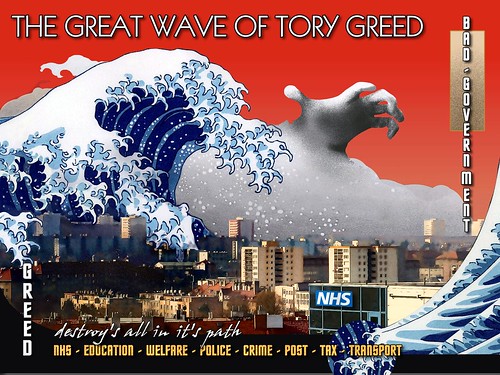
Image by Byzantine_K
The Wonderful Wave of Tory Greed.

You would have thought that the legacy of Thatcher and the recent banking crash was a lesson adequate in the consequences of purely self-serving and unbridled greed. Apparently not.

The solutions that have been privatised beneath the final (and at least in fact elected) Tory government are a continuing bane of our lives and their privatisation has benefitted no-one particular but their owners, shareholders, and executives.

The privatisation of our power and water supplies has led to these important solutions becoming operated by profiteering corporations everywhere from right here to China. We have observed massive increases in bills, ridiculous charges for solutions, and the endless hounding to take up pricey insurances to pay for issues that have been when dealt with as component of the general service to customers.
Our public transport has been run into the ground with poor and delayed solutions, poor line maintenance, filthy trains and outrages fares – much more than doubling in the last decade. Failure to even adequately maintain the infrastructure led to severe and fatal rail disasters some years back. Additionally, the soaring and sometimes unjustified higher price of petrol. Companies are only as well willing to raise the cost in-line with any enhance in oil prices, significantly less prepared however to lower them once more when the oil cost falls back.
Then there is such as the postal service. Creating the postal service self adequate was clearly not sufficient of course. It ‘has’ to make excessive income and at our considerable expense. The cost of postage no longer rises by a couple of pence, and because 2002 the price of a 1st class stamp has doubled from 30p to 60p. Has the earnings of any individual who isn’t a banker, an executive or equivalent, doubled because 2002? No. Nothing at all like it. If something in actual terms the income of most has truly fallen.

And there are of course other examples. But what about now – the new wave of privatisation and cuts which is, and will, actually devastate the UK?

The National Well being Service is being gutted and sold off to cash hungry corporations and thier greedy owners such as Richard Branson and his so-referred to as ‘Virgin Care’. NHS hospitals are getting privatised now, and other individuals closed. Tens of thousands of NHS employees have been produced redundant and more are to be reduce soon over 4000 employees from just a single NHS Trust are getting asked to consider redundancy as many will soon be axed. The NHS is currently overstretched with employees being let go and fewer students unsurprisingly selecting to persue a career in healthcare. Firms who have already bought into the NHS have been found to be deliberately operating down services in an attempt to entice people into picking costly private possibilities. A lot more advertising is appearing for costly private overall health solutions and insurances – and thinking about how insurers treat their personal customers, this is not a very good trend to be persuing. Several major insurers are recently revealed to have been spying on consumers, including serveillance and even getting into houses below false pretences and secretely taking photographs within, the purpose getting to assist in difficult or denying claims. The reality is that healthcare insurers like any other insurer will and do place profit before ANY other consideration. They will stop at nothing to limit or alltogether deny a claim and numerous – possibly all – overall health insurances have exemptions in remedy and care.

Education is becoming ruined with endless bureacracy, and an education program increasingly geared towards the interests of company and profit. It should not be forgotten that a lot of Tories did and nonetheless do resent the idea of state education and would love nothing a lot more than to have all schools as charge-paying, as they feel that children should get only as good an education as their parents can afford.

Beyond this of course, the would-be-laughable if not so worrying drive to slowly privatise the Police service. How will you really feel about Police employed by such as the incompetant and profit-orientated security organization G4S? Several of the staff within police stations are already privately contracted – if this trend continues it is not a case of if but when the logos of corporate affiliation seem on officer’s uniforms, and thier skills and priorities turn out to be genuinely questionable.

All in all, the Conservative Party and their wealthy associates, their &quotlapdog&quot and weak willed Liberal Democrat allies, are top this nation back into a much less responsible, less reasoned and much less caring age, and we will all endure for it. Most of the progress produced because the end of Globe War II has been stripped away in the addiction for wealth and energy by an insulated and careless minority. And, this is frequently with the help or just by means of the apathy of those who will suffer the most from all of this. Us. Do practically nothing now and you will spend later – in all senses. If you are not independently wealthy, do not have a rich and generous loved ones, or are not a Parlimentary politician you must be afraid. Extremely afraid.

Nice China Prototype Manufacturing images

A few nice china prototype manufacturing images I found:

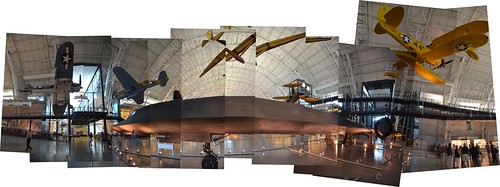
Steven F. Udvar-Hazy Center: Photomontage of SR-71 on the port side

Image by Chris Devers
Posted by means of e-mail to ☛ HoloChromaCinePhotoRamaScope‽: cdevers.posterous.com/panoramas-of-the-sr-71-blackbird-at…. See the complete gallery on Posterous …

• • • • •

See more photos of this, and the Wikipedia post.

Specifics, quoting from Smithsonian National Air and Space Museum | Lockheed SR-71 Blackbird:

No reconnaissance aircraft in history has operated globally in more hostile airspace or with such full impunity than the SR-71, the world’s quickest jet-propelled aircraft. The Blackbird’s efficiency and operational achievements placed it at the pinnacle of aviation technologies developments during the Cold War.

This Blackbird accrued about two,800 hours of flight time throughout 24 years of active service with the U.S. Air Force. On its final flight, March 6, 1990, Lt. Col. Ed Yielding and Lt. Col. Joseph Vida set a speed record by flying from Los Angeles to Washington, D.C., in 1 hour, four minutes, and 20 seconds, averaging three,418 kilometers (two,124 miles) per hour. At the flight’s conclusion, they landed at Washington-Dulles International Airport and turned the airplane over to the Smithsonian.

Transferred from the United States Air Force.

Manufacturer:
Lockheed Aircraft Corporation

Designer:
Clarence L. &quotKelly&quot Johnson

Date:
1964

Nation of Origin:
United States of America

Dimensions:
Overall: 18ft five 15/16in. x 55ft 7in. x 107ft 5in., 169998.5lb. (five.638m x 16.942m x 32.741m, 77110.8kg)
Other: 18ft 5 15/16in. x 107ft 5in. x 55ft 7in. (five.638m x 32.741m x 16.942m)

Components:
Titanium

Physical Description:
Twin-engine, two-seat, supersonic strategic reconnaissance aircraft airframe constructed largley of titanium and its alloys vertical tail fins are constructed of a composite (laminated plastic-type material) to reduce radar cross-section Pratt and Whitney J58 (JT11D-20B) turbojet engines feature huge inlet shock cones.

Long Description:
No reconnaissance aircraft in history has operated in more hostile airspace or with such complete impunity than the SR-71 Blackbird. It is the quickest aircraft propelled by air-breathing engines. The Blackbird’s functionality and operational achievements placed it at the pinnacle of aviation technology developments during the Cold War. The airplane was conceived when tensions with communist Eastern Europe reached levels approaching a complete-blown crisis in the mid-1950s. U.S. military commanders desperately needed correct assessments of Soviet worldwide military deployments, especially close to the Iron Curtain. Lockheed Aircraft Corporation’s subsonic U-two (see NASM collection) reconnaissance aircraft was an able platform but the U. S. Air Force recognized that this comparatively slow aircraft was already vulnerable to Soviet interceptors. They also understood that the speedy development of surface-to-air missile systems could place U-2 pilots at grave threat. The danger proved reality when a U-2 was shot down by a surface to air missile more than the Soviet Union in 1960.

Lockheed’s very first proposal for a new high speed, higher altitude, reconnaissance aircraft, to be capable of avoiding interceptors and missiles, centered on a style propelled by liquid hydrogen. This proved to be impracticable simply because of considerable fuel consumption. Lockheed then reconfigured the design for traditional fuels. This was feasible and the Central Intelligence Agency (CIA), already flying the Lockheed U-two, issued a production contract for an aircraft designated the A-12. Lockheed’s clandestine ‘Skunk Works’ division (headed by the gifted design and style engineer Clarence L. &quotKelly&quot Johnson) created the A-12 to cruise at Mach 3.two and fly effectively above 18,288 m (60,000 feet). To meet these difficult specifications, Lockheed engineers overcame many daunting technical challenges. Flying a lot more than three times the speed of sound generates 316° C (600° F) temperatures on external aircraft surfaces, which are sufficient to melt standard aluminum airframes. The design team chose to make the jet’s external skin of titanium alloy to which shielded the internal aluminum airframe. Two standard, but very powerful, afterburning turbine engines propelled this exceptional aircraft. These power plants had to operate across a huge speed envelope in flight, from a takeoff speed of 334 kph (207 mph) to far more than three,540 kph (2,200 mph). To avoid supersonic shock waves from moving inside the engine intake causing flameouts, Johnson’s team had to design and style a complicated air intake and bypass system for the engines.

Skunk Functions engineers also optimized the A-12 cross-section design and style to exhibit a low radar profile. Lockheed hoped to attain this by very carefully shaping the airframe to reflect as small transmitted radar power (radio waves) as possible, and by application of special paint developed to absorb, rather than reflect, those waves. This therapy became one particular of the 1st applications of stealth technologies, but it never ever totally met the design and style objectives.

Test pilot Lou Schalk flew the single-seat A-12 on April 24, 1962, after he became airborne accidentally in the course of higher-speed taxi trials. The airplane showed great promise but it needed considerable technical refinement ahead of the CIA could fly the initial operational sortie on May 31, 1967 – a surveillance flight more than North Vietnam. A-12s, flown by CIA pilots, operated as portion of the Air Force’s 1129th Particular Activities Squadron under the &quotOxcart&quot system. Although Lockheed continued to refine the A-12, the U. S. Air Force ordered an interceptor version of the aircraft designated the YF-12A. The Skunk Functions, however, proposed a &quotspecific mission&quot version configured to conduct post-nuclear strike reconnaissance. This method evolved into the USAF’s familiar SR-71.

Lockheed built fifteen A-12s, such as a unique two-seat trainer version. Two A-12s have been modified to carry a unique reconnaissance drone, designated D-21. The modified A-12s have been redesignated M-21s. These have been created to take off with the D-21 drone, powered by a Marquart ramjet engine mounted on a pylon in between the rudders. The M-21 then hauled the drone aloft and launched it at speeds high sufficient to ignite the drone’s ramjet motor. Lockheed also built three YF-12As but this kind in no way went into production. Two of the YF-12As crashed during testing. Only a single survives and is on display at the USAF Museum in Dayton, Ohio. The aft section of one of the &quotwritten off&quot YF-12As which was later employed along with an SR-71A static test airframe to manufacture the sole SR-71C trainer. One particular SR-71 was lent to NASA and designated YF-12C. Which includes the SR-71C and two SR-71B pilot trainers, Lockheed constructed thirty-two Blackbirds. The first SR-71 flew on December 22, 1964. Because of intense operational expenses, military strategists decided that the more capable USAF SR-71s ought to replace the CIA’s A-12s. These have been retired in 1968 following only 1 year of operational missions, mainly more than southeast Asia. The Air Force’s 1st Strategic Reconnaissance Squadron (portion of the 9th Strategic Reconnaissance Wing) took over the missions, flying the SR-71 beginning in the spring of 1968.

Soon after the Air Force began to operate the SR-71, it acquired the official name Blackbird– for the specific black paint that covered the airplane. This paint was formulated to absorb radar signals, to radiate some of the tremendous airframe heat generated by air friction, and to camouflage the aircraft against the dark sky at high altitudes.

Experience gained from the A-12 plan convinced the Air Force that flying the SR-71 safely essential two crew members, a pilot and a Reconnaissance Systems Officer (RSO). The RSO operated with the wide array of monitoring and defensive systems installed on the airplane. This gear integrated a sophisticated Electronic Counter Measures (ECM) program that could jam most acquisition and targeting radar. In addition to an array of advanced, high-resolution cameras, the aircraft could also carry gear developed to record the strength, frequency, and wavelength of signals emitted by communications and sensor devices such as radar. The SR-71 was made to fly deep into hostile territory, avoiding interception with its tremendous speed and higher altitude. It could operate safely at a maximum speed of Mach three.three at an altitude a lot more than sixteen miles, or 25,908 m (85,000 ft), above the earth. The crew had to put on stress suits related to those worn by astronauts. These suits were essential to shield the crew in the event of sudden cabin pressure loss whilst at operating altitudes.

To climb and cruise at supersonic speeds, the Blackbird’s Pratt &amp Whitney J-58 engines were developed to operate continuously in afterburner. Whilst this would seem to dictate high fuel flows, the Blackbird really achieved its ideal &quotgas mileage,&quot in terms of air nautical miles per pound of fuel burned, during the Mach three+ cruise. A typical Blackbird reconnaissance flight may well call for several aerial refueling operations from an airborne tanker. Every time the SR-71 refueled, the crew had to descend to the tanker’s altitude, usually about 6,000 m to 9,000 m (20,000 to 30,000 ft), and slow the airplane to subsonic speeds. As velocity decreased, so did frictional heat. This cooling impact caused the aircraft’s skin panels to shrink significantly, and those covering the fuel tanks contracted so considerably that fuel leaked, forming a distinctive vapor trail as the tanker topped off the Blackbird. As quickly as the tanks had been filled, the jet’s crew disconnected from the tanker, relit the afterburners, and once more climbed to high altitude.

Air Force pilots flew the SR-71 from Kadena AB, Japan, throughout its operational career but other bases hosted Blackbird operations, also. The 9th SRW sometimes deployed from Beale AFB, California, to other areas to carryout operational missions. Cuban missions had been flown straight from Beale. The SR-71 did not start to operate in Europe until 1974, and then only temporarily. In 1982, when the U.S. Air Force primarily based two aircraft at Royal Air Force Base Mildenhall to fly monitoring mission in Eastern Europe.

When the SR-71 became operational, orbiting reconnaissance satellites had currently replaced manned aircraft to collect intelligence from web sites deep inside Soviet territory. Satellites could not cover each and every geopolitical hotspot so the Blackbird remained a crucial tool for global intelligence gathering. On numerous occasions, pilots and RSOs flying the SR-71 provided data that proved vital in formulating profitable U. S. foreign policy. Blackbird crews supplied crucial intelligence about the 1973 Yom Kippur War, the Israeli invasion of Lebanon and its aftermath, and pre- and post-strike imagery of the 1986 raid performed by American air forces on Libya. In 1987, Kadena-primarily based SR-71 crews flew a number of missions over the Persian Gulf, revealing Iranian Silkworm missile batteries that threatened industrial shipping and American escort vessels.

As the overall performance of space-primarily based surveillance systems grew, along with the effectiveness of ground-based air defense networks, the Air Force began to drop enthusiasm for the high-priced system and the 9th SRW ceased SR-71 operations in January 1990. Despite protests by military leaders, Congress revived the system in 1995. Continued wrangling over operating budgets, even so, soon led to final termination. The National Aeronautics and Space Administration retained two SR-71As and the one particular SR-71B for higher-speed analysis projects and flew these airplanes till 1999.

On March 6, 1990, the service profession of a single Lockheed SR-71A Blackbird ended with a record-setting flight. This particular airplane bore Air Force serial quantity 64-17972. Lt. Col. Ed Yeilding and his RSO, Lieutenant Colonel Joseph Vida, flew this aircraft from Los Angeles to Washington D.C. in 1 hour, 4 minutes, and 20 seconds, averaging a speed of 3,418 kph (two,124 mph). At the conclusion of the flight, ‘972 landed at Dulles International Airport and taxied into the custody of the Smithsonian’s National Air and Space Museum. At that time, Lt. Col. Vida had logged 1,392.7 hours of flight time in Blackbirds, much more than that of any other crewman.

This certain SR-71 was also flown by Tom Alison, a former National Air and Space Museum’s Chief of Collections Management. Flying with Detachment 1 at Kadena Air Force Base, Okinawa, Alison logged a lot more than a dozen ‘972 operational sorties. The aircraft spent twenty-four years in active Air Force service and accrued a total of two,801.1 hours of flight time.

Wingspan: 55’7&quot
Length: 107’5&quot
Height: 18’6&quot
Weight: 170,000 Lbs

Reference and Additional Reading:

Crickmore, Paul F. Lockheed SR-71: The Secret Missions Exposed. Oxford: Osprey Publishing, 1996.

Francillon, Rene J. Lockheed Aircraft Considering that 1913. Annapolis, Md.: Naval Institute Press, 1987.

Johnson, Clarence L. Kelly: More Than My Share of It All. Washington D.C.: Smithsonian Institution Press, 1985.

Miller, Jay. Lockheed Martin’s Skunk Operates. Leicester, U.K.: Midland Counties Publishing Ltd., 1995.

Lockheed SR-71 Blackbird curatorial file, Aeronautics Division, National Air and Space Museum.

DAD, 11-11-01