Steven F. Udvar-Hazy Center: Kawanishi N1K2-Ja Shiden Kai “George”

Steven F. Udvar-Hazy Center: Kawanishi N1K2-Ja Shiden Kai “George”

A few nice precision engineering elements images I identified:

Steven F. Udvar-Hazy Center: Kawanishi N1K2-Ja Shiden Kai “George”
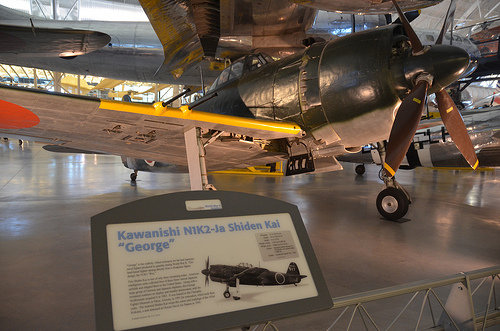
Image by Chris Devers
See a lot more photos of this, and the Wikipedia report.

Particulars, quoting from Smithsonian National Air and Space Museum: Steven F. Udvar-Hazy | Kawanishi N1K2-Ja Shiden (Violet Lightning) Kai (Modified) &quotGEORGE&quot:

GEORGE is the unlikely Allied nickname for the very best Japanese naval fighter developed in quantity throughout World War II. The official Japanese name and designation was Kawanishi N1K2 Shiden (Violet Lightning). This outstanding land-based fighter sprang straight from a floatplane fighter design, the N1K1 REX (see NASM collection).

Many countries utilized floatplanes for scouting and reconnaissance duties, and to hunt submarines and surface ships, but only Japan built and fielded fighters on floats. The Japanese Imperial Navy intended to use these specialized aircraft to achieve air superiority above a beachhead to assistance amphibious landing operations exactly where carrier or land-based fighters had been unavailable. The Kawanishi N1K1 (Allied codename REX) was the only airplane made especially for this purpose to fly in the course of Planet War II.

In September 1940, the Japanese Navy issued a specification for floatplane fighters capable of supporting offensive naval operations. A team of engineers like Toshihara Baba, Shizuo Kikuhara, Hiroyuki Inoue, and Elizaburo Adachi had readied the initial prototype by Might 1942, and it flew on Might 6. Tests showed that the speed of new airplane was only slightly less than the Mitsubishi A6M Zero (see NASM collection) and the amphibious fighter was virtually as maneuverable as its land-primarily based cousin. This was remarkable efficiency for an aircraft that could not retract or jettison its enormous landing gear.

Extended just before the very first Kyofu flew, Kawanishi engineers believed that the fundamental style would also make an excellent land-based fighter. The conversion appeared to entail basically replacing the major and wingtip floats with a traditional landing gear. The business decided to develop this variant as a private venture. As the project unfolded, the engineers decided to replace the 14-cylinder engine with a new 18-cylinder model anticipated to create about two,000 horsepower. The new engine essential a bigger propeller and this component, in turn, necessary abnormally lengthy landing gear struts to stop the blade ideas from contacting the ground. Kawanishi flew the initial N1K1-J land-primarily based fighter on December 27, 1942. The new engine failed to deliver the anticipated power and the landing gear functioned poorly. The airplane also fell quick of projected speed (649 kph – 403 mph) by 74 kph (46 mph) and could handle only 575 kph (357 mph). This was more rapidly than the Mitsubishi A6M Zero ZEKE, nonetheless, and the Japanese Navy badly required an powerful counter to new American naval fighter aircraft such as the Grumman F6F Hellcat and Vought F4U Corsair (see NASM collection). The Japanese Navy ordered Kawanishi to abandon two other fighter projects and start building Shidens.

By the end of 1943, Kawanishi delivered about 70 of the new fighters and the Navy employed these airplanes for pilot familiarization and coaching. Expecting Allied amphibious landings in the Philippines, the Navy sent the very first Shiden unit to Cebu in time to challenge Allied air energy supporting the invasion of that island in October 1944. Engine, landing gear, logistics, and upkeep issues plagued the Shiden units but Allied pilots realized they faced a excellent new Japanese fighter.

With N1K1-J production underway and Shidens flying combat missions, Kawanishi set about refining the design. They lowered the wings from mid-fuselage and the extra ground clearance permitted the engineers to install a shorter, much more conventional and less-troublesome landing gear, simplified the fuselage structure, and redesigned the empennage. Only the wings and armament remained from the initial design. The engine continued to give problems, but the Navy was impressed with these improvements and ordered the new version into production as the N1K2-J Shiden Kai (modified). In air-to-air combat, seasoned Japanese pilots flying Shiden Kais could much more than hold their personal against most American pilots flying F6F Hellcats. In February 1945, a brave pilot, Warrant Officer Muto, single-handedly engaged 12 Hellcats and shot down four of them before the remainder disengaged. Flying intercept missions against Boeing B-29 Superfortresses above the residence islands, the Shiden Kai was less effective since of inadequate climb speed and energy loss at high altitudes.

Kawanishi developed a number of other variants and planned a lot more when the war ended. About 1,500 of the various models had been created. In battle over Formosa (Taiwan), the Philippines, Okinawa, and the house islands, Shiden pilots acquitted themselves nicely but this superb airplane was yet another very good design and style that appeared too late and in as well few numbers to reverse Japan’s fortunes in the air war.

NASM’s Shiden Kai is one of 3 remaining today. The other two are displayed at the U. S. Air Force Museum in Dayton, Ohio, and the New England Air Museum in Windsor Locks, Connecticut. American intelligence units collected 4 GEORGE fighters from numerous Japanese airfields and delivered them to Yokosuka Naval Shipyard for shipment to the United States. The NASM GEORGE came from Omura or Oppama Naval Air Station, Japan, and the fighter arrived stateside aboard the escort carrier &quotUSS Barnes.&quot It was probably evaluated at the Naval Aircraft Factory at Philadelphia, and then moved to Willow Grove Naval Air Station. The GEORGE remained outdoors on show and steadily deteriorated along with a group of German and Japanese airplanes till 1983 when the Smithsonian Institution acquired it. The airplane was stored at the Paul Garber Facility until NASM loaned it to the Champlin Fighter Museum in Mesa, Arizona, for restoration in December 1991 and the project was completed in November 1994. The restored Shiden Kai wears the colors and markings of the 343rd Kokutai, a unit stationed at Omura Naval Air Station in 1945.

Transferred from the United States Navy.

Manufacturer:
Kawanishi Kokuki K. K.

Date:
1942

Nation of Origin:
Japan

Dimensions:
Overall: 400 x 930cm, 2675kg, 1200cm (13ft 1 1/2in. x 30ft 6 1/8in., 5897.3lb., 39ft four 7/16in.)

Components:
All-metal monocoque construction

Physical Description:
Single-engine, low-wing monoplane, standard layout with tailwheel landing gear.

Image from page 241 of “The Bell Technique technical journal” (1922)

Image by Net Archive Book Images
Identifier: bellsystemtechni06amerrich
Title: The Bell Program technical journal
Year: 1922 (1920s)
Authors: American Phone and Telegraph Company
Subjects: Telecommunication Electric engineering Communication Electronics Science Technologies
Publisher: [Brief Hills, N.J., etc., American Phone and Telegraph Co.]
Contributing Library: Prelinger Library
Digitizing Sponsor: Web Archive

View Book Web page: Book Viewer
About This Book: Catalog Entry
View All Images: All Images From Book

Click right here to view book on the web to see this illustration in context in a browseable on the web version of this book.

Text Appearing Ahead of Image:
partially eliminatelarge interfering currents. This appears a most unusual arrangementuntil it is remembered that, despite the fact that the amplitude of a particularpart of the current may be elevated, the total load on the first stagemay nicely be higher than that on the final stage. This is the reverseof the scenario in cascade amplification where the first tubes handleonly a modest existing and the succeeding ones a proportionately largercurrent. The discrimination of a single of the tuned circuits when a couplingresistance of 1 ohm is utilized is provided by curve A of Fig. 4. Curve Bshows the effect of adding the second tuned circuit. If regenerativeamplification had been employed, each the selectivity and amplificationcould of course be significantly enhanced, but this has not been utilised becauseof the necessity for higher stability and measurement precision. Modulator. As previously mentioned, the second amplifier unitworks into a modulator, the circuit of which is shown in Fig. 5. This is LOW FREQUENCYTUNED CIRCUIT

Text Appearing Right after Image:
TO LOW FRE-QUENCY AMPLIFIER-RECTIFIER Fig. 5—Modulator for heterodyne current analyzer of a two tube balanced type In which modulation, or frequency trans-formation, takes spot in the grid circuit. The heterodyning fre-quency is applied in the frequent input lead across a suitable resistance.The input from the amplifier is applied via a transformer acrossthe grids of the two tubes in series with a high resistance in each and every side.No biasing possible is applied on the grids. A modulator operated inthis manner has the house of providing a modulation output propor-tional to the smaller sized of the two input currents and independent of thelarger. The amplitude of this output may possibly, as a result, be determinedentirely by the amplitude of the element becoming measured. Anotherdesirable characteristic of this kind of modulator is that its efficiency isnot affected by interference, therefore it will show a fixed relation among ANALYZER FOR Complex ELECTRIC WAVES 237 the low frequency output and a offered

Note About Photos
Please note that these photos are extracted from scanned page photos that may possibly have been digitally enhanced for readability – coloration and appearance of these illustrations may possibly not perfectly resemble the original operate.

Nice Cnc Engineering photos

Nice Cnc Engineering photos

Some cool cnc engineering photos:

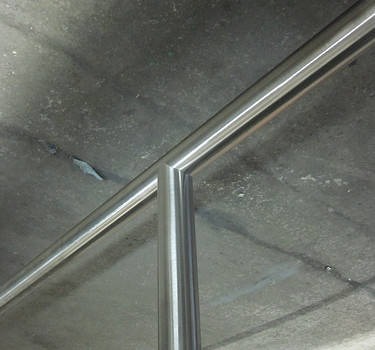
handrail joint

Image by Caliper Studio
Center stringer convenience stair connects two office floors in Starret Lehigh constructing. Stringer and slab edge assemblies are blackened. Twenty 4 stainless steel treads are welded to the stringer type a continuous ribbon. 1 1/four&quot diameter handrail posts are continuous bent &quotC&quot shapes that wrap about treds and are welded to stringer. Stair will be delivered to site in one particular piece [24′ extended 3′ wide 3′ tall @ 2000lbs].

Style by Diller Scofidio + Renfro

Detailing, Fabrication and Installation by Caliper Studio. Caliper Studio engaged Eckersley O’Callaghan &amp partners for engineering solutions.

Stocks To Look Out For: Siliconware Precision Industries (ADR) (NASDAQ:SPIL

Stocks To Look Out For: Siliconware Precision Industries (ADR) (NASDAQ:SPIL
Sophisticated Semiconductor Engineering, Inc. (TAIEX: 2311, NYSE: ASX), on August 28, 2015, admitted the announcement produced public these days by Siliconware Precision Electronics Co, Ltd. in response to ASE&#39s tender offer you of NT$ 45 per widespread share for up to&nbsp…
Study a lot more on Wall Street Observer

ROHM&#39s H Bridge Motor Driver Achieves Lower Power Consumption
Motors have been a driving force behind sector and our everyday lives for as long as any person can keep in mind. More than a century has passed given that the initial Japanese-made motor was created, and the range of motors&#39 applications is still expanding right now.
Read much more on ENGINEERING.com

Cool Precision Engineering Elements photos

Cool Precision Engineering Elements photos

A couple of nice precision engineering components images I found:

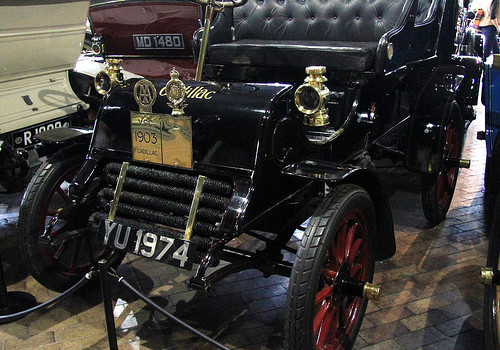
Beaulieu National Motor Museum 18-09-2012

Image by Karen Roe
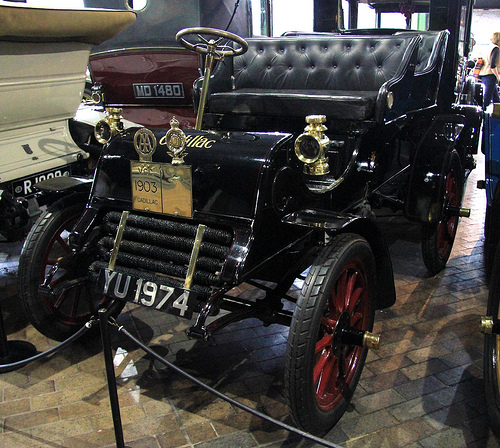
1903 Cadillac
USA
This Model A was the initial Cadillac to be brought to Britain. Frederick Stanley Bennett imported it and drove it in the 1903 Thousand Miles Trial. Bennett subsequently became the official UK importer and was behind the standardisation tests of 1908 in which three identical Cadillacs were dismantled and then rebuilt from a mixed up pile of components, proving the interchangeability of the elements.
Produced in 1902 by Henry Leland, Cadillac was constructed upon the remains of the original Henry Ford Firm. From the starting Leland insisted on the highest requirements of precision engineering in order to build a quality mass produced car, demanding that ‘We need to make every piston so precise and every single cylinder so exact that every piston will fit into every cylinder’. Regardless of these higher production requirements more than 2000 Cadillacs had been developed in 1903.
Engine: 1609cc, 1 cylinder, overhead valve, six,5hp
Performance: 30mph
Cost New: £200
Manufacturer: Cadillac Automobile Business, Detroit
Owner: Mr J.F. Bennett and Mrs M Southam

Housing a collection of over 250 automobiles and motorcycles telling the story of motoring on the roads of Britain from the dawn of motoring to the present day, the award winning (Winner – The International Historic Motoring Awards of the Year 2012) National Motor Museum appeals to all age groups. From World Land Speed Record Breakers such as Campbell’s famous Bluebird to film favourites such as the magical flying car, Chitty Chitty Bang Bang and uncommon oddities like the giant orange on wheels. Don’t miss fascinating extra attributes such as the Motorsport Gallery, Wheels and Jack Tucker’s Garage – A permanent, multi award-winning 1930’s garage has been produced inside the Museum, comprehensive down to the final nut and bolt and rusty drainpipe. While the building is a comprehensive fabrication, everything in it – all the fixtures, fittings, tools and ephemera – are genuine artefacts collected over a period of 25 years.

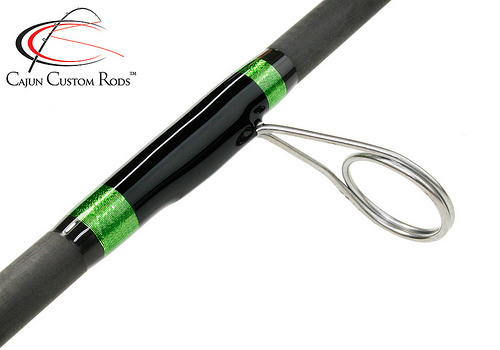
Custom Inshore Snook Spinning Rod

Image by Cajun Custom Rods
This Cajun Custom Rods™ “Inshore Snook Spinning Rod&quot is functionality-enhanced and hand-crafted to provide you the quite greatest custom fishing rod obtainable – loaded for inshore fishing action! Precision-tuned for energy-finesse inshore spin-casting, this custom fishing rod leverages cutting-edge technologies to incorporate: a classic layout of hand-tuned Titanium REC Recoil spinning guides with &quotSpring-Back technology,&quot a CCR™ split grip manage technique utilizing Super Grade Premium Higher Density (HD) Portuguese cork, a sensitivity-tuned and ergonomic AERO spinning reel seat (silver hood / comfort finish), ProWrap &quotMetallic Green &amp Black&quot thread, and a laser-cut Snook decal. This custom fishing rod is built around a perfectly engineered 7′ Lamiglas inshore popping series rod blank … engineered, fabricated, and hand-tuned to each premium component! Custom-made, corrosion-proof, and strike-prepared … At Cajun Custom Rods™, you style the rod of your dreams and we’ll build your self-assurance!”

&quotTight Wraps, Tight Lines, and Content Fishing on the 4th of July!&quot

– Jaesen Yerger
Cajun Custom Rods™, Inc.
www.cajuncustomrods.com

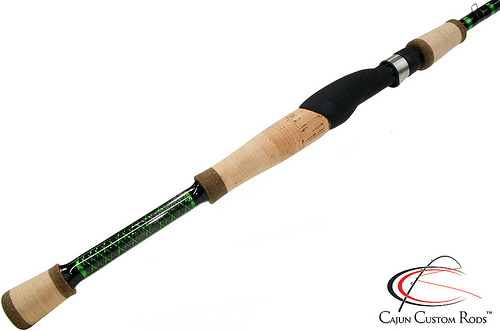
Custom Inshore Snook Spinning Rod

Image by Cajun Custom Rods
This Cajun Custom Rods™ “Inshore Snook Spinning Rod&quot is efficiency-enhanced and hand-crafted to supply you the extremely greatest custom fishing rod available – loaded for inshore fishing action! Precision-tuned for power-finesse inshore spin-casting, this custom fishing rod leverages cutting-edge technologies to include: a standard layout of hand-tuned Titanium REC Recoil spinning guides with &quotSpring-Back technology,&quot a CCR™ split grip manage program utilizing Super Grade Premium High Density (HD) Portuguese cork, a sensitivity-tuned and ergonomic AERO spinning reel seat (silver hood / comfort finish), ProWrap &quotMetallic Green &amp Black&quot thread, and a laser-cut Snook decal. This custom fishing rod is constructed around a completely engineered 7′ Lamiglas inshore popping series rod blank … engineered, fabricated, and hand-tuned to every single premium element! Custom-developed, corrosion-proof, and strike-ready … At Cajun Custom Rods™, you design the rod of your dreams and we’ll create your self-assurance!”

&quotTight Wraps, Tight Lines, and Content Fishing on the 4th of July!&quot

– Jaesen Yerger
Cajun Custom Rods™, Inc.
www.cajuncustomrods.com

Most current Fast Prototype China News

Award-Winning EMS Provider, Creation Technologies, Seems on Fox Business
… including complete-service manufacturing facilities, two turnkey product improvement centers, and two NPI centers for fast prototyping. The firm also has facilities in Canada, Mexico and China. On August 13th, Marvel Production Group, LLC (MPG …
Study a lot more on GlobeNewswire (press release)

Sophisticated filament is important to 3D printing revolution
… holds them collectively.&quot I thought about that story the other day for the duration of a telephone contact with Xiaofan Luo, founder of the Chinese company Polymaker, which makes filament for 3D printers. polymax-engine.jpg … The team figured that 3D printing — then …
Read more on ZDNet

Boy With Severely Deformed &#39Porcelain Legs&#39 Sees His Life Saved by 3D Printing
Just ask a six-year-old tiny boy in China, named Komine, who was born with a condition effecting about a single in 20,000 newborns, known as Osteogenesis Imperfecta (also recognized as “brittle bone disease” or Lobstein Syndrome). If you thought breaking a bone …
Read a lot more on 3DPrint.com

Petalite bids to raise £300k to launch rapid smartphone charger
Twelve component companies located in France, the US, China and Thailand have also been sourced, with the initial 1,100 Petalite batteries scheduled for delivery in October. Leigh Purnell, founder and inventor of Petalite, mentioned: &quotPortable batteries …
Study more on Birmingham Post

The scary history and future of Brazil&#39s booming drone marketplace

The scary history and future of Brazil&#39s booming drone market place
Sánchez says a single cause for Brazil&#39s speedy ascension in the drone revolution can be located in the history of the military dictatorship. Military rulers built on Brazil&#39s currently … For many UAV businesses, like American ones, the BRIC countries …
Read more on Fusion

LeapFrog: 12 ideas for India to seize the digital entrepreneurship opportunity
3 waves of digital innovation have swept across India over the past decades: the software services boom of the 1980s, the DotCom boom of the late 1990s, and the a lot more current wave powered by SMAC technologies (social, mobile, analytics, cloud).
Study far more on YourStory.com

Most current Speedy Prototyping Expense News

British hydrogen fuel cell pioneer develops automobiles and iPhones of the future
Indian mobile masts are the foundation of Winand&#39s strategy for fast expansion. The scale of the rollout will provide … Manufacturing tens of thousands of fuel cells will bring expenses down and attract much more buyers, says Lawson-Statham, who joined the …
Study far more on Telegraph.co.uk

New Possibilities in the .2 Billion Conductive Ink Market place
The target industry here is speedy prototyping or low volume manufacture of boards with 4 layers or higher (etching PCBs gets a lot more difficult with growing layer numbers). This strategy seeks to reduce prototyping turnaround time for multi-layer circuits …
Study much more on EE Instances

How A Philosophy Of &quotInformed Creativity&quot Drives Design and style At Map
But right here&#39s the kicker: it expenses just $ 150—a fraction of what you&#39d spend for an Apple laptop—and it&#39s so easy to build that youngsters can do it. The cleverness and user-friendliness at the heart of …. Fast iteration is essential for Map and its consumers …
Read more on Co.Design

Uncommon 11 Mid-Day Movers 8/21: (MCUR) (SPIL) (NWY) Higher (TUES) (CCIH

Unusual 11 Mid-Day Movers eight/21: (MCUR) (SPIL) (NWY) Greater (TUES) (CCIH
Siliconware Precision Industries Co., Ltd. (Nasdaq: SPIL) 23.7% Larger Advanced Semiconductor Engineering announced nowadays that it plans to commence on August 24, 2015, tender delivers in the Republic of China and the United States for common shares&nbsp…
Read much more on StreetInsider.com

Deals of the day- Mergers and acquisitions
Taiwan&#39s Advanced Semiconductor Engineering Inc (ASE) on Friday stated it would get up to 25 % of Siliconware Precision Industries Co Ltd (SPIL) for an amount likely exceeding T$ 30 billion ($ 918.98 million). ** The planet&#39s largest oil trader Vitol …
Study a lot more on Reuters

Flextronics International Director Lay Koon Tan Sells 2798 Shares (FLEX)
The Business delivers a variety of design and style and engineering solutions that relate to manufacturing (which includes enclosures, metals, plastic injection molding, precision plastics, machining, and mechanicals), technique integration and assembly and test solutions,&nbsp…
Read more on Dakota Economic News

Cool Higher Precision Engineering photos

Some cool high precision engineering photos:

Image from page 1147 of “Electrical globe” (1883)

Image by World wide web Archive Book Images
Identifier: electricalworld43newy
Title: Electrical planet
Year: 1883 (1880s)
Authors:
Subjects: Electrical engineering
Publisher: [New York McGraw-Hill Pub. Co., etc.]
Contributing Library: Engineering – University of Toronto
Digitizing Sponsor: University of Toronto

View Book Page: Book Viewer
About This Book: Catalog Entry
View All Images: All Pictures From Book

Click right here to view book on-line to see this illustration in context in a browseable on the web version of this book.

Text Appearing Prior to Image:
or belt ordirect connection rotary converters, motor-generator sets, oil-in-sulated and air-blast transformers, direct-present and alternating-existing railway motors and controllers, single and polyphase in-duction motors of constant and variable speeds, direct-current motorsof several kinds, including motors for variable-speed service fromsingle and double-voltage circuits, switchboard apparatus, ammeters,voltmeters, wattmeters, synchroscopes, energy factor meters, circuit-breakers and switches, a lot of of them electrically operated portableinstruments, instruments of precision, potential regulators, and innu-merable other forms of auxiliary apparatus and instruments. Thealternating-existing, series-wound, single-phase crane motors, sim-ilar in sort and common construction to the single-phase railwaymotors exhibited in the Transportation Building, and the new West-inghouse Unit Switch System of Numerous Control are also to heseen in this section. The spectacular high-tension sign, utilizing a

Text Appearing After Image:
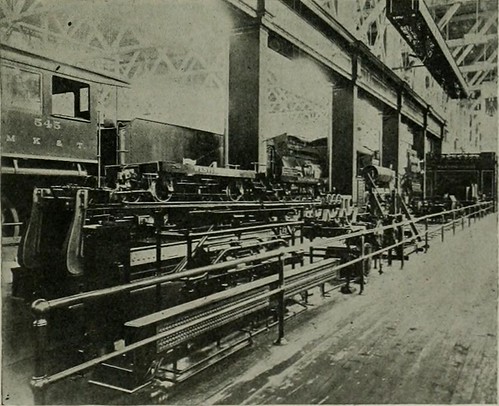
FIG. five.—BRAKE E.XHIBITS, TRANSPORTATION Developing. brake which is now so considerably in use. The method at present gen-erally adopted when two pumps are used on 1 locomotive isshown, and a single of the novel attributes of the rack is that all valvesare placed ig duplicate, a single sectioned so as to show the internalworking mechanism, and connected to the valve in use in such a ELECTRICAL Planet and ENGINEER. Vol. XLIII, No. 24. manner that it moves as the standard valve is operated. The opera-tion of the different valves is therefore readily studied. The Westinghouse friction draft gear also is shown in section,with a machine specially made for testing it in operation. Theavailable power which can be e.xerted on the draft gear approximates2,000 pounds. A triple valve testing rack is presented to show themanner in which this device is now getting installed in a lot of rail-road shops. Sectional parts also are shown of the other apparatusof the Westinghouse Air Brake Organization and the WestinghouseTraction Brake

Note About Photos
Please note that these photos are extracted from scanned page photos that may have been digitally enhanced for readability – coloration and look of these illustrations may possibly not perfectly resemble the original function.