80 Millwick Drive, Unit 1 Weston, Ontario M9L 1Y3 416-740-2646 www.jtfdavco.com.
Month: September 2014
Cool Brass Turned Components pictures
A few nice brass turned parts images I found:
NYC – Brooklyn – Coney Island – The Cyclone

Image by wallyg
Athough it is not the longest standing, or necessarily the most impressive, the Coney Island Cyclone may just be the most famous roller coaster around. The track is 2,650 feet long (including 6 fan turns, 9 drops, 16 changes of direction, and 18 track crossovers) and 85 feet at its highest point; the first drop is nearly 60 degrees. Each of the three trains is made up of three 8-person cars, but only two trains can run simultaneously. Invented by Harry C, Baker, the ride’s top speed is 68 mph and it takes about one minute and fifty seconds.
After seeing the success of 1925’s Thunderbolt and 1926’s Tornado, Jack and Irving Rosenthal bought land at the intersection of Surf Avenue and West 10th Street where the ride the Great Coaster sat. When the Vernon Keenan designed Cyclone opened on June 26, 1927, at a final cost of the Cyclone reported between 6k and 5,000k, a single ride cost 25 cents (35 on Sundays).
According to legend, in 1948 a coal miner with aphonia who visited Coney Island. He had not spoken in years but screamed while going down the Cyclone’s first drop and said "I feel sick" as his train returned to the station—then prompty fainted after realizing he had just spoken.
By the 1960s, attendance at Coney Island had dropped off. In 1965 (or 1971, reports disagree), the Cyclone was bought by the city of New York for one million dollars. Lack of riders hurt profits, and the ride was condemned; in 1972 it was nearly destroyed at the hands of a planned Coney Island aquarium expansion. A "Save the Cyclone" campaign ensued, and the coaster was leased to the Astroland park for ,000 per year. Today, the ride is owned by Astroland, but the land it stands on is still owned by the Parks Department. Astroland’s owners had the ride refurbished, and it reopened on July 3, 1975. In the 1980s, events like the Mermaid Parade and Sideshows by the Seashore brought visitors back to Coney Island and the Cyclone. Its 70th birthday was celebrated in 1997 with a tightrope walk by Tino Wallenda between the ride’s two highest points; that year a single ride cost . Its 80th birthday was celebrated on June 26, 2007 with a brass band, stilt walkers and Miss Cyclone; that year a single ride cost (with a re-ride option).
Astroland Park, opened in 1962 by the Dewey Albert, served as a neighborhood anchor for over 4 decades–surviving recessions, urban renewal, racial tensions and the crack epidemic. But it couldn’t survive Thor Equities, who bought the property (but not the amusement park business) from the Albert family in November, 2006. In its place will be Coney Island Park, part of a planned year-round resort. The municipally owned Cyclone was not part of the Thor sale, and the Albert family will continue to operate it under its contract with the City. The a 3.1-acre park, adjacent to the Coney Island boardwalk owes its name to the the Cold War space race. A red, white, and blue rocket ship, rises above the rides with "ASTROLAND PARK" painted across its fuselage.
The Cyclone was designated a landmark by the New York City Landmarks Preservation Commission in 1988.
National Historic Register #91000907 (1991)
ARIZONA BORDERS AND CITIZEN SAFETY…
Image by roberthuffstutter
The United States Border Patrol is a federal law enforcement agency within U.S. Customs and Border Protection (CBP), a component of the Department of Homeland Security (DHS). Its 20,200 Agents[1] are primarily responsible for immigration and border law enforcement as codified in the Immigration and Nationality Act. Their duty is to prevent terrorists and terrorist weapons from entering the United States and to deter, detect, and apprehend illegal aliens and individuals involved in the illegal drug trade who enter the United States other than through designated ports of entry.
Additionally, the CBP enforces federal controlled substances laws (as codified in the Controlled Substances Act) when violations occur or are found during the enforcement of federal immigration laws, via delegated authority from the Drug Enforcement Administration.
Note that there are two personnel segments of U.S. Customs and Border Protection that people often confuse with each other, the CBP Officer [1], who wears a blue uniform and the Border Patrol Agent [2] who wears a green uniform.
Contents [hide]
1 History
2 Strategy
2.1 1986: Employer sanctions and interior enforcement
2.2 Inspection stations
2.2.1 El Paso Sector’s Operation Hold the Line
2.2.2 San Diego Sector’s Operation Gatekeeper
2.2.3 Tucson Sector’s Operation Safeguard
2.3 Northern border
2.4 Border Patrol moves away from interior enforcement
2.5 The new strategy
3 Capabilities
4 Expansion
5 Special Operations Group
5.1 Other specialized programs
6 Border Patrol organization
6.1 Border Patrol Sectors
7 Training
7.1 Uniforms
7.2 Border Patrol (OBP) Ranks and Insignia
7.2.1 Border Patrol Shoulder Ornaments
8 Awards
8.1 Newton-Azrak Award for Heroism
9 Border Patrol Uniform Devices
10 Equipment
10.1 Weapons
10.2 Transportation
11 Line of duty deaths
12 Armed incursions
13 Ramos and Compean
14 Criticisms
14.1 Ineffective
14.2 Allegations of abuse
14.3 Corruption
15 National Border Patrol Council
16 National Border Patrol Museum
17 In popular culture
17.1 Books
17.2 Film
17.2.1 Documentaries
18 See also
19 References
20 External links
21 External Video
21.1 GAO and OIG Reports
[edit] History
Immigration inspectors, circa 1924Mounted watchmen of the United States Immigration Service patrolled the border in an effort to prevent illegal crossings as early as 1904, but their efforts were irregular and undertaken only when resources permitted. The inspectors, usually called "mounted guards", operated out of El Paso, Texas. Though they never totaled more than 75, they patrolled as far west as California trying to restrict the flow of illegal Chinese immigration.
In March 1915, Congress authorized a separate group of mounted guards, often referred to as "mounted inspectors". Most rode on horseback, but a few operated automobiles, motorcycles and boats. Although these inspectors had broader arrest authority, they still largely pursued Chinese immigrants trying to avoid the National Origins Act and Chinese Exclusion Act of 1882. These patrolmen were Immigrant Inspectors, assigned to inspection stations, and could not watch the border at all times. U.S. Army troops along the southwest border performed intermittent border patrolling, but this was secondary to "the more serious work of military training." Non-nationals encountered illegally in the U.S. by the army were directed to the immigration inspection stations. Texas Rangers were also sporadically assigned to patrol duties by the state, and their efforts were noted as "singularly effective".
The Border Patrol was founded on May 28, 1924 as an agency of the United States Department of Labor to prevent illegal entries along the Mexico–United States border and the United States-Canada border. The first two border patrol stations were in El Paso, Texas and Detroit, Michigan.[2] Additional operations were established along the Gulf Coast in 1927 to perform crewman control to insure that non-American crewmen departed on the same ship on which they arrived. Additional stations were temporarily added along the Gulf Coast, Florida and the Eastern Seaboard during the sixties when in Cuba triumphed the Cuban Revolution and emerged the Cuban Missile Crisis.
Prior to 2003, the Border Patrol was part of the Immigration and Naturalization Service (INS), an agency that was within the U.S. Department of Justice. INS was disbanded in March 2003 when its operations were divided between CBP, United States Citizenship and Immigration Services, and U.S. Immigration and Customs Enforcement.
The priority mission of the Border Patrol, as a result of the 9/11 attacks and its merging into the Department of Homeland Security (DHS) is to prevent terrorists and terrorist weapons from entering the United States of America. However, the Border Patrol’s traditional mission remains as the deterrence, detection and apprehension of illegal immigrants and individuals involved in the illegal drug trade who generally enter the United States other than through designated ports of entry. The Border Patrol also operates 33 permanent interior checkpoints along the southern border of the United States.
Currently, the U.S. Border Patrol employs over 20,200 agents (as of the end of fiscal year 2009),[3] who are specifically responsible for patrolling the 6,000 miles of Mexican and Canadian international land borders and 2,000 miles of coastal waters surrounding the Florida Peninsula and the island of Puerto Rico. Agents are assigned primarily to the Mexico–United States border, where they are assigned to control drug trafficking and illegal immigration.[4] Patrols on horseback have made a comeback since smugglers have been pushed into the more remote mountainous regions, which are hard to cover with modern tracking strategies.[5]
[edit] Strategy
[edit] 1986: Employer sanctions and interior enforcement
Border Patrol Agents with a Hummer and Astar patrol for illegal entry into U.S.The Border Patrol’s priorities have changed over the years. In 1986, the Immigration Reform and Control Act placed renewed emphasis on controlling illegal immigration by going after the employers that hire illegal immigrants. The belief was that jobs were the magnet that attracted most illegal immigrants to come to the United States. The Border Patrol increased interior enforcement and Form I-9 audits of businesses through an inspection program known as "employer sanctions". Several agents were assigned to interior stations, such as within the Livermore Sector in Northern California.
Employer sanctions never became the effective tool it was expected to be by Congress. Illegal immigration continued to swell after the 1986 amnesty despite employer sanctions. By 1993, Californians passed Proposition 187, denying benefits to illegal immigrants and criminalizing illegal immigrants in possession of forged green cards, I.D. cards and Social Security Numbers. It also authorized police officers to question non-nationals as to their immigration status and required police and sheriff departments to cooperate and report illegal immigrants to the INS. Proposition 187 drew nationwide attention to illegal immigration.
[edit] Inspection stations
United States Border Patrol Interior Checkpoints are inspection stations operated by the USBP within 100 miles of a national border (with Mexico or Canada) or in the Florida Keys. As federal inspection stations are also operated by the Mexican government within 50 km of its borders where they are officially known as a "Garita de Revisión." or Garitas, they are known also by that name to Latinos.
[edit] El Paso Sector’s Operation Hold the Line
El Paso Sector Chief Patrol Agent (and future U.S. congressman) Silvestre Reyes started a program called "Operation Hold the Line". In this program, Border Patrol agents would no longer react to illegal entries resulting in apprehensions, but would instead be forward deployed to the border, immediately detecting any attempted entries or deterring crossing at a more remote location. The idea was that it would be easier to capture illegal entrants in the wide open deserts than through the urban alleyways. Chief Reyes deployed his agents along the Rio Grande River, within eyesight of other agents. The program significantly reduced illegal entries in the urban part of El Paso, however, the operation merely shifted the illegal entries to other areas.
[edit] San Diego Sector’s Operation Gatekeeper
A Border Patrol Jeep stands watch over the U.S.-Mexico border at San Ysidro, California.San Diego Sector tried Silvestre Reyes’ approach of forward deploying agents to deter illegal entries into the country. Congress authorized the hiring of thousands of new agents, and many were sent to San Diego Sector.[citation needed] In addition, Congressman Duncan Hunter obtained surplus military landing mats to use as a border fence.[citation needed] Stadium lighting, ground sensors and infra-red cameras were also placed in the area.[citation needed] Apprehensions decreased dramatically in that area as people crossed in different regions.
[edit] Tucson Sector’s Operation Safeguard
California was no longer the hotbed of illegal entry and the traffic shifted to Arizona, primarily in Nogales and Douglas.[citation needed] The Border Patrol instituted the same deterrent strategy it used in San Diego to Arizona.
[edit] Northern border
In 2001, the Border Patrol had approximately 340 agents assigned along the Canada – United States border border. Northern border staffing had been increased to 1,128 agents to 1,470 agents by the end of fiscal year 2008, and is projected to expand to 1,845 by the end of fiscal year 2009, a sixfold increase. Resources that support Border Patrol agents include the use of new technology and a more focused application of air and marine assets.
The northern border sectors are Blaine (Washington), Buffalo (New York), Detroit (Selfridge ANGB, Michigan), Grand Forks (North Dakota), Havre (Montana), Houlton (Maine), Spokane (Washington), and Swanton (Vermont).
[edit] Border Patrol moves away from interior enforcement
In the 1990s, Congress mandated that the Border Patrol shift agents away from the interior and focus them on the borders.
After the September 11, 2001 attacks, the Department of Homeland Security created two immigration enforcement agencies out of the defunct Immigration and Naturalization Service: U.S. Immigration and Customs Enforcement (ICE) and the U.S. Customs and Border Protection (CBP). ICE was tasked with investigations, detention and removal of illegal immigrants, and interior enforcement. CBP was tasked with inspections at U.S. ports of entry and with preventing illegal entries between the port of entry, transportation check, and entries on U.S. coastal borders. DHS management decided to align the Border Patrol with CBP. CBP itself is solely responsible for the nation’s ports of entry, while Border Patrol maintains jurisdiction over all locations between ports of entry, giving Border Patrol agents federal authority absolutely[dubious – discuss] nationwide[dubious – discuss].
In July 2004, the Livermore Sector of the United States Border Patrol was closed. Livermore Sector served Northern California and included stations at Dublin (Parks Reserve Forces Training Area), Sacramento, Stockton, Fresno and Bakersfield. The Border Patrol also closed other stations in the interior of the United States including Roseburg, Oregon and Little Rock, Arkansas. The Border Patrol functions in these areas consisted largely of local jail and transportation terminal checks for illegal immigrants. These functions were turned over to U.S. Immigration and Customs Enforcement.
[edit] The new strategy
Cameras add "Smart Border" surveillance.In November 2005, the U.S. Border Patrol published an updated national strategy.[6] The goal of this updated strategy is operational control of the United States border. The strategy has five main objectives:
Apprehend terrorists and terrorist weapons illegally entering the United States;
Deter illegal entries through improved enforcement;
Detect, apprehend, and deter smugglers of humans, drugs, and other contraband;
Use "smart border" technology; and
Reduce crime in border communities, improving quality of life.
[edit] Capabilities
The border is a barely discernible line in uninhabited deserts, canyons, or mountains. The Border Patrol utilizes a variety of equipment and methods, such as electronic sensors placed at strategic locations along the border, to detect people or vehicles entering the country illegally. Video monitors and night vision scopes are also used to detect illegal entries. Agents patrol the border in vehicles, boats, aircraft, and afoot. In some areas, the Border Patrol employs horses, all-terrain motorcycles, bicycles, and snowmobiles. Air surveillance capabilities are provided by unmanned aerial vehicles.[3]
The primary activity of a Border Patrol Agent is "Line Watch". Line Watch involves the detection, prevention, and apprehension of terrorists, undocumented aliens and smugglers of aliens at or near the land border by maintaining surveillance from a covert position; following up on leads; responding to electronic sensor television systems and aircraft sightings; and interpreting and following tracks, marks, and other physical evidence. Major activities include traffic check, traffic observation, city patrol, transportation check, administrative, intelligence, and anti-smuggling activities.[4]
Traffic checks are conducted on major highways leading away from the border to detect and apprehend illegal aliens attempting to travel further into the interior of the United States after evading detection at the border, and to detect illegal narcotics.[3]
Transportation checks are inspections of interior-bound conveyances, which include buses, commercial aircraft, passenger and freight trains, and marine craft.[3]
Marine Patrols are conducted along the coastal waterways of the United States, primarily along the Pacific coast, the Caribbean, the tip of Florida, and Puerto Rico and interior waterways common to the United States and Canada. Border Patrol conducts border control activities from 130 marine craft of various sizes. The Border Patrol maintains watercraft ranging from blue-water craft to inflatable-hull craft, in 16 sectors, in addition to headquarters special operations components.[3]
Horse and bike patrols are used to augment regular vehicle and foot patrols. Horse units patrol remote areas along the international boundary that are inaccessible to standard all-terrain vehicles. Bike patrol aids city patrol and is used over rough terrain to support linewatch.[3] Snowmobiles are used to patrol remote areas along the northern border in the winter.
[edit] Expansion
Attrition in the Border Patrol was normally at 5%. From 1995-2001 attrition spiked to above 10%, which was a period when the Border Patrol was undergoing massive hiring. In 2002 the attrition rate climbed to 18%. The 18% attrition was largely attributed to agents transferring to the Federal Air Marshals after 9/11. Since that time the attrition problem has decreased significantly and Congress has increased journeyman Border Patrol Agent pay from GS-9 to GS-11 in 2002. The Border Patrol Marine Position was created in 2009 (BPA-M). This position will be updated to a GS-12 position sometime in 2010 or 2011. Border Patrol Field Training Officers may possibly be updated in 2010 to a temporary GS-12 pay rate. In 2005, Border Patrol attrition dropped to 4% and remains in the area of 4% to 6% as of 2009.[7]
The Intelligence Reform and Terrorism Prevention Act of 2004 (signed by President Bush on December 17, 2004) authorized hiring an additional 10,000 agents, "subject to appropriation". This authorization, if fully implemented, would nearly double the Border Patrol manpower from 11,000 to 21,000 agents by 2010.
In July 2005, Congress signed the Emergency Supplemental Spending Act for military operations in Iraq/Afghanistan and other operations. The act also appropriated funding to increase Border Patrol manpower by 500 Agents. In October 2005, President Bush also signed the DHS FY06 Appropriation bill, funding an additional 1,000 Agents.
In November 2005, President George W. Bush made a trip to southern Arizona to discuss more options that would decrease illegal crossings at the U.S. and Mexican border. In his proposed fiscal year 2007 budget he has requested an additional 1,500 Border Patrol agents.
The Secure Fence Act, signed by President George W. Bush on October 26, 2006, has met with much opposition. In October 2007, environmental groups and concerned citizens filed a restraining order hoping to halt the construction of the fence, set to be built between the United States and Mexico. The act mandates that the fence be built by December 2008. Ultimately, the United States seeks to put fencing around the 1,945-mile (3,130 km) border, but the act requires only 700 miles (1,100 km) of fencing. DHS secretary Michael Chertoff has bypassed environmental and other oppositions with a waiver that was granted to him by Congress in Section 102 of the act, which allows DHS to avoid any conflicts that would prevent a speedy assembly of the fence.[8][9]
This action has led many environment groups and landowners to speak out against the impending construction of the fence.[10] Environment and wildlife groups fear that the plans to clear brush, construct fences, install bright lights, motion sensors, and cameras will scare wildlife and endanger the indigenous species of the area.[11] Environmentalists claim that the ecosystem could be affected due to the fact that a border fence would restrict movement of all animal species, which in turn would keep them from water and food sources on one side or another. Desert plants would also feel the impact, as they would be uprooted in many areas where the fence is set to occupy.[12]
Property owners in these areas fear a loss of land. Landowners would have to give some of their land over to the government for the fence. Citizens also fear that communities will be split. Many students travel over the border every day to attend classes at the University of Texas at Brownsville. Brownsville mayor Pat Ahumada favors alternative options to a border fence. He suggests that the Rio Grande River be widened and deepened to provide for a natural barrier to hinder illegal immigrants and drug smugglers.[13]
The United States Border Patrol Academy is located in Artesia, New Mexico.
[edit] Special Operations Group
A Border Patrol Special Response Team searches room-by-room a hotel in New Orleans in response to Hurricane Katrina.
CBP BORSTAR canine team conducting rappeling trainingIn 2007, the Border Patrol created the Special Operations Group (SOG) headquartered in El Paso, TX to coordinate the specialized units of the agency.[14]
Border Patrol Tactical Unit (BORTAC)
National Special Response Team (NSRT)
Border Patrol, Search, Trauma and Rescue (BORSTAR)
Air Mobile Unit (AMU)
[edit] Other specialized programs
The Border Patrol has a number of other specialized programs and details.
Air and Marine Operations
K9 Units
Mounted Patrol
Bike patrol
Sign-cutting (tracking)
Snowmobile unit
Infrared scope unit
Intelligence
Anti-smuggling investigations
Border Criminal Alien Program
Multi-agency Anti-Gang Task Forces (regional & local units)
Honor Guard
Pipes and Drums
Chaplain
Peer Support
[edit] Border Patrol organization
David V. Aguilar, Acting Commissioner of Customs and Border ProtectionThe current Acting Chief of the Border Patrol is Michael J. Fisher who succeeded in 2010 David V. Aguilar, who is now the Acting Commissioner of Customs and Border Protection.
[edit] Border Patrol Sectors
There are 20 Border Patrol sectors, each headed by a Sector Chief Patrol Agent.
Northern Border (West to East):
Blaine Sector (Western Washington State, Idaho, and Western Montana.) – stations; Bellingham, Blaine, Port Angeles, Sumas.
Spokane Sector (Eastern Washington State)
Havre Sector (Montana)
Grand Forks Sector (North Dakota)
Detroit Sector (Selfridge Air National Guard Base, Michigan) – stations; Downtown Detroit, Marysville, Gibralter, Sault Sainte Marie, Sandusky Bay.
Buffalo Sector (New York) – stations; Buffalo, Erie, Niagura Falls, Oswego, Rochester, Wellesley Island.
Swanton Sector (Vermont)
Houlton Sector (Maine)
Southern Border (West to East):
San Diego Sector (San Diego, California)
El Centro Sector (Imperial County, California)
Yuma Sector (Western Arizona)- stations; Wellton, Yuma, Blythe
Tucson Sector (Eastern Arizona)
El Paso Sector (El Paso, Texas and New Mexico) – stations; Alamogordo, Albuquerque, Deming, El Paso, Fabens, Fort Hancock, Las Cruces, Lordsburg, Santa Teresa, Truth or Consequences, Ysleta
Marfa Sector (Big Bend Area of West Texas) – stations; Alpine, Amarillo, Big Bend, Fort Stockton, Lubbock, Marfa, Midland, Pecos, Presidio, Sanderson, Sierra Blanca, Van Horn
Del Rio Sector (Del Rio, Texas) – stations; Abilene, Brackettville, Carrizo Springs, Comstock, Del Rio, Eagle Pass North, Eagle Pass South, Rocksprings, San Angelo, Uvalde
Rio Grande Valley Sector (South Texas) – stations; Brownsville, Corpus Christi, Falfurrias, Fort Brown, Harlingen, Kingsville, McAllen, Rio Grande City, Weslaco
Laredo Sector (South Texas) – stations; Cotulla, Dallas, Freer, Hebbronville, Laredo North, Laredo South, Laredo West, San Antonio, Zapata
New Orleans Sector (Louisiana, Mississippi, Alabama, and West Florida)
Miami Sector (Florida East and South)
Caribbean
Ramey Sector (Aguadilla, Puerto Rico) and the Virgin Islands, it is the only Border Patrol Sector located outside the continental United States
[edit] Training
All Border Patrol Agents spend 15 weeks in training at the Border Patrol Academy (if they are fluent in Spanish) in Artesia, New Mexico, which is a component of the Federal Law Enforcement Training Center (FLETC).Those who are not fluent in Spanish spend an additional eight weeks at the Academy. Recruits are instructed in Border Patrol and federal law enforcement subjects.
Border Patrol courses include: Immigration and Nationality Law, Criminal Law and Statutory Authority, Spanish, Border Patrol Operations, Care and Use of Firearms, Physical Training, Driver Training, and Anti-Terrorism.
FLETC courses include: Communications, Ethics and Conduct, Report Writing, Introduction to Computers, Fingerprinting, and Constitutional Law.[15]
The physical aspects of the Border Patrol Training Program are extremely demanding. At the end of 55 days, trainees must be able to complete a one and a half mile run in 13 minutes or less, a confidence course in two and a half minutes or less, and a 220 yard dash in 46 seconds or less. This final test is much easier than the day to day physical training during the program.[15]
[edit] Uniforms
The Border Patrol currently wears the following types of uniforms:
CBP officers at a ceremony in 2007Dress uniform – The dress uniform consists of olive-green trousers with a blue stripe, and an olive-green shirt, which may or may not have blue shoulder straps. The campaign hat is worn with uniform.
Ceremonial uniform – When required, the following items are added to the dress uniform to complete the ceremonial uniform: olive-green Ike jacket or tunic with blue accents (shoulder straps and cuffs, blue tie, brass tie tack, white gloves, and olive-green felt campaign hat with leather hat band. The campaign hat is worn with uniform.
Rough duty uniform – The rough duty uniform consists of green cargo trousers and work shirt (in short or long sleeves). Usually worn with green baseball cap or tan stetson.
Accessories, footwear, and outerwear – Additional items are worn in matching blue or black colors as appropriate.
Organization patches – The Border Patrol wears two:
The CBP patch is worn on the right sleeves of the uniform. It contains the DHS seal against a black background with a "keystone" shape. A "keystone" is the central, wedge-shaped stone in an arch, which holds all the other stones in place.
Border Patrol agents retain the circular legacy Border Patrol patch, which is worn on the left sleeve.
The Border Patrol uniform is getting its first makeover since the 1950s to appear more like military fatigues and less like a police officer’s duty garb.[16] Leather belts with brass buckles are being replaced by nylon belts with quick-release plastic buckles, slacks are being replaced by lightweight cargo pants, and shiny badges and nameplates are being replaced by cloth patches.
[edit] Border Patrol (OBP) Ranks and Insignia
Location Title Collar insignia Shoulder ornament Pay grade
Border Patrol Headquarters Chief of the Border Patrol Gold-plated Senior Executive Service (SES)
Deputy Chief of the Border Patrol Gold-plated SES
Division Chief Gold-plated SES
Deputy Division Chief Gold-plated GS-15, General Schedule
Associate Chief Gold-plated GS-15
Assistant Chief Silver-plated GS-14
Operations Officer Oxidized GS-13
Border Patrol Sectors Chief Patrol Agent (CPA) Gold-plated SES or GS-15
Deputy Chief Patrol Agent (DCPA) Gold-plated SES/GS-15 or GS-14
Division Chief Gold-plated GS-15
Assistant Chief Patrol Agent (ACPA) Silver-plated GS-15 or GS-14
Patrol Agent in Charge (PAIC) Silver-plated GS-14 or GS-13
Assistant Patrol Agent in Charge (APAIC) Oxidized GS-13
Special Operations Supervisor (SOS) Oxidized GS-13
Field Operations Supervisor (FOS) Oxidized GS-13
Supervisory Border Patrol Agent (SBPA) Oxidized GS-12
Senior Patrol Agent (SPA) (Note: Being phased out through attrition) No insignia Currently GS-11 (Will be upgraded to full performance level GS-12 sometime during the 1st quarter of 2011)
Border Patrol Agent (BPA) No insignia GS-5, 7, 9, 11 (Upgrade to GS-12 pending)
Border Patrol Academy Chief Patrol Agent (CPA) Gold-plated GS-15
Deputy Chief Patrol Agent (DCPA) Gold-plated GS-15
Assistant Chief Patrol Agent (ACPA) Silver-plated GS-14
Training Operations Supervisor (TOS) Oxidized GS-14
Supervisory Border Patrol Agent (Senior Instructor) Oxidized GS-13
Supervisory Border Patrol Agent (Instructor) Oxidized GS-13
[edit] Border Patrol Shoulder Ornaments
[edit] Awards
Newton-Azrak Award for Heroism Commissioners Distinguished Career Service Award Commissioners Exceptional Service Medal Commissioners Meritorious Service Award Commissioners Special Commendation Award Chiefs Commendation Medal
No Image Available No Image Available No Image Available
Commissioners Excellence in Group Achievement Award Purple Cross Wound Medal Academy Honor Award Winner Border Patrol Long Service Medal 75th Anniversary of the Border Patrol Commemorative Medal
No Image Available No Image Available
[edit] Newton-Azrak Award for Heroism
The Border Patrol’s highest honor is the Newton-Azrak Award for Heroism. This Award is bestowed to Border Patrol Agents for extraordinary actions, service; accomplishments reflecting unusual courage or bravery in the line of duty; or an extraordinarily heroic or humane act committed during times of extreme stress or in an emergency.
This award is named for Border Patrol Inspectors Theodore Newton[17] and George Azrak,[18] who were murdered by two drug smugglers in San Diego County in 1967.
[edit] Border Patrol Uniform Devices
Border Patrol Tactical Unit (BORTAC) Border Patrol Search, Trauma and Rescue Unit (BORSTAR) Special Response Team (NSRT) Honor Guard Border Patrol Pipes and Drums Cap Badge
No Image Available
K-9 Handler Chaplain Field Training Officer Peer Support
[edit] Equipment
[edit] Weapons
A Border Patrol Agent carrying an M14 rifle.Border Patrol Agents are issued the H&K P2000 double action pistol in .40 S&W. It can contain as many as 13 rounds of ammunition (12 in the magazine and one in the chamber).
Like other law enforcement agencies, the Remington 870 is the standard shotgun.
Border Patrol Agents also commonly carry the M4 Carbine and the H&K UMP 40 caliber submachine gun. The M14 rifle is used for mostly ceremonial purposes.
As a less than lethal option, the Border Patrol also uses the FN303.
[edit] Transportation
Unlike in many other law enforcement agencies in the United States, the Border Patrol operates several thousand SUVs and pickup trucks, which are known for their capabilities to move around in any sort of terrain. This vehicles may have individual revolving lights (strobes or LEDs) and/or light bars and sirens. An extensive modernization drive has ensured that these vehicles are equipped with wireless sets in communication with a central control room. Border Patrol vehicles may also have equipment such as speed radar, breathalyzers, and emergency first aid kits. Some sectors make use of sedans like the Ford Crown Victoria Police Interceptor or the Dodge Charger as patrol cars or high speed "interceptors" on highways. The Border Patrol also operates ATVs, motorcycles, snowmobiles, and small boats in the riverine environment. In 2005, all Border Patrol and ICE aircraft operations were combined under CBP’s Office of Air and Marine. All CBP vessel operation in Customs Waters are conducted by Office of Air and Marine.
Color schemes of Border Patrol vehicles are either a long green stripe running the length of the vehicle or a broad green diagonal stripe on the door. Most Border Patrol vehicles are painted predominantly white.
The Border Patrol also extensively uses horses for remote area patrols. The U.S. Border Patrol has 205 horses As of 2005[update]. Most are employed along the Mexico–United States border. In Arizona, these animals are fed special processed feed pellets so that their wastes do not spread non-native plants in the national parks and wildlife areas they patrol.[19]
[edit] Line of duty deaths
Total line of duty deaths (since 1904): 105[20]
Aircraft accident: 14
Assault: 2
Automobile accident: 28
Drowned: 4
Fall: 4
Gunfire: 30
Gunfire (Accidental): 3
Heart attack: 6
Heat exhaustion: 1
Motorcycle accident: 2
Stabbed: 2
Struck by train: 3
Struck by vehicle: 3
Vehicle pursuit: 2
Vehicular assault: 3
[edit] Armed incursions
On August 7, 2008, Mexican troops crossed the border into Arizona and held a U.S. Border Patrol Agent at gunpoint. Agents stationed at Ajo, Arizona said that the Mexican soldiers crossed the border into an isolated area southwest of Tucson and pointed rifles at the agent, who has not been identified. The Mexicans withdrew after other American agents arrived on the scene.[21]
[edit] Ramos and Compean
In February 2005, Border Patrol Agents Ignacio Ramos and Jose Compean were involved in an incident while pursuing a van in Fabens, Texas. The driver, later identified as Aldrete Davila, was shot by Agent Ramos during a scuffle. Davila escaped back into Mexico, and the agents discovered that the van contained a million dollars worth of marijuana (about 750 pounds). None of the agents at the scene orally reported the shooting, including two supervisors. The Department of Homeland Security opened up an internal affairs investigation into the incident.[22] See also [23][24][25]
[edit] Criticisms
[edit] Ineffective
In 2006, a documentary called The Illegal Immigration Invasion[26] linked the scale of illegal immigration into the United States chiefly to the ineffectiveness of the Border Patrol. The film claimed that this is due to the lack of judicial powers of the Border Patrol and the effective hamstringing of the agency by the federal government. The film interviews people that deal with illegal immigration on a daily basis, as well as local citizens living in the border areas.
[edit] Allegations of abuse
There are allegations of abuse by the United States Border Patrol such as the ones reported by Jesus A. Trevino, that concludes in an article published in the Houston Journal of International Law (2006) with a request to create an independent review commission to oversee the actions of the Border Patrol, and that creating such review board will make the American public aware of the "serious problem of abuse that exists at the border by making this review process public" and that "illegal immigrants deserve the same constitutionally-mandated humane treatment of citizens and legal residents".[27]
In 1998, Amnesty International investigated allegations of ill-treatment and brutality by officers of the Immigration and Naturalization Service, and particularly the Border Patrol. Their report said they found indications of human rights violations during 1996, 1997 and early 1998.[28]
An article in Social Justice by Michael Huspek, Leticia Jimenez, Roberto Martinez (1998) cites that in December 1997, John Case, head of the INS Office of Internal Audit, announced at a press conference that public complaints to the INS had risen 29% from 1996, with the "vast majority" of complaints emanating from the southwest border region, but that of the 2,300 cases, the 243 cases of serious allegations of abuse were down in 1997. These serious cases are considered to be distinct from less serious complaints, such as "verbal abuse, discrimination, extended detention without cause."[29]
[edit] Corruption
Incidences of corruption in the U.S. Border Patrol include:
Pablo Sergio Barry, an agent charged with one count of harboring an illegal immigrant, three counts of false statements, and two counts of making a false document.[30] He plead guilty.[31]
Christopher E. Bernis, an agent indicted on a charge of harboring an illegal immigrant for nine months while employed as a U.S. Border Patrol agent.[32]
Jose De Jesus Ruiz, an agent whose girlfriend was an illegal immigrant, he was put on administrative leave pending an investigation.[32]
Oscar Antonio Ortiz, an illegal immigrant[33] who used a fake birth certificate to get into the Border Patrol admitted to smuggling more than 100 illegal immigrants into the U.S., some of them in his government truck,[34] and was helping to smuggle illegal immigrants and charged with conspiring with another agent to smuggle immigrants.
An unidentified patrol agent who was recorded on a wire tap stating that he helped to smuggle 30 to 50 immigrants at a time.[33]
[edit] National Border Patrol Council
National Border Patrol Council (NBPC) is the labor union which represents over 14,000 Border Patrol Agents and support staff. The NBPC was founded in 1968, and its parent organization is the American Federation of Government Employees, AFL-CIO. The NBPC’s executive committee is staffed by current and retired Border Patrol Agents and, along with its constituent locals, employs a staff of a dozen attorneys and field representatives. The NBPC is associated with the Peace Officer Research Association of California’s Legal Defense Fund.[35]
[edit] National Border Patrol Museum
The National Border Patrol Museum is located in El Paso, Texas. The museum exhibits uniforms, equipment, photographs, guns, vehicles, airplanes, boats, and documents which depict the historical and current sector operations throughout the United States.
[edit] In popular culture
[edit] Books
Border Patrol by Alvin Edward Moore
The Border Patrol by Deborah Wells Salter
EWI: Entry Without Inspection (Title 8 U.S.C. § 1325 Improper entry by alien) by Fortuna Testarona Valiente
Tracks in the Sand: A Tale of the Border Patrol by Kent E Lundgren,
On The Line: Inside the U.S. Border Patrol by Alex Pacheco and Erich Krauss
Patrolling Chaos: The U.S. Border Patrol in Deep South Texas by Robert Lee Maril
The U.S. Border Patrol: Guarding the Nation (Blazers) by Connie Collwell Miller
My Border Patrol Diary: Laredo, Texas by Dale Squint
Holding the Line: War Stories of the U.S. Border Patrol by Gerald Schumacher
The Border Patrol Ate My Dust by Alicia Alarcon, Ethriam Cash Brammer, and Ethriam Cash Brammer de Gonzales
The Border: Exploring the U.S.-Mexican Divide by David J. Danelo
Beat The Border: An Insider’s Guide To How The U.S. Border Works And How To Beat It by Ned Beaumont
West of the Moon: A Border Patrol Agent’s Tale by D. B. Prehoda
The Journey: U.S. Border Patrol & the Solution to the Illegal Alien Problem by Donald R. Coppock
Border patrol: With the U.S. Immigration Service on the Mexican boundary, 1910-54 by Clifford Alan Perkins
Border Patrol: How U.S. Agents Protect Our Borders from Illegal Entry by Carroll B. Colby
In Mortal Danger: The Battle for America’s Border and Security by Tom Tancredo
[edit] Film
Border Patrolman, a 1936 film in which a Border Patrolman Bob Wallace, played by George O’Brien, resigns in protest after being humiliated by the spoiled granddaughter of a millionaire.
Border Patrol, a 1943 film starring William C. Boyd, Andy Clyde, George Reeves, and Robert Mitchum
Borderline, a 1950 film noir starring Fred MacMurray about drug smuggling across the U.S./Mexico border
Border Patrol, a 1959 syndicated television series, starring Richard Webb as the fictitious deputy chief of the U.S. Border Patrol
Borderline, a 1980 movie starring Charles Bronson about a Border Patrol Agent on the U.S./Mexico border
The Border, a 1982 film starring Jack Nicholson
El Norte, a 1983 film portraying Central American Indian peasants traveling to the United States.
Flashpoint, a 1984 film starring Kris Kristofferson
Last Man Standing, a 1996 film starring Bruce Willis and Ken Jenkins as Texas Ranger Captain Tom Pickett who is investing the killing of an unnamed Immigration Inspector (played by Larry Holt) across the border in Mexico.
Men in Black, a 1997 science fiction comedy action film starring Tommy Lee Jones, Will Smith and Vincent D’Onofrio. The Border Patrol was portrayed as Immigration Inspectors
The Gatekeeper, a 2002 film by John Carlos Frey about the struggles of migrants at the Mexican/US border.
The Shepherd: Border Patrol, a 2007 film starring Jean-Claude Van Damme
Linewatch, a 2008 film starring Cuba Gooding, Jr., as a Border Patrol agent defending his family from a group of Los Angeles gang members involved in the illegal trade of importing narcotics into the United States.
[edit] Documentaries
Border Patrol: American’s Gatekeepers A&E with former United States Attorney General Janet Reno
Investigative Reports: Border Patrol: America’s Gatekeepers A&E Investigates
History the Enforcers : Border Patrol History Channel
[edit] See also
Border Protection Personnel
United States portal
Law enforcement/Law enforcement topics portal
List of United States federal law enforcement agencies
Immigration and Customs Enforcement
Border control
Ignacio Ramos
Illegal immigration
H.R. 4437
Minuteman Project
MQ-9 Reaper
No More Deaths
Office of CBP Air
United States Mexico barrier
United States-Canadian Border
la migra
[edit] References
^ "Reinstatements to the northern border". CPB.gov. US Customs and Border Protection. 2008-05-19. www.cbp.gov/xp/cgov/border_security/border_patrol/reinsta…. Retrieved 2009-06-01.
^ www.cbp.gov/xp/cgov/border_security/border_patrol/border_…
^ a b c d e f "Boarder Patrol overview". CPB.gov. US Customs and Boarder Protection. 2008-08-22. www.cbp.gov/xp/cgov/border_security/border_patrol/border_…. Retrieved 2009-06-01.
^ a b "Who we are and what we do". CPB.gov. US Customs and Boarder Protection. 2008-09-03. www.cbp.gov/xp/cgov/border_security/border_patrol/who_we_…. Retrieved 2009-06-01.
^ Gaynor, Tim (2008-01-23). "U.S. turns to horses to secure borders". Reuters. www.reuters.com/article/inDepthNews/idUSN2323280820080124…. Retrieved 2008-01-24.
^ www.cbp.gov/linkhandler/cgov/border_security/border_patro…[dead link]
^ Nuñez-Neto, Blas (2006-010-25) (PDF). Border security: The role of the U.S. Border Patrol. Congressional Research Service. p. 35. digital.library.unt.edu/govdocs/crs//data/2006/upl-meta-c…. Retrieved 2009-06-01.
^ Coyle, Marcia (2008-03-03). "Waivers for border fence challenged: Environmental groups take their complaints to Supreme Court". The Recorder.
^ Archibold, Randal C. (2008-04-02). "Government issues waiver for fencing along border". New York Times. www.nytimes.com/2008/04/02/us/02fence.html. Retrieved 2008-04-02.
^ "Conservation groups call for an immediate halt to construction of border fence in San Pedro National Conservation Area". US Newswire. 2007-10-05.
^ Gordon, David George (May 2000). "A ‘grande’ dispute". National Geographic World: p. 4.
^ Cohn, Jeffrey P. (2007). "The environmental impacts of a border fence". BioScience 57 (1): 96. doi:10.1641/B570116. www.bioone.org/doi/full/10.1641/B570116. Retrieved 2009-06-01.
^ "Expansive border fence stirs fights over land". Tell Me More. NPR. 2008-03-03.
^ 2007 State of the Border Patrol video[dead link]
^ a b "FAQs: Working for the Border Patrol-basic training". CPB.gov. US Customs and Boarder Protection. 2008-05-29. www.cbp.gov/xp/cgov/careers/customs_careers/border_career…. Retrieved 2009-06-01.
^ Spagat, Elliot (2007-08-16). "Border Patrol uniform gets first makeover since the 1950s". North County Times. www.nctimes.com/articles/2007/08/17/news/sandiego/18_64_3…. Retrieved 2009-06-01.
^ "Border Patrol Inspector Theodore L. Newton Jr.". The Officer Down Memorial Page. www.odmp.org/officer.php?oid=9933. Retrieved 2009-06-01.
^ "Border Patrol Inspector George F. Azrak". The Officer Down Memorial Page. www.odmp.org/officer.php?oid=1368. Retrieved 2009-06-01.
^ Rostien, Arthur H. (2005-06-09). "Border Patrol horses get special feed that helps protect desert ecosystem". Environmental News Network. www.enn.com/top_stories/article/1731. Retrieved 2009-06-01.
^ "United States Department of Homeland Security – Customs and Border Protection – Border Patrol". The Officer Down Memorial Page. www.odmp.org/agency/4830-united-states-department-of-home…. Retrieved 2009-06-01.
^ Meyers, Jim (2008-08-06). "Mexican troops cross border, hold border agent". Newsmax.com. newsmax.com/insidecover/mexican_troops_border/2008/08/06/…. Retrieved 2009-06-01.
^ "Glenn Beck: Ramos & Compean – the whole story". The Glenn Beck Program. Premiere Radio Networks. 2008-07-29. www.glennbeck.com/content/articles/article/196/13098/. Retrieved 2009-06-01.
^ "Error: no |title= specified when using {{Cite web}}". Ramos-Compean. ramos-compean.blogspot.com/. Retrieved 2009-06-01.
^ "2 Border Patrol agents face 20 years in prison". WorldDailyNet. 2006-08-07. www.worldnetdaily.com/news/article.asp?ARTICLE_ID=51417. Retrieved 2009-06-01.
^ "Ramos and Campean – court appeal". www.scribd.com/doc/219384/Ramos-and-Campean-Court-Appeal. Retrieved 2009-06-01.
^ (Google video) The illegal immigration invasion. October Sun Films. 2006-04-06. video.google.com/videoplay?docid=1451035544403625746. Retrieved 2009-06-01.
^ Jesus A. Trevino (1998). "Border violence against illegal immigrants and the need to change the border patrol’s current complaint review process" (PDF). Houston Journal of International Law 21 (1): 85–114. ISSN 0194-1879. www.hjil.org/ArticleFiles/21_1_10.pdf. Retrieved 2009-06-01.
^ United States of America: Human rights concerns in the border region with Mexico. Amnesty International. 1998-05-19. web.amnesty.org/library/Index/engAMR510031998. Retrieved 2009-06-01.
^ Huspek, Michael; Roberto Martinez, and Leticia Jimenez (1998). "Violations of human and civil rights on the U.S.-Mexico border, 1995 to 1997: a report" (Reprint). Social Justice 25 (2). ISSN 1043-1578. findarticles.com/p/articles/mi_hb3427/is_n2_v25/ai_n28711…. Retrieved 2009-06-01.
The data compiled in this report suggest that law enforcement in the southwest region of the United States may be verging on lawlessness. This statement receives fuller support from announcements emanating from the INS. In December 1997, John Chase, head of the INS Office of Internal Audit, announced at a press conference that public complaints to the INS had risen 29% from 1996, with the "vast majority" of complaints emanating from the southwest border region. Over 2,300 complaints were filed in 1997 as opposed to the 1,813 complaints filed in 1996. Another 400 reports of "minor misconduct" were placed in a new category. Chase was quick to emphasize, however, that the 243 "serious" allegations of abuse and use of excessive force that could warrant criminal prosecution were down in 1997, as compared with the 328 in 1996. These "serious" cases are considered to be distinct from less serious complaints, such as "verbal abuse, discrimination, extended detention without cause.
^ June 23, 2005 "Border agent accused of hiding an illegal entrant". Arizona Daily Star. 2005-06-23. www.azstarnet.com/sn/border/81082.php June 23, 2005. Retrieved 2009-06-01.
^ "Border agent pleads guilty to harboring illegal entrant". Arizona Daily Star. 2005-09-22. www.azstarnet.com/sn/border/94491.php. Retrieved 2009-06-01.
^ a b "U.S. border agent indicted". Arizona Daily Star. 2005-03-11. www.azstarnet.com/sn/border/65117.php. Retrieved 2009-06-01.
^ a b "Boarder agent said to also be smuggler". SignOnSanDiego.com. Union-Tribune Publishing. 2005-08-05. www.signonsandiego.com/news/mexico/tijuana/20050805-9999-…. Retrieved 2009-06-01.
^ Spagat, Elliot (2006-07-28). "Border agent gets 5 years for smuggling". The Washington Post. www.washingtonpost.com/wp-dyn/content/article/2006/07/28/…. Retrieved 2009-06-01.
^ "About NBPC". National Border Patrol Council. 2008-08-14. www.nbpc.net/index.php?option=com_content&task=view&a…. Retrieved 2009-06-01.
[edit] External links
Official US Border Patrol website
US Border Patrol history
National Border Patrol Strategy(PDF)
Border Patrol official recruiting page
Border Patrol Supervisor’s Association (BPSA)
Border Patrol agents killed in the line of duty
Large Border Patrol site
Border Patrol Museum official site
National Border Patrol Council official site
National Association of Former Border Patrol Officers
Friends of the Border Patrol
Congressional Research Service (CRS) Reports regarding the U.S. Border Patrol
Civilian Border Patrol Organizations: An Overview and History of the Phenomenon by the Congressional Research Service.
Border Patrol hiring forums and information for potential agents
National Border Patrol Museum
Pictures of Border Patrol vehicles
Crossing Guards in Training LA Times report on Border Patrol training.
The Coalition Against Illegal Immigration
Border Patrol unofficial Auxiliary NOT a Government Agency and not affiliated with the federal Department of Homeland Security (DHS)
[edit] External Video
Border Stories
[edit] GAO and OIG Reports
GAO Report: Border Patrol – Southwest Border Enforcement Affected by Mission Expansion and Budget August 1992
GAO Report: Border Control – Revised Strategy is Showing Some Positive Results December 1994
g96065.pdf GAO Report: Border Patrol – Staffing and Enforcement Activities March 1996
GAO Report: ILLEGAL IMMIGRATION – Southwest Border Strategy Results Inconclusive; More Evaluation Needed December 1997
USDOJ OIG Report: Operation Gatekeeper July 1998
GAO Report: ILLEGAL IMMIGRATION – Status of Southwest Border Strategy Implementation 1999
GAO Report: Border Patrol Hiring December 1999
GAO Report: Southwest Border Strategy – Resource and Impact Issues Remain After Seven Years August 2001
National Border Patrol Strategy March 2005
GAO Report: Effectiveness of Border Patrol Checkpoints July 2005
DHS OIG Report: An Assessment of the Proposal to Merge Customs and Border Protection with Immigration and Customs Enforcement November 2005
[hide]v • d • eBorder guards
Asia Bangladesh · China · Israel · Hong Kong · India (Border Security Force · Indo-Tibetan Border Police · Rashtriya Rifles · Indian Home Guard · Special Frontier Force · Assam Rifles) · Pakistan (Frontier Corps · Rangers) · Singapore · Taiwan · Thailand
Europe Estonia · European Union · Finland · France · Germany · Italy · Latvia · Lithuania · Norway · Poland · Romania · Russian Federation · Switzerland · Ukraine · United Kingdom
North America Canada · United States of America
Oceania Australia (Department of Immigration and Citizenship · Australian Customs and Border Protection Service) · New Zealand (Immigration New Zealand · New Zealand Customs Service)
Retrieved from "http://en.wikipedia.org/wiki/United_States_Border_Patrol"
Categories: Federal law enforcement agencies of the United States | Border guards | Specialist law enforcement agencies of the United States | History of immigration to the United States | United States Department of Homeland Security | Borders of the United States
Hidden categories: All articles with dead external links | Articles with dead external links from June 2009 | Articles with broken citations | Articles needing cleanup from December 2009 | All pages needing cleanup | All articles with unsourced statements | Articles with unsourced statements from February 2007 | All accuracy disputes | Articles with disputed statements from December 2009 | Articles containing potentially dated statements from 2005 | All articles containing potentially dated statements
UCSF harnesses Google Earth Engine for new malaria fight
UCSF harnesses Google Earth Engine for new malaria fight
With $ one hundred,000 and engineering help from the business, the UCSF group mentioned Wednesday it will produce an on the internet database that countries can use to wage targeted campaigns against malaria. The mosquito-borne illness kills an estimated 600,000 folks …
Study far more on SFGate
Hugg & Hall Forms Company to Offer Storm Shelters
In the aftermath of multiple tornadoes that have ravaged the state, Hugg & Hall Mobile Storage of Tiny Rock has began a new business, Stormbox, that will construct storm shelters from shipping containers. The organization's storm shelters will be above …
Read more on Arkansas Company On the internet
Newest Cnc Milling Uk News
Dimac Tooling now distributor for Freddy industrial vacuums and cleaners
Dimac Tooling is Australia and New Zealand's top supplier of accessories and workholding solutions for CNC milling and CNC turning machine tools. A well known and respected UK primarily based organization established in 1962, Freddy supplied international …
Read much more on Ferret
EP additives: Regulatory updates of chlorinated paraffins and options on …
Steven Anderson , R&D manager, International MWF Item Improvement for Afton Chemical in Manchester, U.K. , says that extended boundary lubricity additives can be used as options to chlorinated paraffins. "Modified natural esters provide extended …
Study more on Insurance coverage News Net
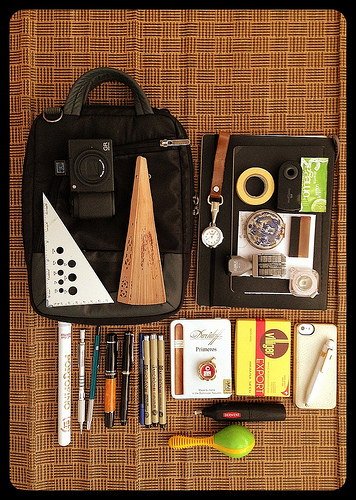
The Portable Atelier, Nyc.
Check out these brass turned parts images:
The Portable Atelier, Nyc.
Image by atelier-ying
This is my camera bag that follows me everywhere, even inside my own home. I also toss it into the baby stroller.
Let’s take a tour starting clockwise from the upper left, shall we?
1. Turano iPad bag with 4 compartments and some dividers. I wish they made this in red or army green or clear smoky plastic.
2. metal drafting triangle, I did forget to include my elliptical and circle templates which I use.
I have a miniature engineer’s scale but there’s no real reason to use it for what I’m doing, my cameras designs stand without toppling over and there’s no standardized dimension of camera building materials to concern myself over. Actually, glue, tape, and architectural modeling supplies are my materials for the most part.
3. the Ricoh GRD3 is tuned for taking only baby photos. I treat it like a film camera; I don’t use the LCD at all, it’s got two settings for color or b&w, and I toss the used chips into a small plastic box. I will have to spend a week on the computer downloading and editing, maybe when my kids turn two years of age.
4. old-fashioned fan. I really use this. it feels so good in the hand, very practical. And good for fanning a restless baby in the stroller. I’d like to get a sandalwood one from HK.
5. Moleskine notebooks. The largest one fits in the Turano, amazingly. I have many sizes of these black notebooks. Actually, I have a red suitcase from my childhood full of nothing but notebooks.
6. Name seals and red ink paste.
7. Office date stamp
8. Muji measuring tape, in millimeters, you never know when you need to measure camera dimensions and distances.
9. Yellow tape, pencil sharpener (sandpaper works best, I find)
10. Coromega (the best Omega supplement and this brand causes no heartburn)
11. my quasi-conductor’s watch made from a complimentary Michael Kors sample attached to a 70’s key strap.
12. iphone and cover and 5mm kaweco lead holder, both in white and brass, my favorite color combo. I want a white and brass kit. Drawing with the Kaweco is a real pleasure. I upload all my drawings with the iphone, from anywhere.
13. Swiss Villiger Cigar box filled with clay scratchboard papers for drawings. I’d like to store an old-world gambling dice game, or a golf game in here too. Like the old Howzat game. I’m working on it.
14. Davidoff Primeros, the best small cigars I have ever had. There is a relic of St. Therese de Lisieux on top of the box. It’s a piece of her habit. It blesses all my efforts.
15. Micron Pen set (.005, .01, .08 sizes)
16. Muji ink refill in gel blue, wonderful scriber’s tool.
17. Namiki Fountain Pen with red ink cartridges. I wish they’d make a vermillion red ink. I can do all my drawings in red, I love the impact and color.
18. Delta La Dolce Vita Fountain pen with Fine nib. The opposite of the ink refill pen in size and feel.
19. HB lead holder
20. Promecha Super Pencil. A work of art in itself.
21. Macanudo Portofino tube with sandpaper for sharpening leads
22. Derwent Electric Eraser, one of my favorite tools, I cannot live without this when I am drawing.
23. Baby’s Rattle. This is one of the best baby pacifiers I know of. Always handy to quiet the little ones.
A Ticket to Ride the TranSiberian
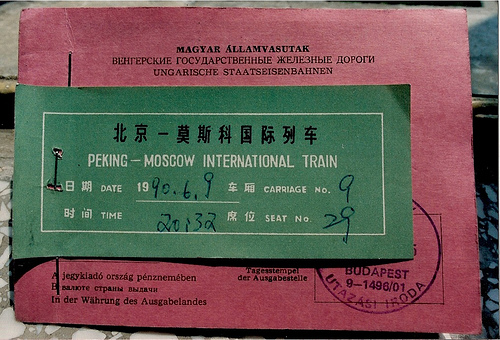
Image by Viewminder
Cut off from the sea by the suspicious port authorities in Shanghai it seemed that the only way I was going to get out of China was overland. This was my ticket.
In Shanghai I had inquired of every traveler I met about the path ahead of me. I had heard tales of this magnificent and exotic railway adventure before… they called it the greatest railway journey on earth. The longest stretch of steel rail ever layed.
An Australian traveller named Mark told me that he had heard that there was a guy in Beijing who could get me a ticket.
I asked Mark how I could find this guy in Beijing. He said just go there and ask for ‘The Crocodile.’ Just go to a city of some ten million souls and ask for ‘The Crocodile’? It sounded almost insane to me.
Ditching Mark after he made moves on my Chinese girlfriend and ditching my Chinese girlfriend after she got all worked up when a soldier who was following me took a picture of us together on the riverfront… I understood her fear in that time of Tienenmen Square and I knew it was time once again to get moving. It was time to move north to Beijing… the city they once called Peking.
Tsu Tsu Mei was a nice girl. She had told me to call her Eleanor… because that was what she called her ‘American name.’ I couldn’t do it because she just didn’t look like an Eleanor to me… I always called her Tsu Tsu Mei. And I think that she really liked that I did… it would have been easier to call her Eleanor I’m sure… but each time I called her ‘Tsu Tsu Mei’ she gave me this look… it started with a big warm vulnerable smile that made it seem to me that she was melting inside with warm thoughts and shaking knees.
That look always made me want to scoop her up in my arms and give her the same feelings right back. Whenever I said her name and got that look… it just kind of summed everything up right there in that moment. I really liked that. Sometimes I wished that it had gone farther but the way it ended is why I have the memories I do… and I hope she does too… we never hurt each other… never not once… it was the hard and cold government of an opressive authoritarian regime that broke both of our hearts there in Shanghai. It wasn’t either of us… it wasn’t our fault.
I was with Mark the Australian when I met Tsu Tsu Mei… we were tooling around Shanghai and we had just gotten on the bus after a tour of the Shanghai Waterpipe Factory Number Seven where I had just purchased a fine example of a brass opium waterpipe. We had seen the place while riding the bus and jumped off… the factory was really happy to have foreigners tour the place. I couldn’t believe that there were at least six other water bong factories in Shanghai. Somehow we had found the seventh.
As foreigners we were pretty much used to talking in english right in front of people knowing full well that they couldn’t follow our conversation… especially the slang riddled prose we frequently used. When Tsu Tsu Mei got on the bus and stood next to me I turned to Mark and said "man she is the most beautiful Chinese woman I have ever seen."
Before Mark could agree… Tsu Tsu Mei let me know that she appreciated the compliment… she smiled and said "thank you" in perfect english.
Shocked that my subterfuge was exposed at first I was a little embarassed… until Mark took that half of a second to start in on her. No way I thought… I was the one who paid the compliment… I was going to be putting the moves on Tsu Tsu Mei. I’m not sure Australian guys understand the concept of a good ‘wing man’ but Mark sure had some learnin’ to do. He needed to watch the movie ‘Top Gun’ and take some notes.
Tsu Tsu Mei and I arranged to meet later that night in downtown Shanghai and proceeded to become great friends. She even took me to meet her parents… Norman Tsu… the first deaf technical drafting instructor in all of China and his ‘deaf wife Janie.’
Tsu Tsu Mei’s father Norman was sent to the United States to study technical drafting in the fifties. He went to Gaudellet University and he confided in me that he really liked it… that he didn’t want to come back to China… he stopped writing home and corresponding with the government… he wanted to drift away… but they corralled his mother who was a widow by this time… and they made her write Norman a letter that made it really clear that it was in her best interests that Norman return to China. That’s how China got its first deaf technical drafting instructor. Or how they got him back.
Norman always referred to his wife as ‘My deaf wife.’ Both of them were deaf and we passed notes to each other over a marvellous dinner… while Tsu tsu Mei just kept smiling at me and at her parents… unbelievable food Normans deaf wife cooked. It was a feast… and not the Chinese food I was used to… this was exotic and unknown to me. The Tsu’s really went out and they’ve been in my thoughts many times since then.
The Tsu family was really good to me and things were moving right along with Tsu Tsu Mei too until that soldier decided that he’d turn our little hand holding session on the Shanghai riverfrint into a Kodak moment. I had seen that guy following me before… he was the tallest Chinaman I’d ever seen… a full head above the rest of the general population. I found great amusement in shagging him… going into a store and going out the back door. It was really like a game. Still… he always found me… he was on me for days there in Shanghai. And after he took that picture I realized that my company with Tsu Tsu Mei wasn’t looked upon favorably by the authorities. She was terrified of the repurcussions. I knew that was it… I wasn’t going to get her or her family inot any trouble. I was going to get out of Shanghai.
I purchased a train ticket on a sleeper train for the seventeen hour ride from Shanghai to Beijing. How was it that I could go to a city the size of Beijing almost a thousand miles to the north and find this man called ‘The Crocodile’ simply by asking? It seemed completely insane… but such was the world I found myself in this year… for me, 1990 was the year of living insanely.
After seventeen hours of watching China slide by through the window accompanied by the soundtrack of nonstop kung fu videos on the train’s television sets, I stepped off the carriage in Beijing, China’s capital city. Which was a godsend because I could not have taken one more of those videos. The Chinese truly love them… they must be a part of their national identity… the way that the Japanese love Godzilla. Godzilla was a mechanism that helped the Japanese to cope with their loss of World War Two and the painful shock of getting Nuked twice. Even though Godzilla always stomps their cities to pieces they always triumph. It’s like a morality tale with them.
When I was living in Osaka someone who worked in the studio that made the Godzilla movies decided to borrow the costume and wear it to a party where he caused it to be damaged to the tune of a hundred and seventy five thousand dollars. I wish I was at that party. Hanging out with the Nigerians. That would have been epic.
The first european looking guy I saw in Beijing… I stopped him as was my custom in the orient and inquired of the conditions and opportunities there in this new city. Blonde hair in China or Japan had always meant ‘help desk’ to me. We vagabonds and adventurers always stuck together and usually became instant friends as long as there wasn’t a woman involved.
Then I asked him if he had ever heard of ‘The Crocodile.’
He said that he would take me to see him right now. Right then. Right there. Unbelievable. I’m not kidding. No shit. I couldn’t believe it either.
I had found ‘The Crocodile.’
The man walked me to a hotel a few blocks away from the railroad station. It was an old building that looked straight out of the 1920’s, like just about every other building in Beijing. You could see that it was really beautiful at one time… maybe even opulent or exclusive… but it, like anything else that was once beautiful or opulent, it seemed to fall into despair and decay under the custodianship of the communists. That was the way pretty much all of Beijing looked. With brown air and trees and bushes that were different from all those I had even known. I always notice the trees and bushes in a new city. Here on the other side of the world the plant life and the vegetation was odd to me… just unusual enough to stick out in my mind.
The man knocked on the door and we were answered by a nice looking blonde woman on her early twenties. She looked kind of pissed off but invited us in still. My guide just turned around and left with little more than a gesture to the woman. I followed her into the room.
It had become a bit of a self entertainment for me to wonder why the man I was seeking should be called "The Crocodile." It intrigued me from the moment I had heard it and in my mind I came up with all sorts of reasons for the nickname. None of them pleasant.
The room was an illustration in contrasts… inside "The Crocodile" had rented two rooms… he knocked down the wall that had seperated them and completely remolded it. This guy was livin’ cush. He sat on the edge of his bed playing with the tv remote control as if it had befuddled him… I could tell from body language that his girlfriend and he had just been fighting.
"The Crocodile" stood up and turned around to face me… the guy must have been six and a half feet tall… and immediately I could see why they called him "The Crocodile."
He wore these braces on his teeth… the largest mass of metal I’ve ever seen in a persons mouth. Communist braces aren’t very pretty… but these… "The Crocodiles" mouth looked like it had been installed by a blacksmith… an angry, drunken blacksmith. Like hammered bars of hot metal hand forged around each of his teeth.
I had to make myself stop staring as he got right down to business. Croc asked me when I wanted to leave… he said he had one ticket and he wanted a hundred and ten bucks American for it. There’d be no negotiating I could tell that right away. I had a feeling that if I tried that he’d have just relieved me of all my dough right there. Probably my gear too.
We were in a bit of a funny situation for a couple of reasons… I thought the ticket looked fake… it looked worse than some of the permits and passes I’d forged in school. I didn’t have a visa to enter Russia… and I didn’t carry that kind of currency in US dollars. I wasn’t too sure that the Russians would actually be too excited about me coming to their country either. When I expressed this to "The Crocodile" he laughed a powerful and boisterous laugh and told me not to worry about it… he’d just gimme the ticket on good faith… so I could try and get a visa and cash a travellers check or something to come up with the Dollars he wanted. Besides he said "I know where your seat is and when you’ll be leaving and if you fuck me I’ll kill you" after which he laughed another deep laugh and gave me a half hug. "I want my money by next week he said." and walked me to the door where he said goodbye and his girlfriend gave me another dirty look.
That was it. Absolutely fucking unbelievable. I’m in Beijing less than two hours and I found my guy and I got my ticket. Now I just needed a visa from the Soviet Consulate. He’d also tell me there if the ticket was real I figured.
But right now I needed a place to stay. That would have to be my first order of business. The Croc’s hotel seemed a little too luxurious for my budget… I needed something ‘dumpier.’ Something where my kind’d fit in you know?
I walked out of the hotel and on to the street… pausing for a moment to take a breath of the sulfery yellow tinged air and feel the pulse of the street there…a moment to let the vibe of it all sink in. I could have gone left or I could have gone right but it really didn’t matter because I had no idea where I was going anyway. It’s like a rule with me… like walking on the upwind side of the street because that’s where all the paper money blows. Go left.
My friend Joel… the guy who’d saved my ass from the knife weilding Yakuza that pressed certain death into my throat in that bar in Osaka… he told me that he went insane and that he would hear these voices in his head that always said the same thing… "look to the left Joel." If he wasn’t crazy already he said that those voices would do it… he never understood the meaning of it. Stupid voices in your head… they never tell you anything good… like "stay away from that one… she’s trouble." They’re always all cryptic. You gotta try to figure them out and break the code. Joel said the lithium they gave him pretty much shut the voices down. I never had heard voices though. It would probably be fun for a day or two… just to see what they would say. I think if I had voices they would sound like Vincent Price on LSD.
So I went left after I walked out of the Crocodile’s hotel. I usually always go left when I got no idea but this time I was especially glad I did.
I get about a block and right there smack dab… badda bing… I run into this guy I lived with in Osaka Japan… Mike Levine… a Jewish guy from Jersey. He had let me borrow a pair of his shoes because I could find any in my size in Japan. Mike’s got this big smile on his face as he sees me… we hug and slap each others backs and talk about the fight that got me thrown out of the university in Japan that we both went to.
Mike gave me directions to a suitably dumpy hotel and we parted ways.
Walking down the street I saw a couple of American girls… who turned out to be two really granola looking lesbian backpackers from Nebraska.
I stopped them there and asked them where they were staying… they said they had no idea… I invited them to share a hotel room with me if we could find one… plus the thought of girl on girl action sounded like really good fun to me. I felt like I was really going to like Beijing. It seemed like an easy city. Things were looking good.
Was this my lucky day or what?
Shit, I been here for like two hours… I already met the guy I came to meet, had a ticket for the Trans Siberian, hooked up with two lesbians and there we found a three dollar a night hotel. Six yuan a night for each of us. What more greatness could god bestow on me? Another lesbian? A blind supermodel? That would just be asking too much I thought. Lady Luck, I’ve always said, she was indeed a friend of mine.
Never look a gift horse in the mouth they say… so I unpacked my gear in the hotel room… every bit of it… and spread it all around. I always unpack fully so if I get robbed they can’t just take one bag and split… they gotta work for it… then I unscrew all the lightbulbs in the room so they gotta have a flashlight to do it well… and then I make some loud noise making booby trap… like a pyramid of empty beer cans behind the door… then they gotta have nerves of steel to finish the job. Never got robbed once. Never. I have come home more than a few times affected by some intoxicant or another and fallen vicim to my own booby traps though. It always scared the beejesus out of me.
The Nebraska lesbians unpacked too.
Time to get out of here… It was time to go have a look at Beijing.
I left the hotel in a hurry and jumped on the first bus I saw… it didn’t matter where the bus was going…I didn’t care… I was sure that I hadn’t been there anyway. That’s the great thing about exploring like that. A new city… just go anywhere. It’s all new.
Sitting on the bus I was of course the only westerner riding it. The Chinese weren’t as polite as the Japanese and they would just stare at you forever… sometimes with mouth agape even… and I found myself very much the center of attention… the center of attention was something I really didn’t want to be. I kinda wanted to blend in really. That was going to be tough.
I started having what could only be described as auditory hallucinations on that bus… that happened alot to me in China… but right there it was bad… the cacaphony of Chinese voices started to filter itself out in my hyperactive mind and become english… I could understand things sometimes… I was certain that people were commenting on how intoxicated I was… they all knew it… they were all talking about me… looking at me… ‘Is that American guy drunk out of his gourd or what?’ I had to get off that bus. The sweat was pouring from my pores. It was getting to be more than uncomfortable… it was unbearable.
The next stop was my stop no matter where it might be… soon as it stopped I jumped off that bus so fast… I didn’t even have a clue as to where I was… and I didn’t care. Away from that hash house hotel and off of that bus…I just wanted my own little piece of contraband free real estate where I could sit and watch China go by and make amusing comments in my head to entertain myself.
This was my stop.
Before me was layed an enormous plaza… I had never seen such a large paved public space. It was gigantic enough it looked like you could lay down and land a 747 in it if you went from one corner to the next. It was so big and vast that the smog of Beijing obscured the other side of it from me. I didn’t know what this place was, but it made me feel realy small… insignificant actually… which was precisely how I wanted to feel.
I stood at Tienenmen Square.
This was the old Beijing… the one that used to be before the extremely systematic exploitation of cheap labor turned the place into a giant pachinko parlor… this was the dirty, dusty and gritty beijing where products were pulled around on wagons by teams of horses who shit big piles in the streets that you’d go straight over the handlebars of your bicycle if you didn’t look where you were going. I’d seen it.
This was the Beijing where the streets seemed impossibly large considering no one really owned a car… the Beijing where the old people all wore those navy blue or black or gray kung fu outfits and walked around stooping with their hands clasped behind their backs as if some ultimate power had ordered them to for all time.
This was the square in Beijing where less than a year had passed since thousands of students took a chance to try and change their world… this was the Beijing where tanks had rolled over them without mercy and their bodies were torn apart by the callousness of lead flying around at ballisticly high speeds and cruel random trajectories. This was the Beijing where their blood ran like rivers down the curbs and into the sewers where like the extinguishing of their tender lives for naught all was soon forgotten by a world more infatuated with its demand for cheap consumer electronics in attractive clamshell packaging.
The one year anniversary of the slaughter was approaching and here as if by accident I find myself in the place where history was made and so conveniently forgotten.
Here and there I could still see bullet scars, burns and other marks that told the tale of a failed movement killed in a single night of murderous debauchery.
It was eerie in Beijing. I couldn’t put my finger on it. Was it just the intoxicant’s influence? I couldn’t place it until I found a nice grassy place to sit down and let everything stabilize. Let my altered mind stop spinning.
The young people were all gone.
The government had sent what looked like the entire youth of the capitol city to ‘summer camp,’ where they’d sing patriotic songs and watch lots of motivational films and learn the error of their ways. It was re-education for the entire young population… there was almost no one walking around that city bettween the age of fourteen and twenty one. It was spooky… strange mojo in a strange land. Like some kind of Twilight Zone episode.
Everybody’s seen the picture of ‘Tank Man,’ that guy whose name the world doesn’t know… the one who was walking home from the grocery store with a couple of plastic bags in his hands… the guy who became a lonely human roadblock for a column of tanks… I know I could never forget that guy… he had balls the size of watermelons that one. I woudda love to have bought that guy a drink or eight.
I was walking down that street and a momentary sense of deja vu made me stop… It felt like I’d been there before… it didn’t take too long for the reality to hit me… I was standing in that spot. In the Tank Man’s spot. The premonition came from looking at that photograph.
There was a pay phone there… on the side of the street… you can see it in the Tank Man picture… I thought my parents might like to know where in the world I was so I tried to call them from it without luck. Maybe they’d think it was cool that I was calling them from there I thought.
I wanted to feel the scene out… I wanted to let it all sink in a little bit so I sat down and I had a look around. It all began to unfold in my mind… the direction the tanks came from… the sounds they’d make… their squeaking tracks rolling on the asphalt echoing in the canyon of concrete buildings… I could see the crosswalk he was walking across when it happened.
I stood up, still painting the scene on the canvas of my mind with the brushes of my imagination and I walked towards the crosswalk… just as he did that remarkable day.
Man… sometimes even I have a hard time putting things into words… sometimes feelings, emotions and perceptions are just too powerful and swift to get a grasp on.
Surveying the scene where this historic collision happened from the street… it was so much different than the picture we all know… that was shot from high above… it’s got a whole different tone than the lonliness and isolation that the street level offered. Just like in the square where I had felt so small… even the street there was massive in width… one of those subcompact cars flying through the smog could have crushed me like a bug. The thought of standing my ground in front of a column of many ton armored tanks with their diesel engines shaking and belching thick black smoke and rumbling in anger… I’ll tell you this… with the greatest respect that I can muster… that guy… at that moment… he took on the entire world. He was a bad ass motherfucker who said ‘hey… I don’t like what’s going down here.’ and he backed it up with his hundred and fifty pound body alone in the streets. He never even put those grocery bags down. But for a moment, that man stopped the world. He stood his ground. He stood our ground. He stood for everyman that day.
I didn’t.
I didn’t even chance stopping where he did. I didn’t want to stop a bus.
When I got across the street I walked back towards Tienenmen Square wondering what happened to the guy.
These thoughts were crisply punctuated when I found the remains of a completely flattened bicycle. It had been run over by something pretty heavy because it was as flat as a bicycle could conceivably become. It even had a curve to it… a lot of parts were gone but the frame, the handlebars, even the rims were crushed flat. I picked it up, still thinking about Tank Man and I realized what it meant.
Something inside me wanted to take it home… to show my people… people born and raised with a freedom fought for by others… I wanted to show them what we pretty much let happen here… the great crime that we ignored. It was a strong symbol to me at least of an oppresive government that lost it’s temper on it’s own people.
I’d never get that flattened bicycle home, but I carried stashed inside the tubes of my backpack messages that people had asked me to carry out of the country to a place where mistakenly so they thought good and decent people might give two shits about the treachery bestowed upon them in their quest for what we have but could really care less about. A freedom so strong… a freedom so deep that it was a part of me wether I was conscious about it or not… a freedom that formed the person I was and carried me on a long and mostly accidental journey to a place where youth was cut short for having the audacity and lack of patience to demand a more tolerant society where people would count for just a little more than cheap labor.
I promised myself I’d remember what happened to them. I promised myself that on June 4th, 1990 that I’d say a prayer there in Tienenmen Square. I’d recognize their martyrdom to the cause of freedom and I’d pay my respects on the anniversary of the barbarism of their all powerful and vicious central authority.
When that morning came with its sultry brownish orange sunrise, three hundred and sixty five days after the blood letting, when the flag of a nation was raised over it’s most proud square… I was the only person that wasn’t Chinese standing there as a witness to at least offer the the quiet contempt of my heart and the objection of my soul as a counterbalance to the disgrace of the murder of these children.
There were no television cameras or satellite trucks… no journalists fixing their hair or taking notes on those long pads that they carry. Nothing.
I carried no sign or banner… I spoke no message of objection. I sought to instigate nothing.
I stood there in Tienenmen Square as a witness.
A witness to what the rest of the free world was so selfishly quick to forget.
Two days later I’d board a train that I’d get off of in another world… where a wall that represented hate and anger and mistrust would be falling, hacked to pieces bit by bit by a people celebrating a new freedom and unity.
Acutech Assists California Based Security Organization in Creating Palm Recognition Security Technique
Columbia Falls, MT (PRWEB) August 29, 2014
Acutech, a Columbia Falls, Montana based rapid prototyping and light manufacturing firm has teamed with a California primarily based safety company to develop state-of-the-art palm recognition security program components.

The palm recognition safety system is new technology that will be used to supply access to higher safety areas within buildings. The technique works by scanning an individual’s palm as it is held up to the wall mounted device then permitting or denying access to the secure area. The technique has a lot of attainable applications like use by government, companies, military, and law enforcement industries.

The firm that is establishing the technique approached Acutech to assist in the development of the prototype due to Acutech’s advancing reputation for providing high high quality industrial prototyping and fast turnaround. Acutech worked with the firm to design and style, engineer, and produce the prototype using 3D printing and machine shop technologies.

Dean Grommet, co-owner of Acutech stated “Our industrial prototyping and 3D printing services are a lot a lot more expense successful than conventional product improvement tactics. The price of study and development is considerably decreased with rapid prototyping due to the fact of the shorter time frame involved in generating a prototype. Our speedy prototyping SLS procedure gives our buyers with a sturdy and precise portion that can easily be tested for match and function. Using our speedy prototyping procedure permits our consumers the capacity to modify their product early in the development method prior to going to the manufacturing stage at a minimum expense. We also offer you state-of-the-art production manufacturing solutions to meet our customer’s manufacturing needs when they are ready to commence producing their product and bring it to industry. We have the capabilities to meet demand for each low and high volume production applications. We are excited to be working with this organization that is on the cutting edge of safety systems development”

Acutech’s solutions contain state-of-the-art fast prototyping, specialist solution improvement, engineering, design and style, consulting, 3D printing, precision cutting, mold constructing, injection molding, custom metal fabrication, and a full service machine and manufacturing shop. For more data on Acutech, pay a visit to http://www.acutechworks.com or call Acutech at (406) 892-4030.


Associated Speedy Precision Machining Press Releases
Bristol, CT Dentist, Dr. David R. Edelson, Delivers CEREC Technology for Very same Day Ceramic Fillings and Crowns
Bristol, CT (PRWEB) August 26, 2014
While a classic dental crown may possibly take up to three weeks to fabricate and metal amalgam fillings could contain mercury or weaken teeth, Dr. David R. Edelson is a dentist in the Bristol, CT region now offering Bristol sufferers with an alternative to these restorative alternatives. CEREC restorations create very same day powerful ceramic fillings and crowns that fit perfectly by using 3D laptop generated models rather than messy, uncomfortable impression trays.

Metal amalgam has historically been a well-known option of dentists when filling cavities and restoring teeth, primarily simply because it is affordable and very resistant to damage. Sufferers who dislike the dull gray colour of the amalgam could opt for gold, which is stronger but expensive and lacks subtlety. When compared to amalgam or gold, composite resin blends naturally into teeth and would look like the ideal selection if not for the lack of durability and the likelihood of staining.

In response to the inadequacy of these choices, Dr. Edelson utilizes the CEREC process to provide his sufferers with ceramic fillings. They provide a organic, stain resistant appear that lasts longer than amalgams and resins and are more affordable than gold. CEREC was named for Chairside Economical Restorations of Esthetic Ceramics, words that describe this tooth restoration process.

This leading dentist in the Bristol, CT region begins by preparing the tooth for the filling or crown, then requires a picture, or optical impression, of the location. This picture is entered into a specific software program that produces a 3D model of the tooth. Soon after picking a block of ceramic that matches the shade of the surrounding teeth, Dr. Edelson sends the model to the milling machine situated within the office, which creates a perfectly fitting tooth restoration from the ceramic in a couple of minutes. A patient can count on to leave the workplace with a new smile in just one short appointment.

The development of this process is timely, as millions of amalgam and resin fillings and porcelain crowns deteriorate and want replacement. Sufferers looking for a dentist in the Bristol, CT location who delivers the rewards of ceramic tooth restorations can locate more info on Dr. Edelson’s web site or by calling his workplace straight.

About the Doctor

Dr. David R. Edelson is a general dentist offering customized dental care for sufferers in Plainville, CT. Dr. Edelson received his B.S. in Biology from Trinity College in Hartford, CT. He then went on to acquire his Medical professional of Dental Medicine at Tufts University College of Dental Medicine. He completed his basic practice residency at Boston City Hospital and his dental sleep medicine residency at Tufts University College of Dental Medicine. Dr. Edelson belongs to the one particular % of dental professionals currently providing the LANAP® protocol, the initial FDA-cleared laser process for gum disease and periodontal treatment. To learn far more about Dr. Edelson and his dental services, visit his internet site at http://www.plainvilledentist.com and call 860-357-6772.


Related 3d Milling Press Releases
Cement Vertical Roller Mill
For the cement market were 30,25,20,10,eight.eight tons of annual production and other industries use to meet the customers of various supplies with various yield and grinding needs. At the identical time I also have fine vertical grinding mill, the State Development Center has fine vertical cement mill as the “Eighth 5-Year” period focused on advertising the application of high efficiency, new power-saving items.
The working principle of vertical roller mill
1, the major structure and function
Roller is the primary material for rolling mill parts. Mill constructed with two pairs of roller, every pair of rollers mounted on the very same shaft, rotating at various speeds.
Disc fixed to the reducer output shaft, the upper part of the disc material bed, the bed material a circular groove.
PRM-kind separator primarily composed of vertical roller mill ,roller, disc, compression device, reducer, motor, housing and other elements.
Fineness of separation is an critical element of the choice, which consists of adjustable speed drives, rotor, guide blades, housing, meals, fighting off the cone material, composed of the outlet, and the separator works comparable.
Pressure device is known as the grinding pressure of the elements provided by the high pressure oil station, hydraulic cylinder, rod, storage and other elements, in a position to exert adequate pressure roller grinding of components.
2, the operating principle of vertical roller mill
The material flow via the separator, in the function of guide vanes and the rotor, the coarse material to the disc from the hopper cone, the fine powder with a mill with air, dust collection device in the system to collect, is the item, the material in the get in touch with procedure with the gas being dried to the required product water, by adjusting the angle and the wind guide vane separator rotor speed can be diverse fineness of the solution.
Motor through reducer drive the disc rotation, the present hot air from the air inlet into the mill, the material from the feed opening falls on the central disc the centrifugal force, material to the disc edge and moved across the ring groove on the disc by the grinding roll rolling and grinding, to the edge of the disc, moving by means of the air with the wind at the beginning of big particles falling back to disc on the direct re-grinding.
Compared with the ball mill, vertical roller mill with the following features
Compared with the cement vertical mill to mill the advantage is obvious, in order to establish a far more intuitive description of the qualities of MPS vertical mill, following the annual output of 10 tons of cement and production of raw material preparation program, for example, compared with the two HRM vertical mill and ball mill kinds of program indicators.
Grinding efficiency drying massive capacity into the grinding material Liaodu large, medium and huge vertical mill can save two broken items, chemical stability stars are homogeneous gradation, solution Liaoduo uniformity is conducive to burning method is basic low noise, less dust, the operating atmosphere clean metal loss, high utilization use of the economy.
Assuming an annual output of 10 million tons of cement in order to meet production wants, could use the following two alternatives:
Programme 1: HRM1300 vertical mill grinding system
Programme two: @ two.two six.5 closed-circuit grinding program
Table II installed capacity of the two applications, technical and financial indicators in Table III.
As can be observed from the above comparison, the decision of vertical roller mill to lessen annual operating charges only 380,200 yuan, and the level of technologies and merchandise to enhance yield, save power, increase the operating atmosphere, decreasing noise and pollution, and improve potential to adapt to other elements of the play is not assess the extended-term benefits.
vertical roller mill
vertical roller mill
vertical roller mill
I will show you how I swiftly and easily tram my milling machine using a handful of tricks up my sleeve, and then prove how well it functions by checking the accuracy u…
Your Story Created Here: Busche in Albion
Your Story Made Right here: Busche in Albion
… Enterprises in Albion to see how they support young people begin their personal story. Ryan Cureton was a senior at Central Noble Higher School when he enrolled in a plan that matched him up with Busche and got him considering about a career in CNC machining.
Study far more on Indiana’s NewsCenter
Lake Tech director to detail alterations
… offering specialized coaching in “fabrication, machining such as Personal computer Numeric Manage, milling, welding,” amongst other locations. Starting Oct. six, Lake Tech will start a new CNC Production Specialist course to teach students how to create …
Study a lot more on Daily Commercial
Streamline Provide Chain With 1-Stop Metal Fabrication
Romig gradually expanded his firm's metal working capabilities by means of a series of strategic corporate acquisitions over decades. Right now, Summit Steel offers a full-variety of solutions from 2D and 3D laser cutting, CNC turning/milling, Swiss machining, …
Read a lot more on Manufacturing.net
Arnold to Present Energy Efficiency Options at The Battery Show 2014
Chicago, IL (PRWEB) September ten, 2014
Arnold Magnetic Technologies announced nowadays that it will present its options for power efficiency in automotive applications at The Battery Show and Electric & Hybrid Car Technology Expo in Novi, Mich.

Arnold CEO Tim Wilson will take portion in a panel session on electric and hybrid automotive technologies in the course of the show. As a panelist, Wilson will talk about Arnold’s efficiency components and high speed motor designs utilised for applications such as electric turbocharging of autos.

The firm will also exhibit at the Sept. 16-18 show. Attendees can check out booth #E808 to speak with Arnold’s technical employees and discover how Arnold’s sophisticated materials are incorporated in high efficiency motor styles.

Higher functionality materials from Arnold assistance motor systems that are smaller sized, lighter and much more effective although operating in high speed, high heat environments. These capabilities enable cars to meet stricter fuel efficiency and emissions regulations. Goods incorporate RECOMA® samarium cobalt, Arnon® silicon steel, shaped field magnets and Wraptite® composite sleeving, as nicely as technique integration of these components.

The panel session will be held Tuesday, Sept. 16, from three:45 to five:15 p.m. in the Suburban Collection Showplace’s Opal Ballroom.

Arnold is also offering a free of charge technical short download on electric turbocharging, or eTurbo, and its effect on automobile efficiency. This technical short presents design considerations and challenges for electric motor design, and some certain components that can help enhance efficiency.

For more details on Arnold’s higher efficiency materials for automotive applications, go to booth #E808 at The Battery Show or http://www.arnoldmagnetics.com.

About Arnold Magnetic Technologies
Arnold Magnetic Technologies (http://www.arnoldmagnetics.com), headquartered in Rochester, N.Y., is a worldwide manufacturer of high overall performance magnets, precision magnetic assemblies and thin metals. Arnold has thousands of customers in markets from consumer, industrial, and healthcare to military, aerospace, and telecommunications. Its magnets, metals and systems are utilized in high-efficiency motors, batteries, and solar panels, and on industrial aircraft such as the Boeing 787 and Airbus 380.