Verify out these cnc parts pictures:
DIY CNC Parts
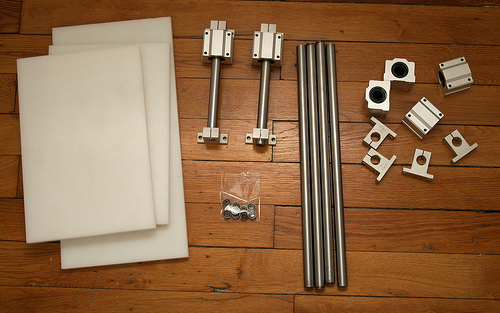
Image by equinoxefr
Rapid Prototyping China
Verify out these cnc parts pictures:
DIY CNC Parts
Image by equinoxefr
Willoughby, Ohio (PRWEB) September 02, 2014
Rimeco Merchandise, Inc. of Willoughby, Ohio is pleased to announce that it is now incorporated in the new Aerospace Industries Association Products and Solutions Guide. This is the premiere “buyers” guide for sourcing information in Aerospace and Defense. John Ribic, President states “We are really pleased that we have a listing in this worthwhile resource for the A&D business.”

Rimeco Items, Inc. is a manufacturer of CNC Machined elements for aircraft and aircraft engines. We have CNC Turning and Milling capabilities and are AS 9100 Certified. Our specialty is the machining of Tee Tubes, Elbows, Unions and Fittings from Stainless Steel and Higher Nickel Alloys. We use a trade secret, proprietary process that makes it possible for us to make these components at a substantial discount to our competitors. Our method entails combining multiple operations into one machining step, so we are capable to ship as typically as our buyers need. Making use of our proprietary approach along with off-line programming, we have been capable to reduce our lead-instances on new components to as low as one week.

Our method was originally created for Tee Tubes and Elbows of all sizes. Our buyers use the union elements in their tubing assemblies developed for jet engines. Our parts are flawless and delivered on-time every time. From the quote procedure all the way by means of arrival at our customer’s facilities, Rimeco treats our clients with the highest level of high quality and interest in the industry.


Connected Cnc Milling Components Press Releases

precision sheet metal fabrication China produced by Joinconn, www.joinconn.com,for precision sheet metal fabrication China far more details pls. get in touch with lisa@dgjuwan…
Video Rating: / 5
A handful of nice precision element makers photos I found:
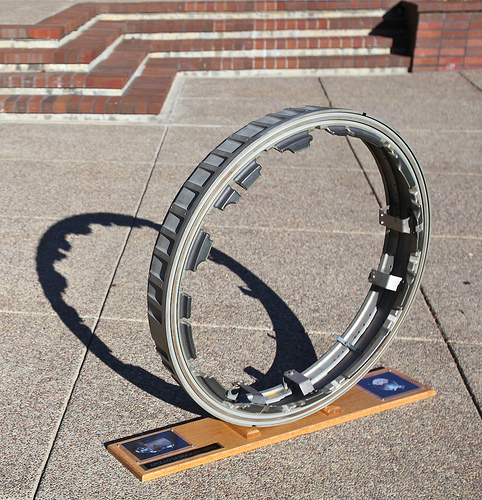
Apollo 14 Docking Ring
Image by jurvetson
Milled from a solid block of titanium, with twelve docking latches, it is a marvel of precision design and style in the era ahead of CAD/CAM.
The Smithsonian believed this was the CM docking ring from Apollo 14 Command Module, and had paperwork to help that. I feel it is the sister unit, a big structural engineering element utilised for ground testing to try to recreate the series of docking failures seasoned early in the Apollo 14 mission with the probe that was brought back (normally the docking probe would be left behind). Hence the Apollo 14 label on the base and description at the Bonhams’ auction:
NASA’s choice to fly Apollo missions employing a lunar orbit rendezvous approach necessary the improvement of a method to join, separate, then rejoin two spacecraft. This system also had to let astronauts to move internally between the Command and Lunar Modules. The flight configuration selected was an effect system consisting of a probe situated at the forward end of the Command Module (CM) and a funnel-kind drogue located at the prime of the Lunar Module (LM). The CM’s probe was mounted to the docking ring, which provided a point of structural integrity for the two docked cars as soon as the probe was removed. Removal of the probe produced a tunnel so the crew could travel between the docked cars. A series of latches about the docking ring locked the cars collectively. The tip of the probe had a set of 3 modest capture latches which had been developed to hold the vehicles with each other lengthy adequate that the bigger docking ring latches could be engaged.
Just right after the Saturn V’s third stage sent Apollo 14 on its planned trajectory toward the moon, Shepard along with astronauts Edgar Mitchell and Stuart Roosa seasoned difficulty docking the CSM to the LM. 5 attempts were created but the docking probe capture latches never engaged to secure the two cars together. This could have scrubbed for the second time in a row a lunar landing mission. With the failure of Apollo 13 due to a Service Module oxygen tank explosion, a scrub of the Apollo 14 lunar landing would most definitely have offered ammunition to these in Congress lobbying for an early termination of the Apollo Plan.
Soon after practically two hours of delays and on the sixth try, with Roosa holding the CSM tight with the LM for many seconds, the latches lastly engaged. The crew then activated the series of larger latches mounted along the docking ring to receive a "hard dock" configuration. Though they had been ultimately docked, Mission Manage and the crew’s concern shifted to the possibility that the program could fail when it was most necessary, the redocking of the LM Ascent Stage following Shepard and Mitchell’s return from the moon. If this happened the crew could be forced into performing a space walk in order to return to the CSM. The lunar rocks and scientific data may well have to be abandoned in the LM pending the precise situations of a possible lunar orbit docking problem. The probe was completely inspected by the crew throughout the coast period to the moon and they sent detailed verbal descriptions plus television pictures to Mission Control. Because the probe now showed standard operation of the capture mechanism, NASA created the selection to proceed with the planned mission.
The redocking while in lunar orbit was fully normal. The docking probe (usually jettisoned with the LM) was returned to earth for inspection and evaluation.
NASA and spacecraft manufacturer North American Rockwell performed an exhaustive series of tests to the docking system. All elements (probe, latches, docking ring) had been tested "in location" with the recovered Apollo 14 CM, then each was removed for a series of combined and person tests. The docking method dilemma was a major reason the docking ring was removed and never ever re-installed into the Apollo 14 CM. Post-flight evaluation of tv, motion image film, accelerometer info, and reaction control system thruster activity indicated that probe-to-drogue get in touch with conditions were as expected for all docking attempts. The probe’s capture latches should have worked on every of the 1st 5 docking attempts. A plunger-variety component in the capture latch failed to reach a forward or locked position most likely due to some kind of foreign debris or contamination. A change in the size of the plunger due to temperature was an added possibility. Internal harm to the capture-latch mechanism was ruled out as the cause because the program functioned correctly in all subsequent operations following the sixth docking try and throughout post flight testing. The debris or contamination most probably became dislodged following the fifth docking try, enabling the system to operate effectively from that point. NASA and Rockwell created the decision to supply a protective cover on the tip of the probe to prevent contamination during future flights.
Throughout the tests, the ring was shipped between a variety of NASA and contractor facilities through a 39 by 39 by 12 inch wood transit case which is integrated with the ring. The ring itself has a series of inspection stamps and ID numbers that study: "MDR 408699, V36-316250-9, 06361-B009522, MR 361588, DEC 9 1968, V36 316250 31, ASSEM, FEB 18 1969, 06361A015194." A separate 6 by 3 inch yellow "Temporary Parts Removal Tag" repeats many of these numbers and has the added hand-written information of: "TPS 112, REM #103, Docking Ring, S/C 110, 2/14/72."
Included are copies of documents listing the NASA artifact number (2243) getting from Command Module (S/C # 110) for the transfer to the National Air and Space Museum (NASM) and deascession papers from NASM.
The Apollo 14 docking ring is the single biggest and heaviest piece of lunar spacecraft structural gear ever to be provided to private hands. The flown CM docking ring, the twin of this one particular, remained with the ascent stage of the Lunar Module Antares when it was jettisoned. Antares was then deliberately crashed into the moon’s surface to simulate a "moonquake."
PMP – Precision Machine Parts Poland.
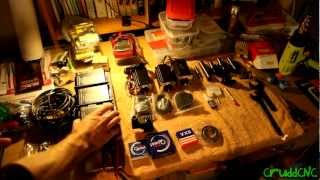
Hey guys welcome to watch initial video of several to come following my cnc milling machine conversion.
Video Rating: five / 5
Bellingham, Washinton (PRWEB) August 30, 2014
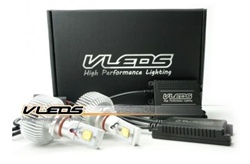
Security and style are now synonymous—VLEDs has fog lights of all sizes and types for just about any auto, van, or truck. Sturdy, extended-lasting, and sophisticated, VLEDs’ fog lights are impressive and can make a wonderful addition to any vehicle.

A lot of buyers locate it frustrating when they buy a new vehicle and the lights do not match. Sure, the headlights may possibly appear excellent, but the fog lights are ugly and yellow. This happens typically, even with the newest 2014 and 2015 models. For example, the daytime operating lights and fog lights for all Cadillac models are characterized by their unsightly yellow light. Cadillac is not alone there—many other tends to make have this issue. That is why buyers turn to VLEDs in order to get safety and style in equal proportions. VLEDs enables auto owners to transform their regular, hum-drum vehicles into higher-end, fashionable machines with LED fog lights of every size.

For example, VLEDs gives the CREE MT-G2 Higher Power LED Headlights. The MT-G2 involves two CREE MT-G2 higher-energy LEDs that emit an definitely astonishing light output, even in the heaviest fog. The MT-G2 installs in minutes, virtually immediately transforming a automobile, providing it a excellent new appear while boosting its safety level.

VLEDs also consists of a lot of other best-rated LED fog lights in its substantial catalog. Sizes consist of H1, H9, H8, 9145, and 9006, just to name a couple of. As always, VLEDs components come with a generous warranty.

About VLEDs

Founded in 2005 in Bellingham, Washington, VLEDs has quickly become 1 of the largest suppliers of automotive LED and HID lights in the globe. VLEDs delivers an incredible array of bulb types, from headlights, fog lights, brake lights, and license plate lights to lights for turn signals, festoon dome vanities, parking markers, and instrument gauges, as nicely as numerous other components.


Serving customers in the transportation, agriculture, medical, and electrical industries, Screw Machine Specialties Precision CNC turning solutions of metal a…
Video Rating: / five

CNC machined Items http://www.floydfolks.org & http://www.littlefamilyfarm.com 1-540-745-2322 floydlcfgroup@gmail PO box 179 Floyd,Virginia 24091 follow u…
Video Rating: 5 / five
Fitzpatrick Manufacturing Company is a custom CNC machine shop that tends to make the most complex components with ease thanks to a highly educated employees, state of the art…
Video Rating: five / 5